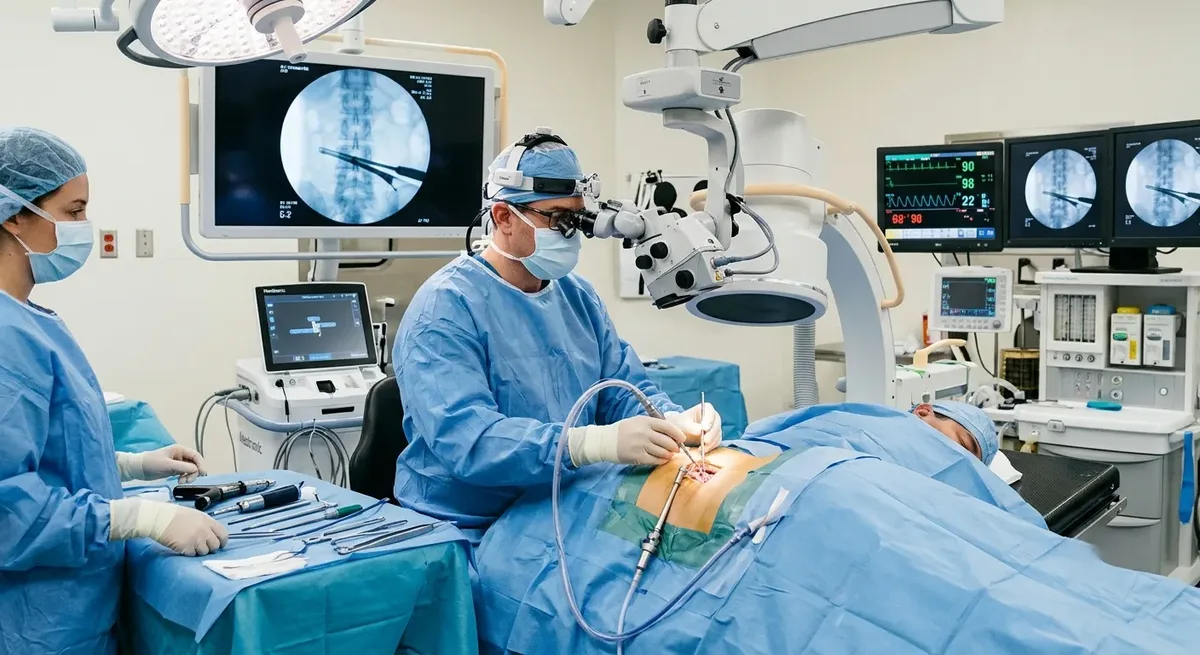
Understanding Minimally Invasive Spine Surgery
Minimally Invasive Spine Surgery (MISS) is a group of surgical techniques designed to treat spinal disorders while limiting disruption to normal muscles and soft tissues. Traditional open operations may require a longer incision and broader muscle exposure. MISS instead uses smaller access corridors and specialized instruments to achieve the same essential goals—such as nerve decompression, spinal stabilization and fusion—with less disturbance of surrounding anatomy.
Minimally invasive does not mean a smaller operation
The surgical objective remains the same. The difference is the route used to reach the spine: smaller, muscle-sparing corridors are chosen when they can accomplish the required decompression, reconstruction or stabilization safely.
Key Features of MISS
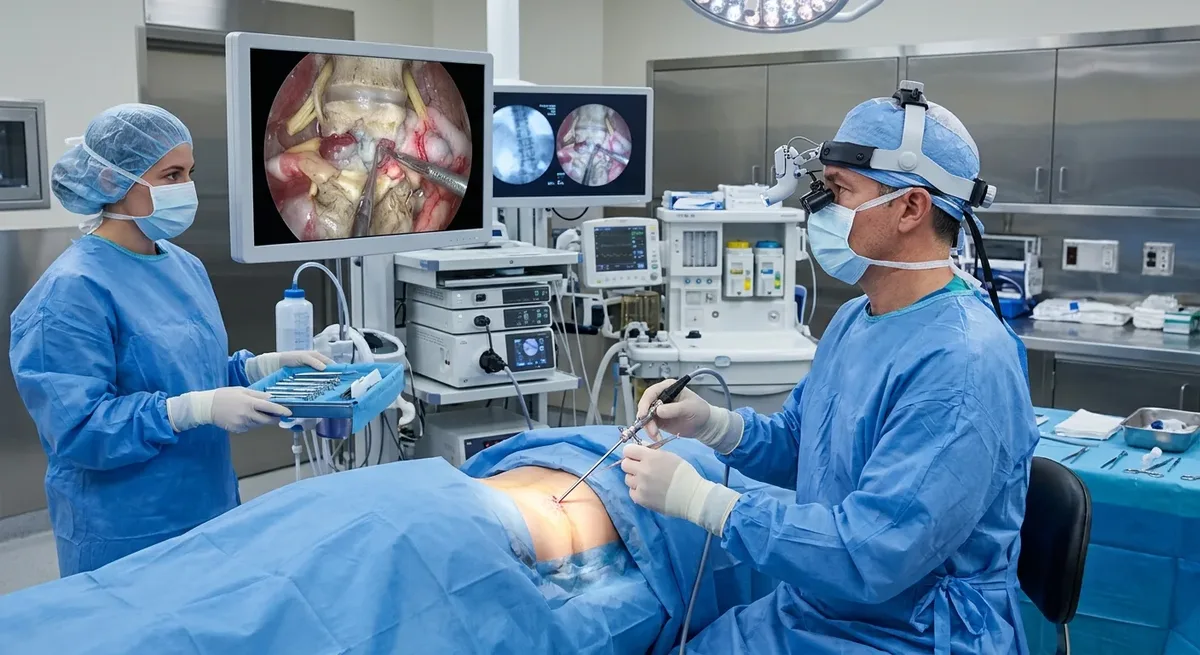
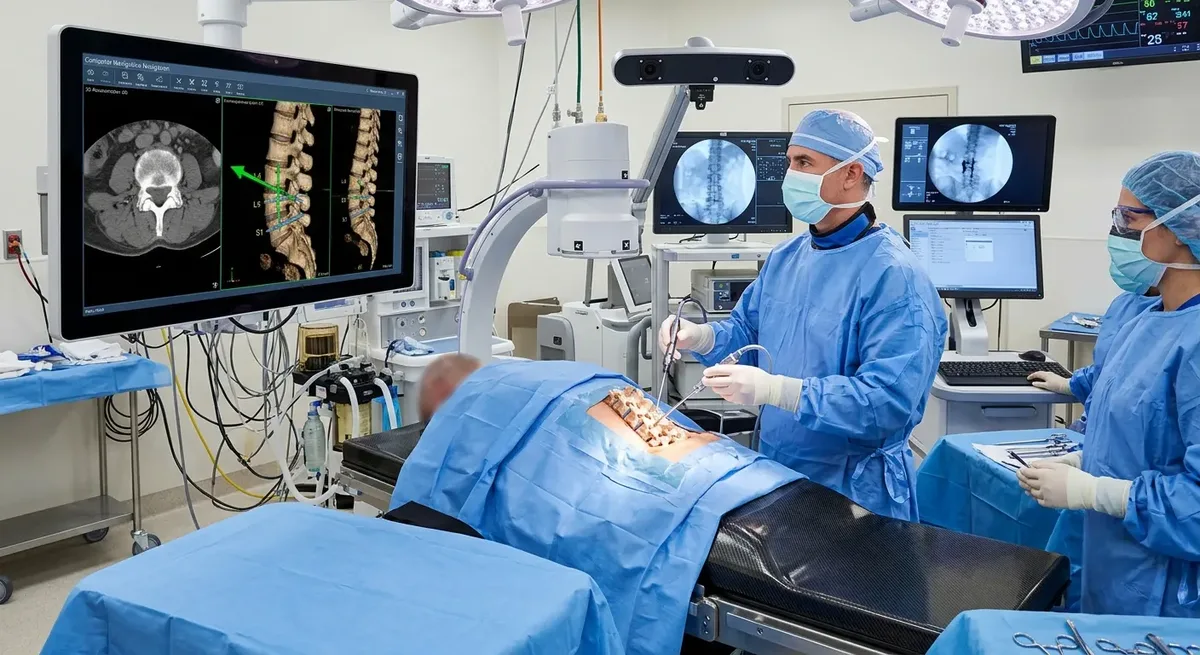
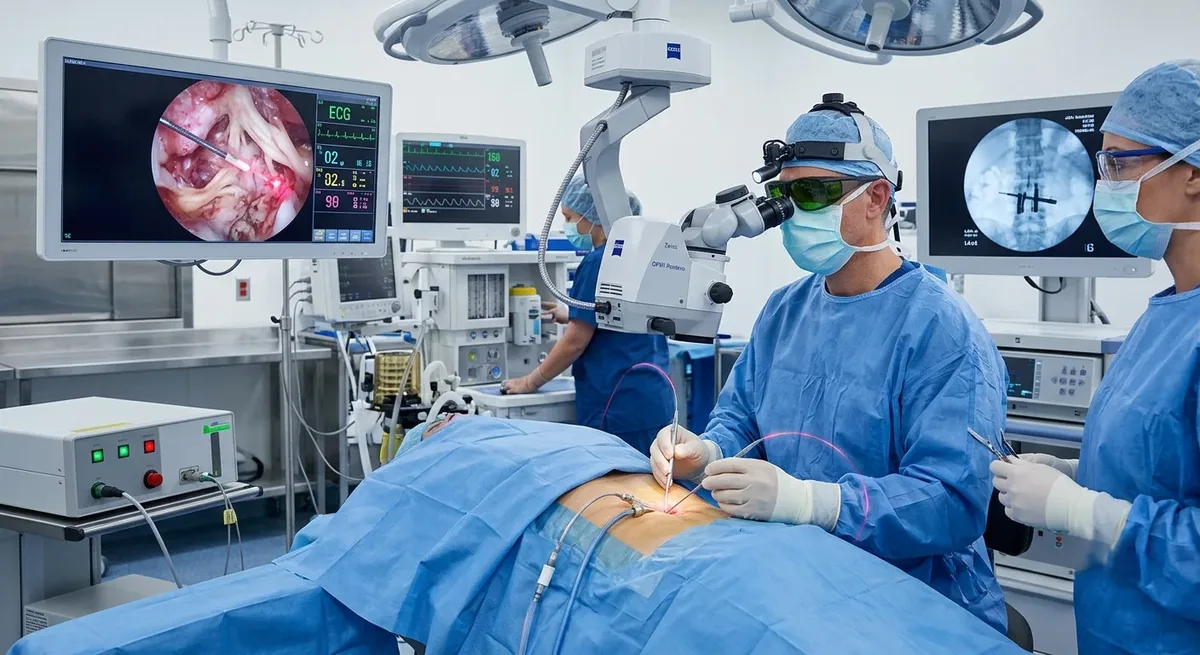
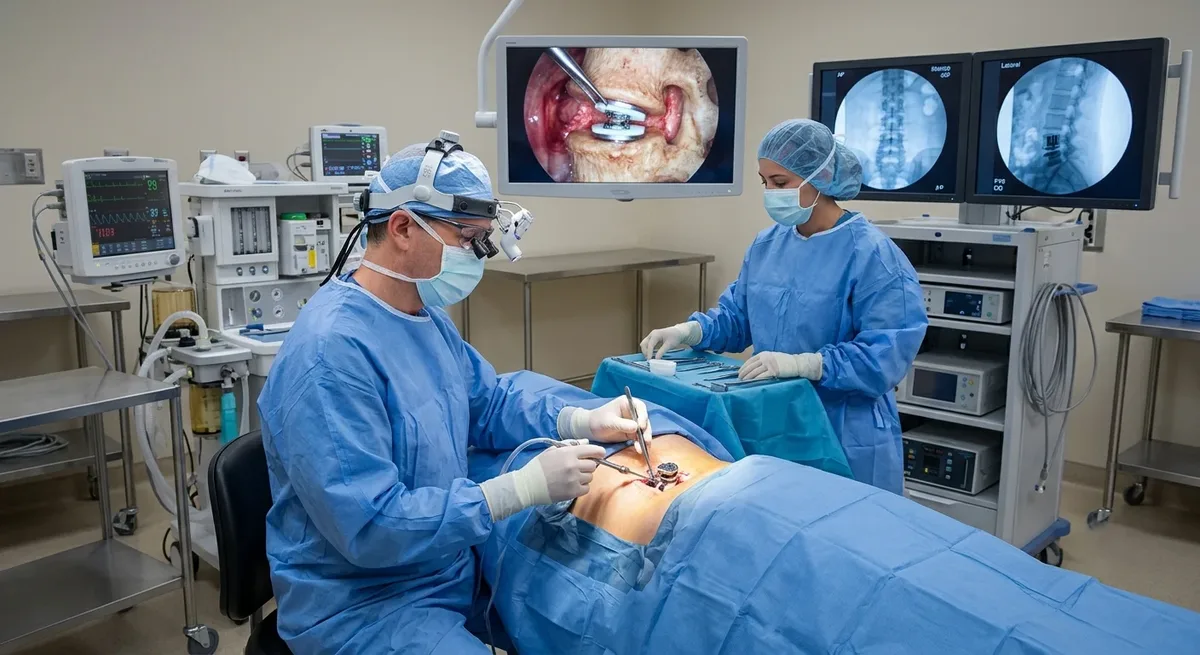
MISS relies on technology and carefully planned access corridors. Tubular retractors can separate rather than widely strip muscle, while microscopes or endoscopes provide magnified illumination of the operative field. Fluoroscopy, navigation and other image-guidance systems help the surgeon localize spinal anatomy and place instruments accurately.
- Small access corridors: specialized retractors allow surgery through limited skin and muscle openings.
- Magnified visualization: microscopes or endoscopes improve illumination and precision around nerves and other delicate structures.
- Image guidance: intraoperative imaging can assist localization and accurate placement of implants.
- Anatomy preservation: the approach aims to preserve normal muscle attachments and spinal biomechanics wherever possible.
See the technology
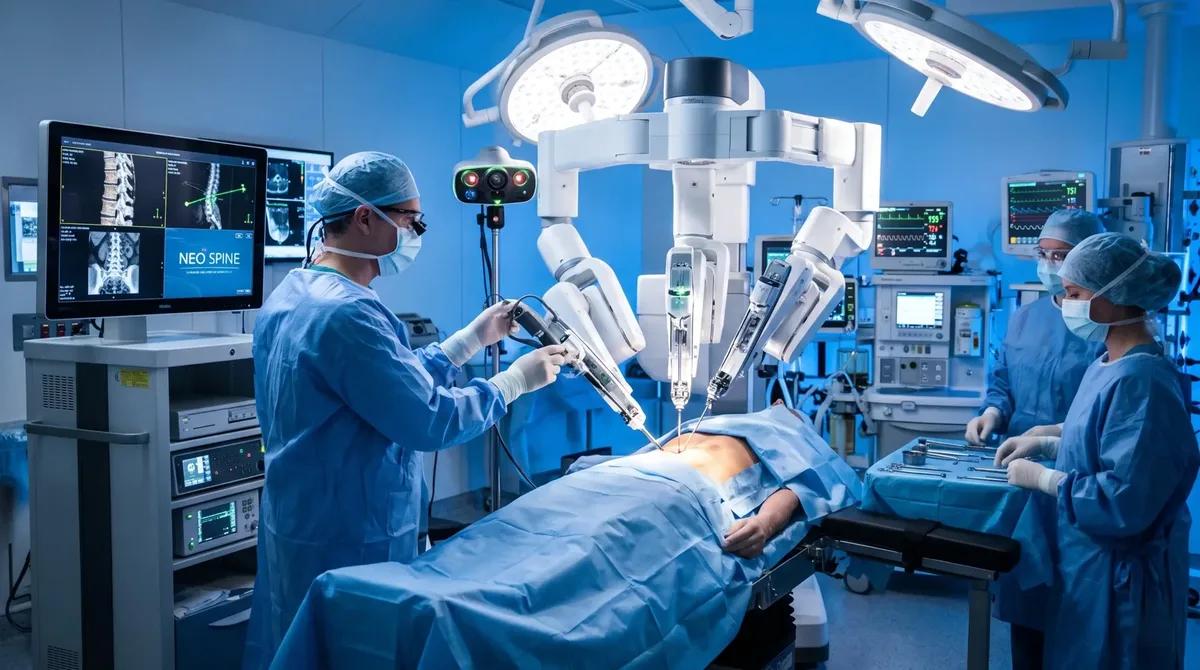
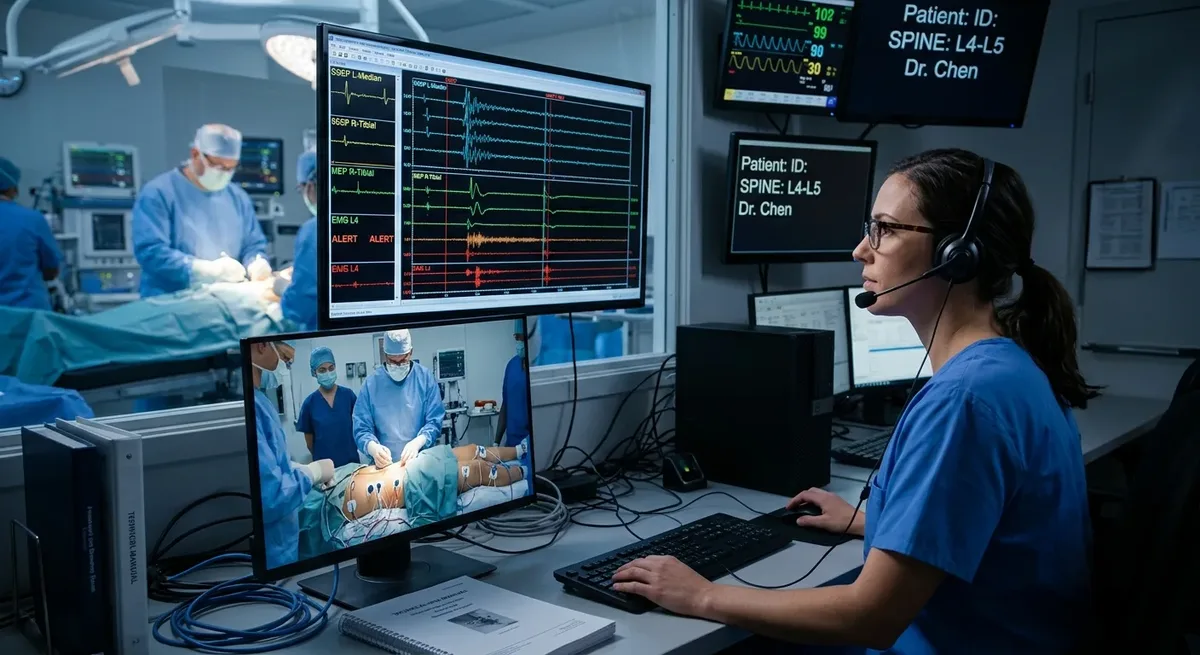
Images supplied by Neo Spine Clinic. Equipment and illustrations show the type of technology involved; Dr. Sharma will explain which tools your own operation needs.
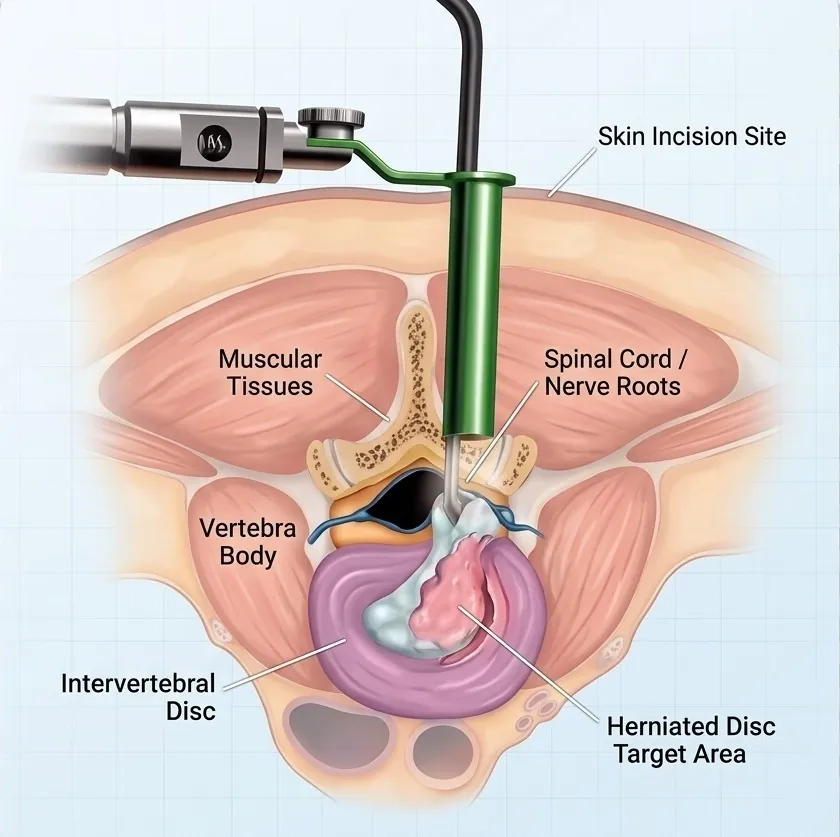
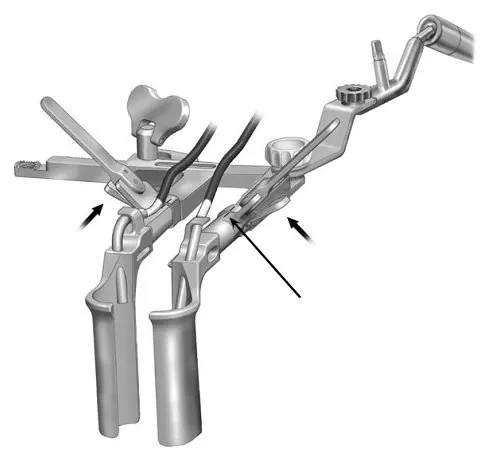 Enlarge image: Tubular retractor: separates the back muscles instead of stripping them, creating a small working corridor to the spine.
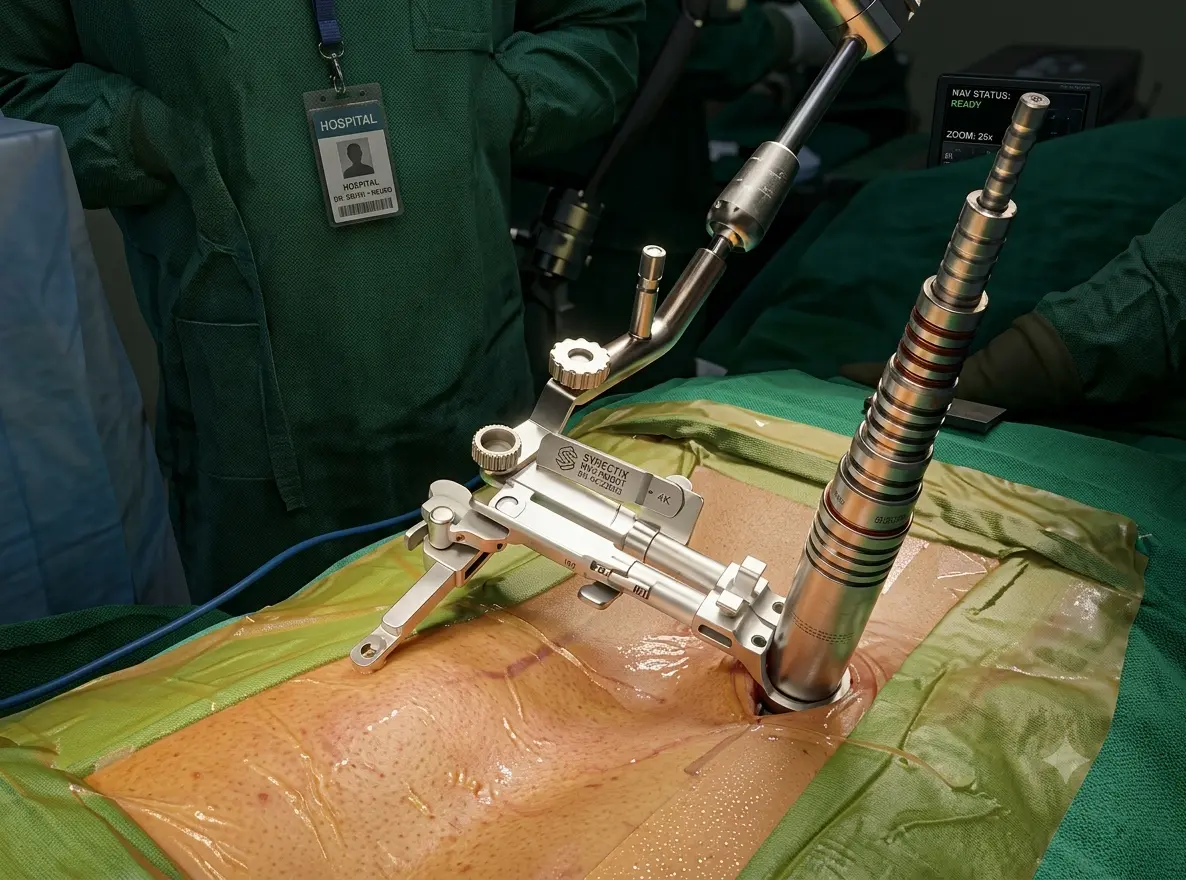 Enlarge image: A minimally invasive retractor in use during surgery.
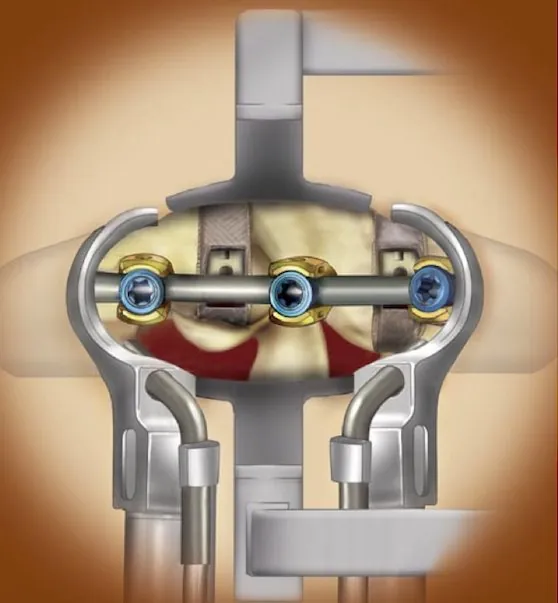 Enlarge image: Screws and rods placed through small incisions to stabilise the spine (illustration).
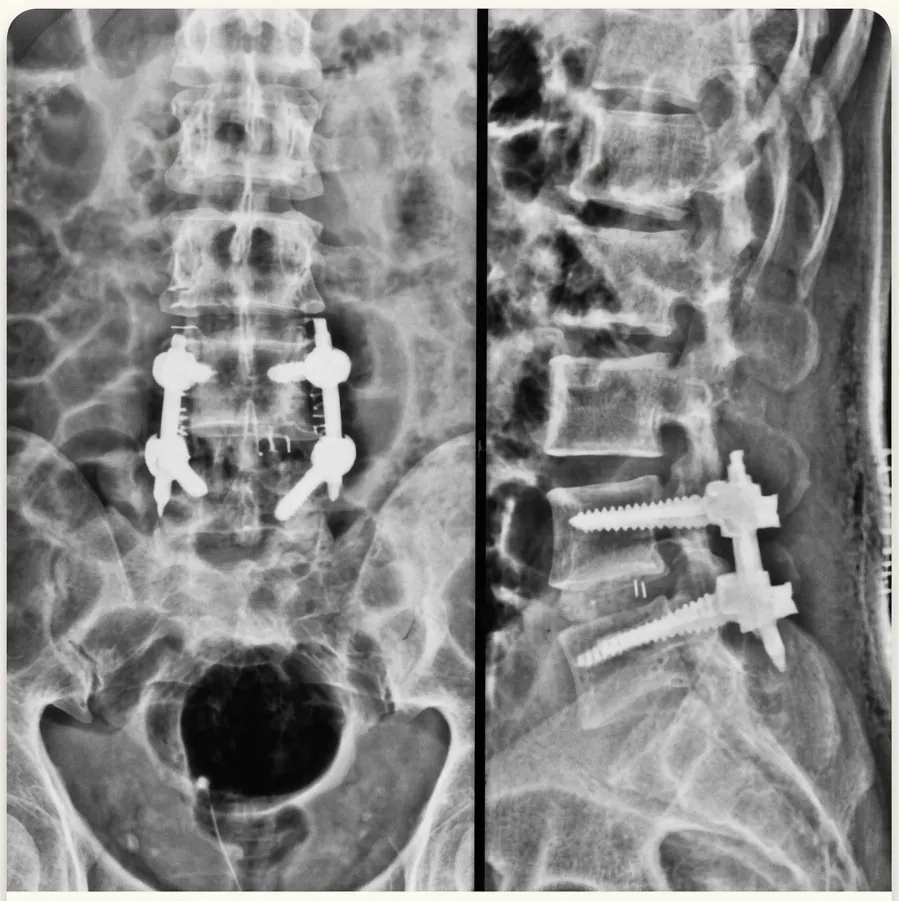
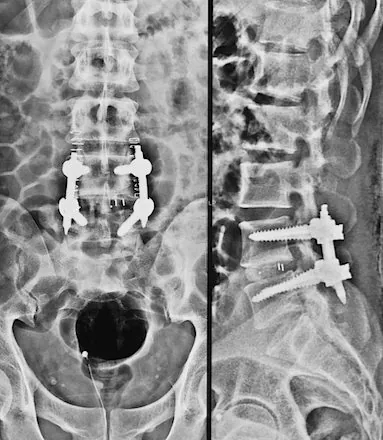 Enlarge image: X-rays after an L4–5 minimally invasive fusion (MIS TLIF): screws, rods and a spacer in the disc space.
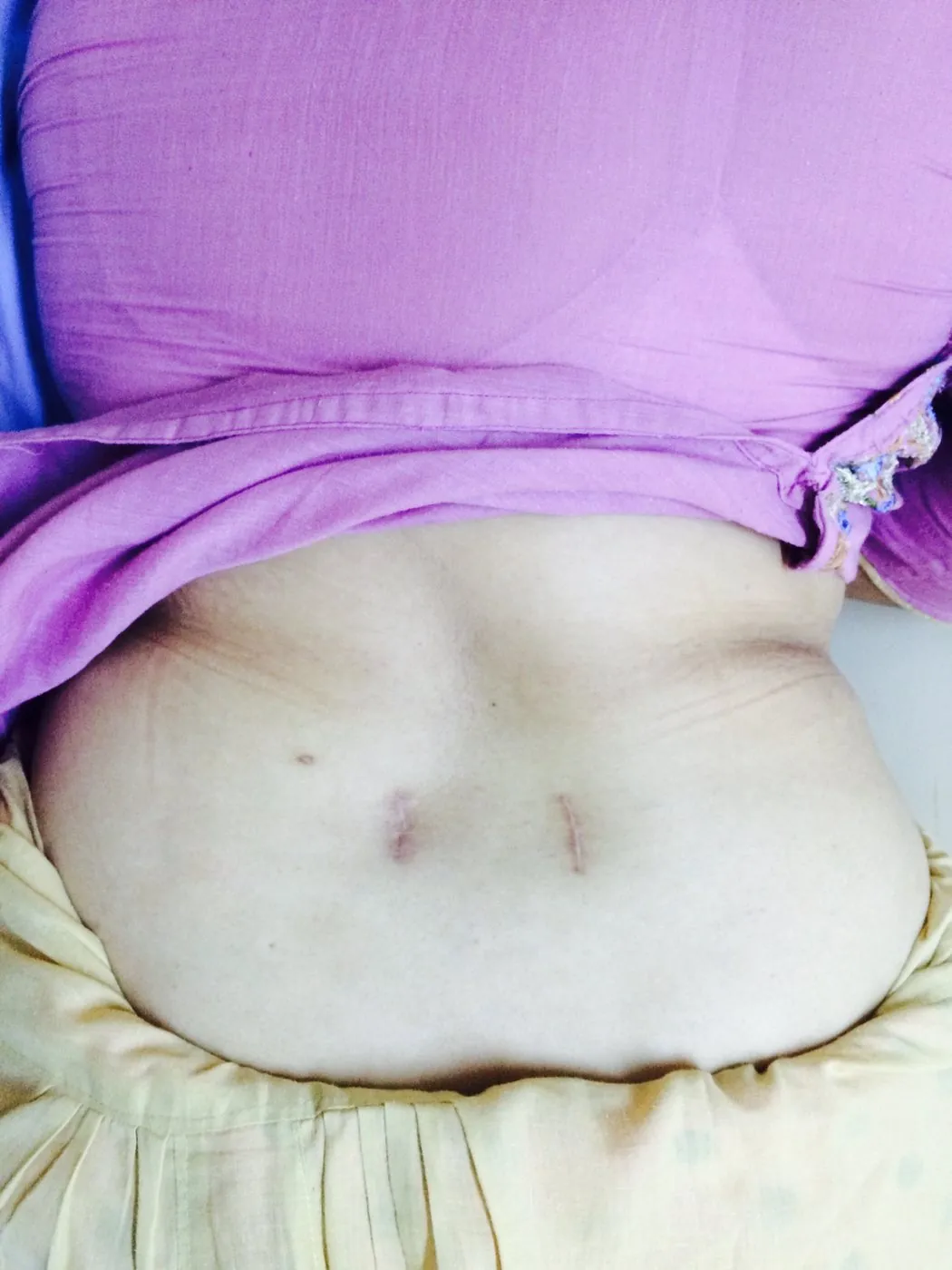 Enlarge image: Healed skin incisions after an MIS TLIF.
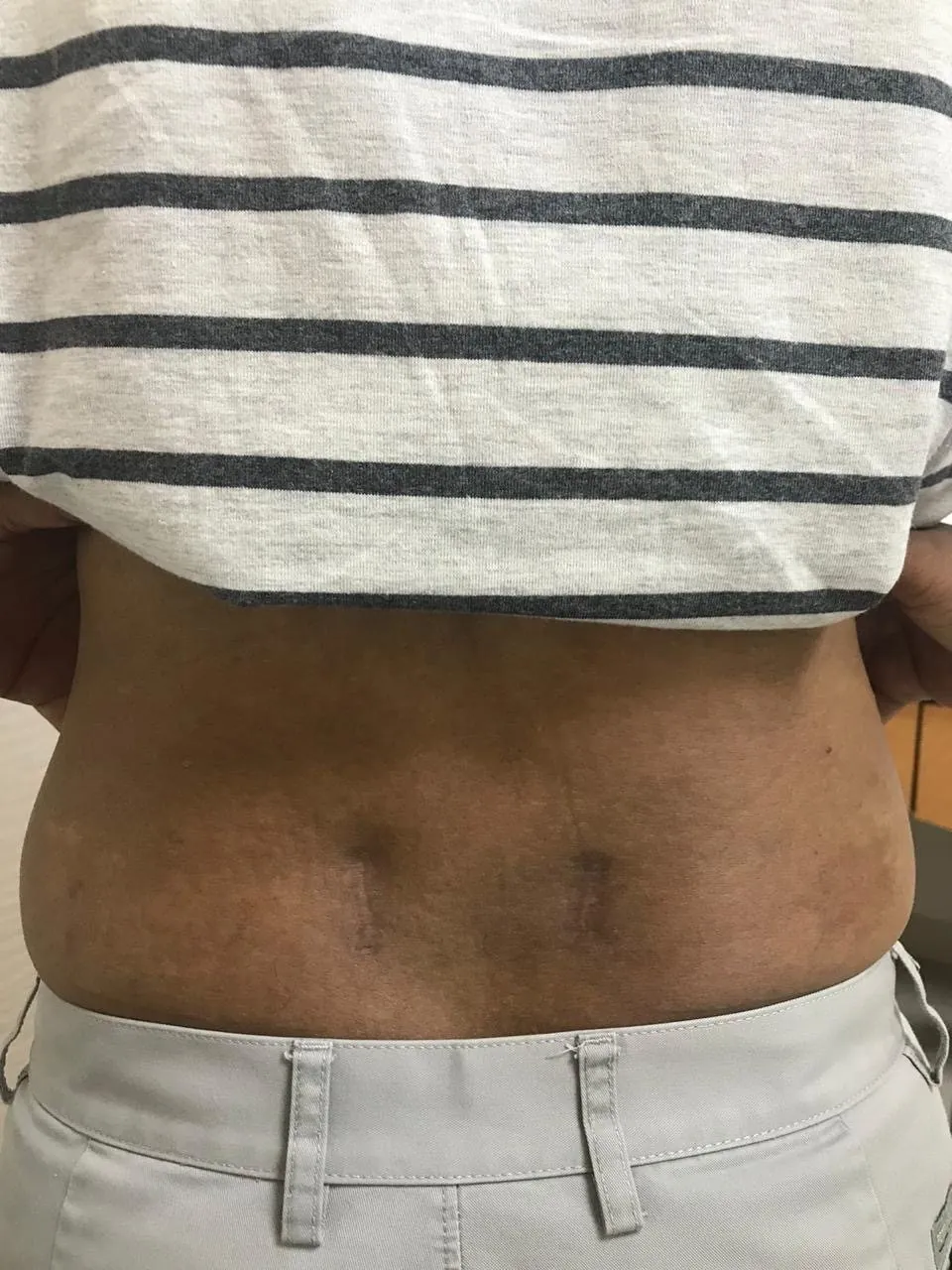 Enlarge image: Small skin incisions after a minimally invasive lumbar interbody fusion.
Advantages of Minimally Invasive Spine Surgery
| Potential Advantage | Clinical Benefit |
|---|---|
| Precision and visualization | Magnification, illumination and image guidance can support accurate dissection and instrumentation. |
| Less muscle disruption | Muscle-sparing access can reduce tissue trauma and help preserve normal biomechanics. |
| Smaller incisions | Usually produces smaller scars and reduced wound exposure. |
| Reduced blood loss | Limited tissue exposure can decrease operative blood loss in appropriately selected procedures. |
| Postoperative comfort | Less soft-tissue trauma may mean less postoperative pain and reduced need for pain medication. |
| Earlier mobilization | Patients may begin walking and rehabilitation earlier and often have shorter hospital stays. |
| Return to activity | Recovery to work and routine activities may be faster, depending on the procedure and underlying condition. |
Limitations and Challenges
MISS is not automatically the best option for every spinal problem. These operations can be technically demanding and require appropriate surgeon training, operating-room experience, specialized retractors, microscopes or endoscopes, and advanced imaging. Equipment and instrumentation can also increase treatment cost.
Conditions That May Limit a Fully Minimally Invasive Approach
- Severe multilevel spinal stenosis or extensive compression
- High-grade spondylolisthesis
- Complex multilevel degenerative disc disease
- Major deformity requiring extensive correction
- Certain tumors, widespread infection or other pathology requiring broad exposure
- Complex anatomy or substantial scar tissue after previous operations
The smallest incision is not the goal
Adequate nerve decompression, safe correction and durable stabilization come first. An open or hybrid approach is preferable when it provides better control for a complex pathology.
Types of Minimally Invasive Spine Surgery
Minimally invasive principles can now be applied to many procedures throughout the cervical, thoracic and lumbar spine, as well as selected fracture and sacroiliac-joint treatments.
Procedures by Spinal Region
Cervical spine (neck)
- Anterior Cervical Discectomy and Fusion (ACDF)
- Anterior Cervical Corpectomy and Fusion (ACCF)
- Posterior cervical decompression and fusion
- Cervical microforaminotomy
Thoracic spine (mid-back)
- Anterior thoracic discectomy and corpectomy
- Posterior thoracic decompression and instrumentation
Lumbar spine (lower back)
- Microdiscectomy for herniated disc material compressing a nerve
- Minimally Invasive Transforaminal Lumbar Interbody Fusion (MIS-TLIF)
- Anterior Lumbar Interbody Fusion (ALIF)
- Extreme Lateral Interbody Fusion (XLIF)
- Oblique Lateral Interbody Fusion (OLIF)
- Percutaneous pedicle-screw fixation
- Sacroiliac-joint fusion
Vertebral compression fractures
- Kyphoplasty and vertebroplasty for selected fractured vertebrae
MISS Principles in Modern Spine Surgery
Not every condition can be treated through a completely minimally invasive operation. However, modern open spine surgery increasingly incorporates the same principles: smaller targeted exposure, preservation of healthy muscle, careful tissue handling and precise instrumentation. Because of this evolution, the recovery difference between a formal MISS procedure and a well-executed modern open procedure may be smaller in some cases than the labels suggest.
Technique should follow pathology
MISS is a surgical tool, not a diagnosis or a guarantee of faster recovery. The correct operation is the least disruptive approach that still treats the actual spinal problem completely and safely.
Choosing the Right Surgical Approach
The decision between minimally invasive, open or hybrid surgery should follow a complete assessment rather than a preference for one technique. Important factors include:
- MRI, CT and standing or dynamic X-rays when indicated
- A detailed neurological examination
- The location, severity and number of spinal levels involved
- Whether the goal is decompression, fusion, deformity correction or a combination
- Bone quality, previous surgery and other medical conditions
- The patient's functional goals and expectations
When appropriately selected and performed by an experienced spine surgeon, minimally invasive techniques can achieve effective decompression and stabilization while reducing unnecessary tissue trauma and supporting earlier recovery.
Frequently Asked Questions
Who is a good candidate for MISS?
Patients with persistent leg or back pain from disc herniation or stenosis, degenerative disc disease that hasn't responded to conservative treatment, or spinal instability needing fusion. Severe osteoporosis, widespread infection, or certain tumours may rule it out.
Who is not a good candidate?
Patients with severe spinal deformities needing extensive correction, large tumours, complex multi-level pathology, or heavy scar tissue from previous surgery — these often need an open approach for better access and control.
What does it cost in India?
Typically ₹1.5–4.5 lakh nationally, depending on the procedure, hospital, and surgeon. In Mumbai specifically, costs generally run ₹2–5 lakh, with high-end centres or robotic/navigation assistance at the upper end.
How long does recovery take?
Most patients walk within 24–48 hours, resume light activity in 1–2 weeks, and return to work in 2–4 weeks. Full fusion healing takes about 3–6 months, often alongside physiotherapy.
What does the scar look like?
Typically small — about 1–2cm — healing quickly with low infection risk, and fading to be barely noticeable over time, unlike the longer scars from open surgery.
Is MISS safe, and what results can I expect?
Like any operation it carries risks, which are discussed before surgery. Compared with open surgery it usually involves less blood loss and muscle damage and a lower infection rate. Results depend on the condition, its severity and the procedure; Dr. Sharma will discuss what to expect in your case.
This page is general education written by Dr. Amit Sharma. Whether a technique suits you depends on your diagnosis, imaging and overall health, and is decided at an individual consultation.