See the technology
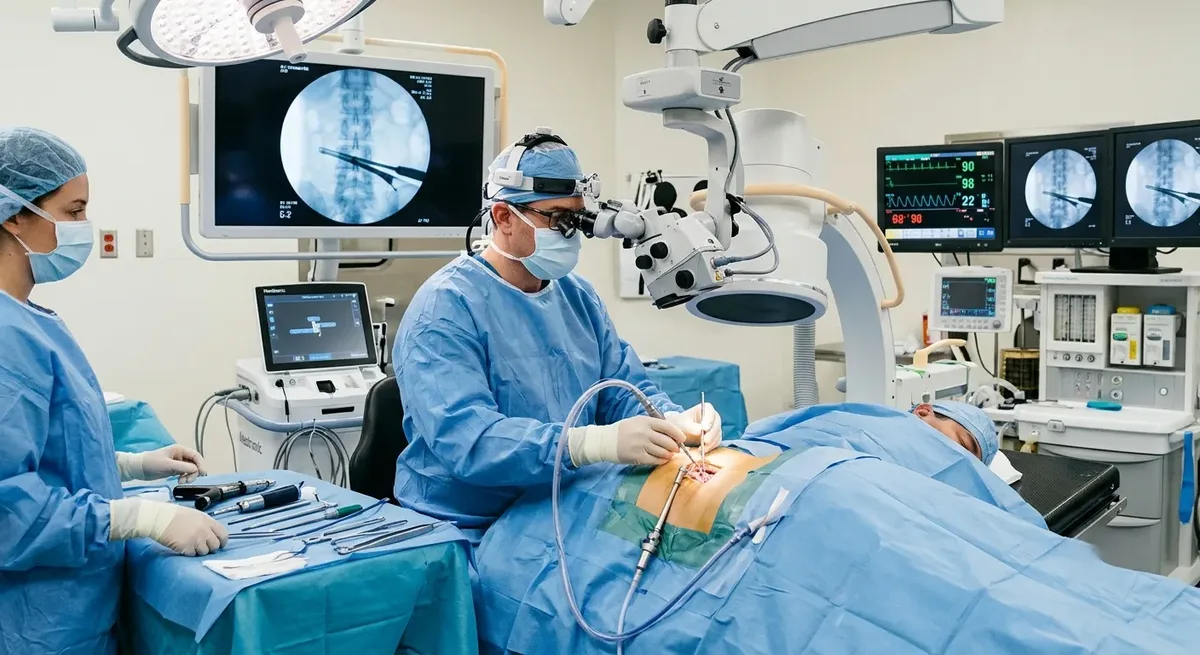
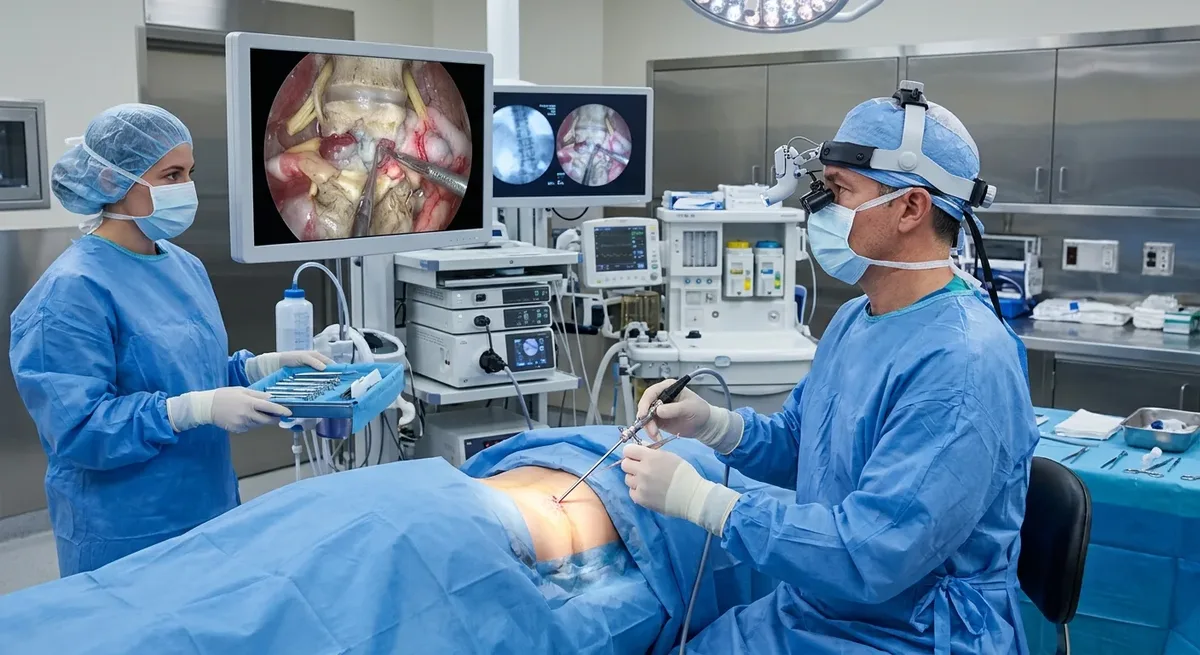
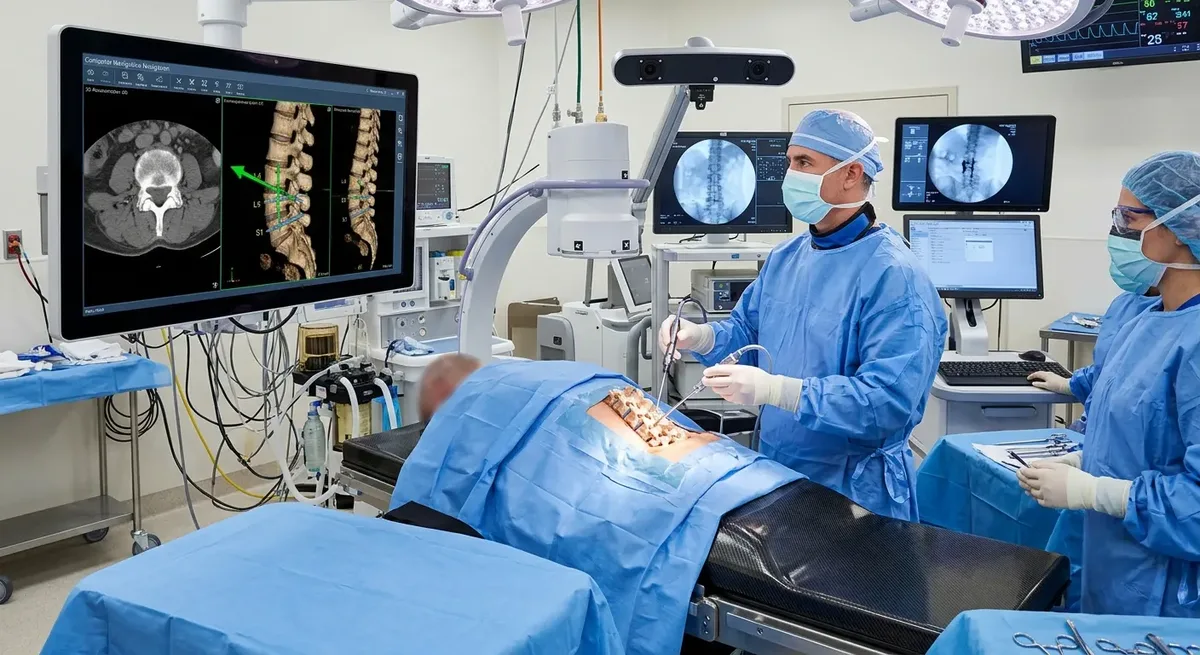
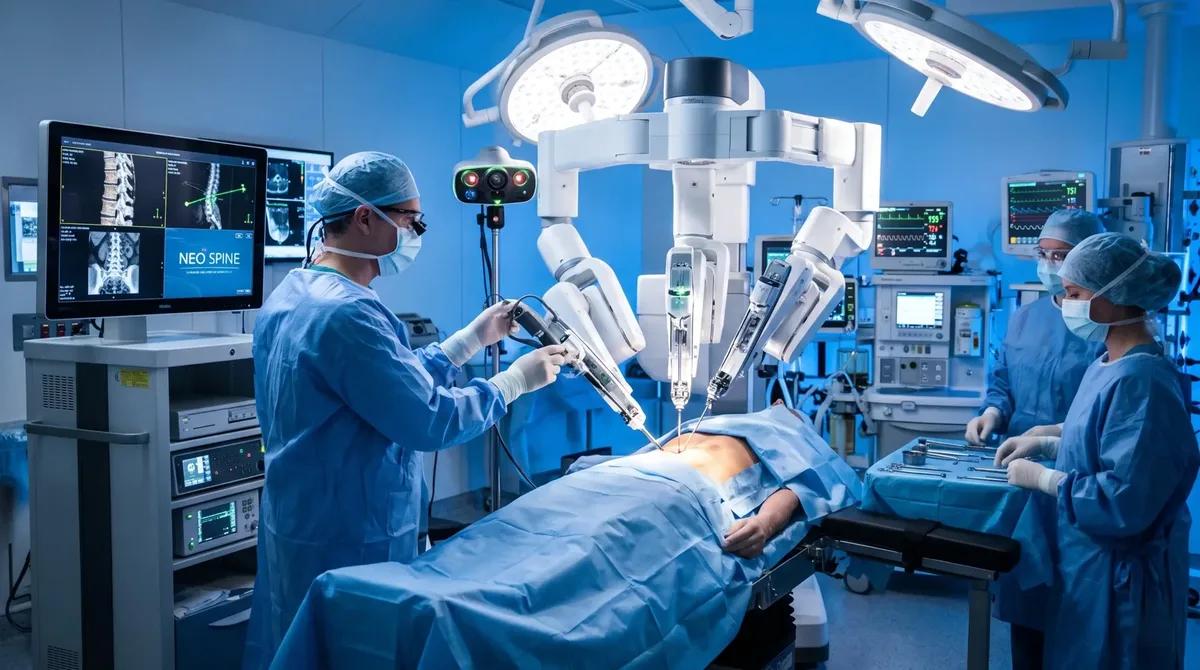
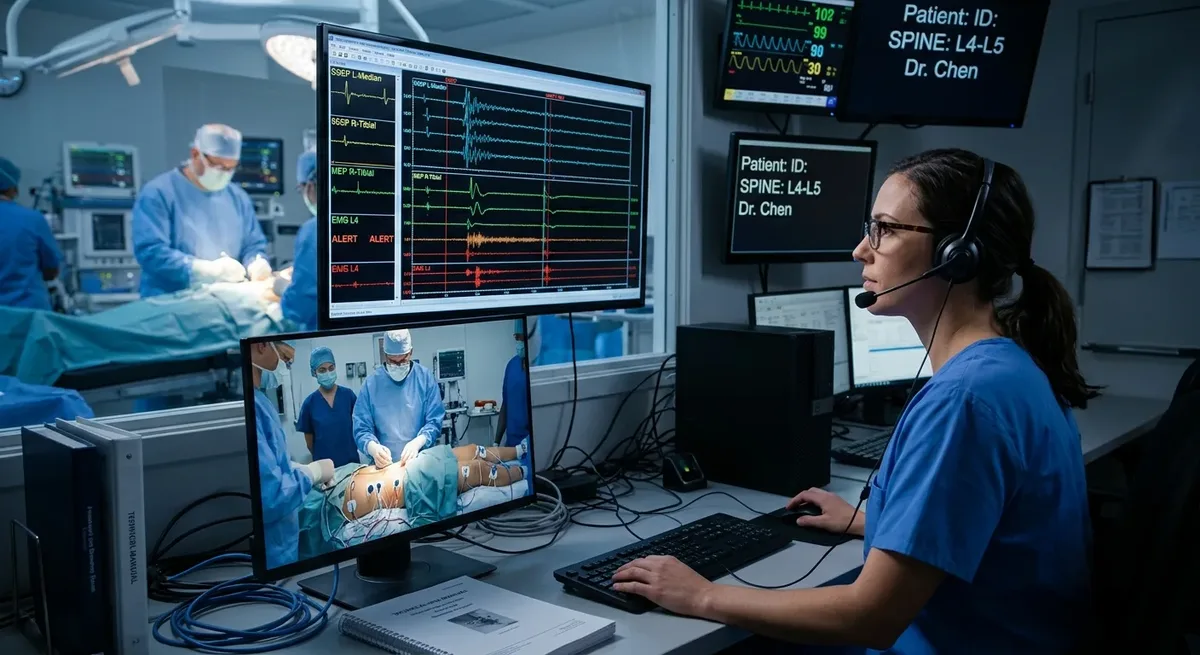
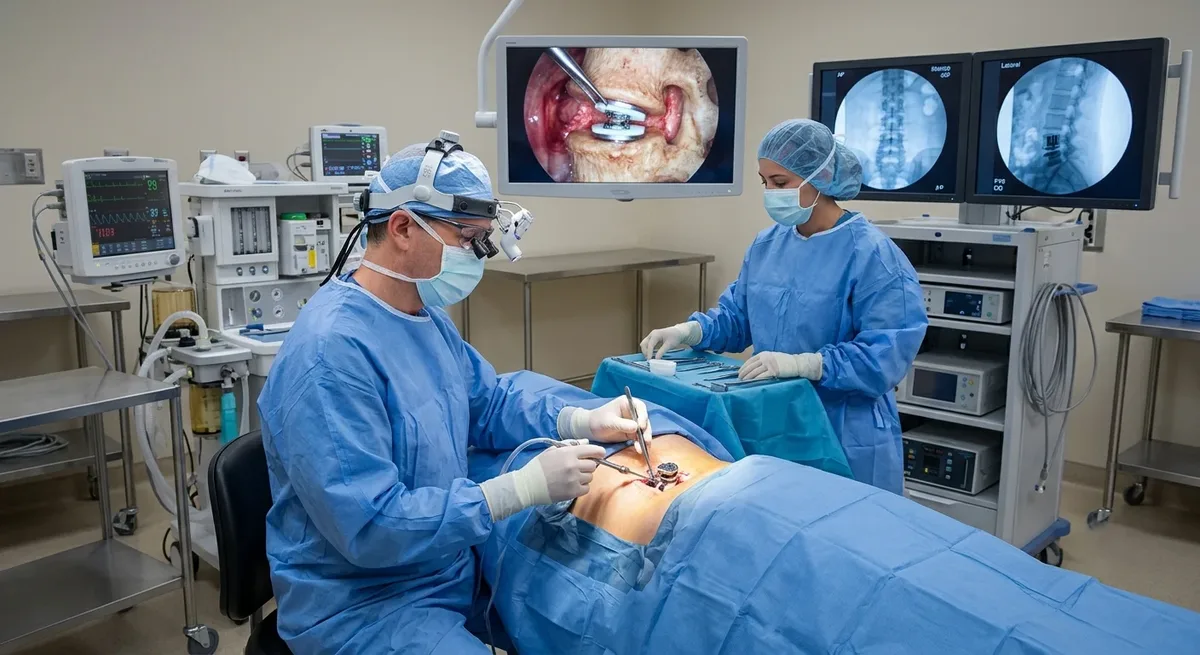
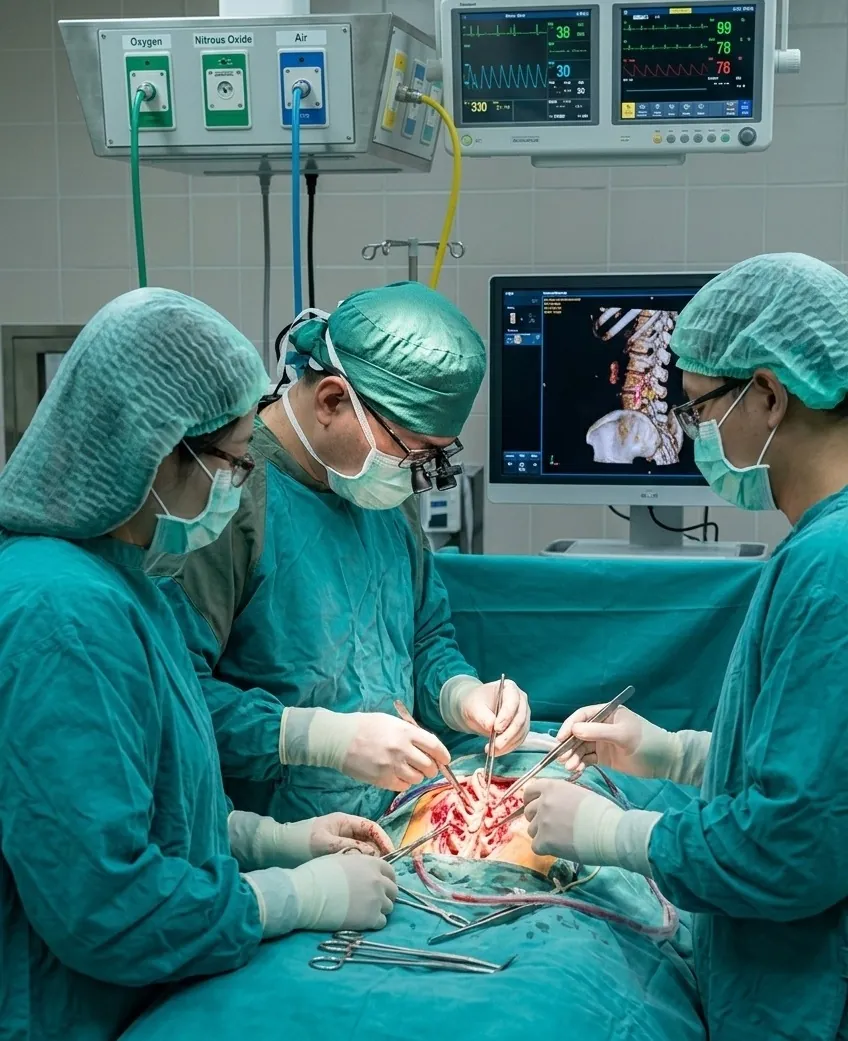
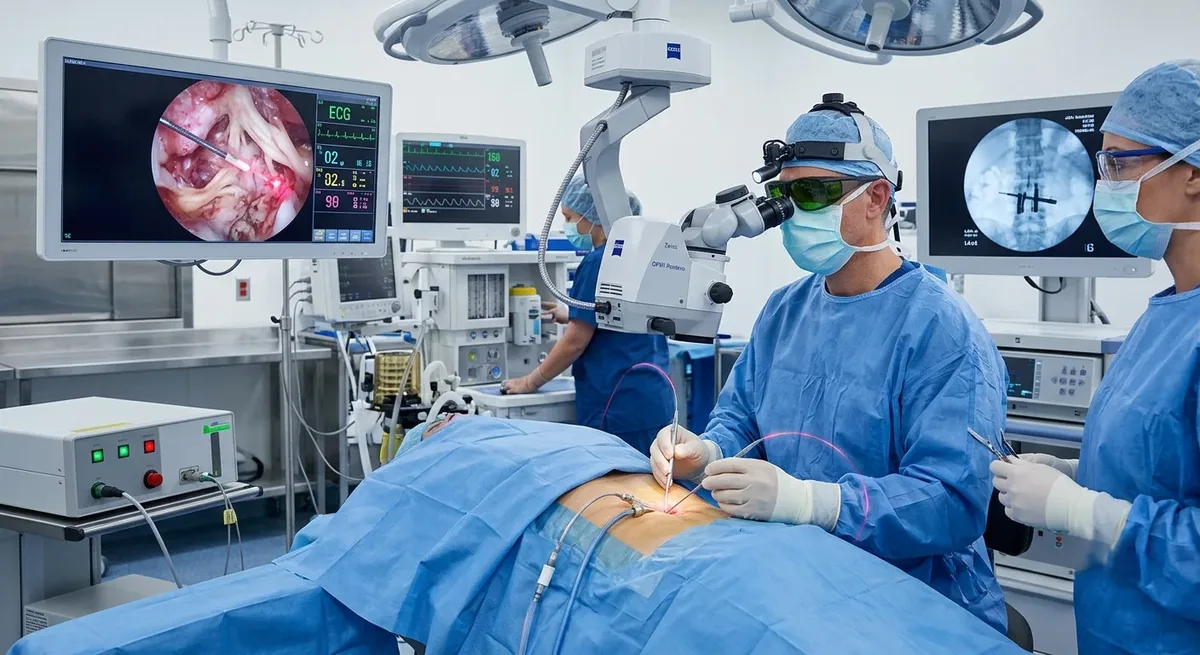
Images supplied by Neo Spine Clinic. Equipment and illustrations show the type of technology involved; Dr. Sharma will explain which tools your own operation needs.
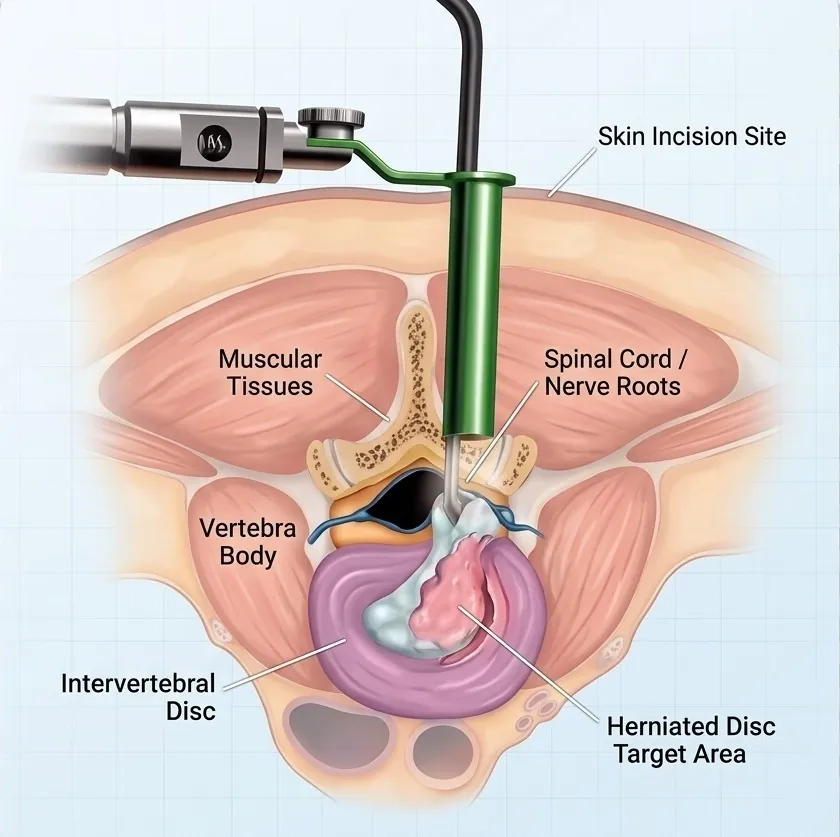
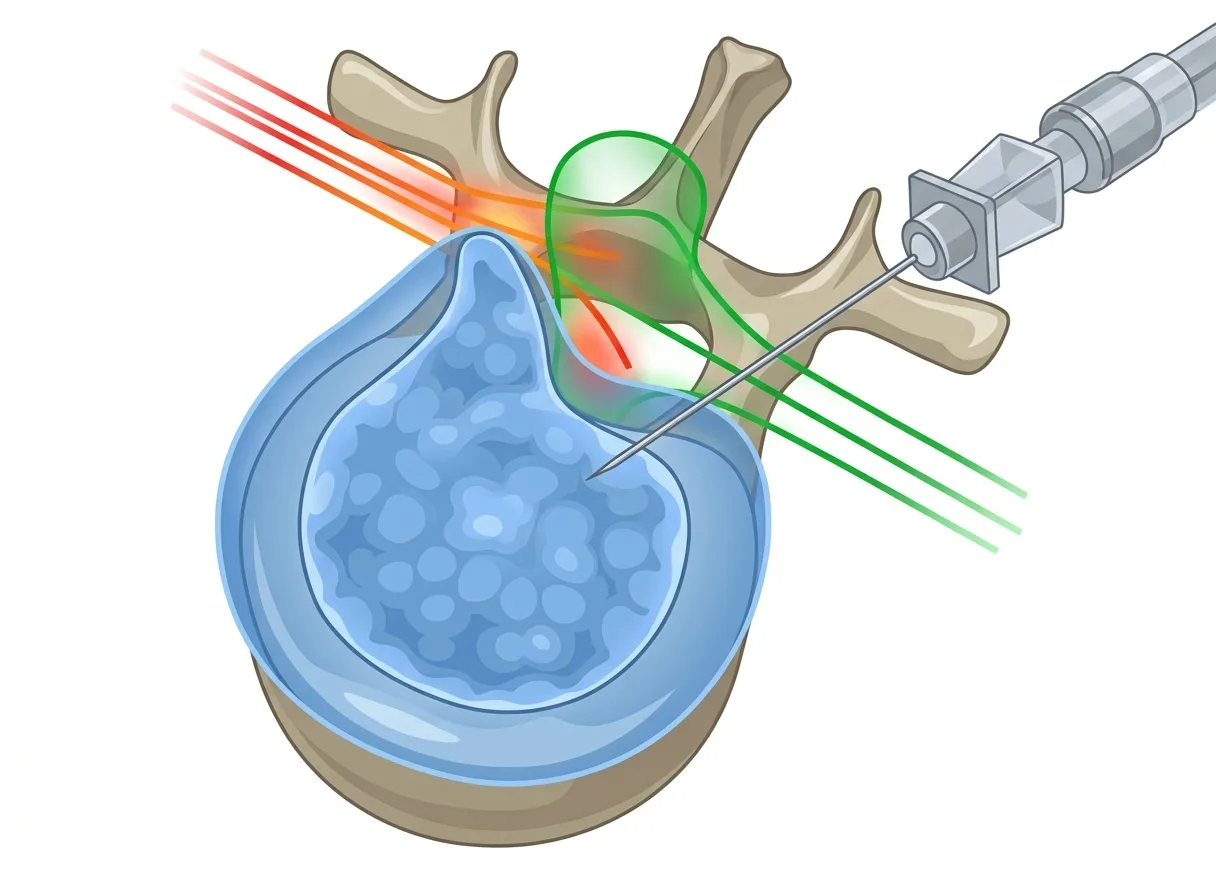 Enlarge image: LASER energy delivered to a disc through a fine probe (illustration).
What Is LASER Spine Surgery?
“LASER spine surgery” is a term commonly used for less invasive spinal procedures, but LASER—Light Amplification by Stimulated Emission of Radiation—is a type of concentrated light energy, not a complete surgical technique by itself. In spine care, LASER energy may be delivered through a specialized probe as one tool within a carefully selected procedure.
Some LASER-based procedures can be performed through a small access route under local anaesthesia and may be suitable as day-care treatment. The important question, however, is not whether a procedure uses LASER; it is whether the underlying spinal problem can be treated adequately and safely with that method.
LASER is a tool—not a universal replacement for spine surgery
Its role is limited to selected pathologies. Complex nerve compression or instability may require endoscopic, microscopic, other minimally invasive or conventional surgical techniques instead.
How LASER Treatment Works
LASER energy produces controlled heat at the treatment site. Depending on the indication, that energy may be used to reduce disc volume, act on pain-sensitive tissue or assist removal of small compressive structures during another minimally invasive procedure.
| Mechanism | Intended Effect |
|---|---|
| Disc shrinkage | Heating selected disc tissue can reduce its volume and lower pressure from a small contained protrusion. |
| Action on pain-sensitive nerve endings | Thermal energy may reduce pain arising from selected degenerated disc tissue. |
| Local tissue treatment | LASER may be used to treat selected tissue around a compressed nerve as part of a decompression procedure. |
Uses of LASER in Spine Treatment
Selected Uses
Lumbar disc prolapse
In selected contained disc herniations, energy delivered inside the disc can shrink disc material and reduce pressure on a nearby nerve.
Discogenic back pain
Thermal treatment may act on small pain-sensitive nerve endings within selected degenerated discs.
Inflammatory irritation around a nerve root
Treatment of selected disc material may reduce local irritation associated with pain, tingling or other nerve symptoms.
LASER as an Adjunct to Endoscopic Spine Surgery
LASER energy can also be used alongside endoscopic spine surgery rather than as a stand-alone treatment. Through the endoscopic working channel, the surgeon has direct visualization and may use LASER selectively to assist with small fragments of disc, ligament or bone contributing to nerve compression.
In this setting, the endoscope provides visualization and access while LASER is one of several possible instruments used for precise tissue treatment. The surgical objective remains adequate nerve decompression with minimal unnecessary tissue disruption.
Limitations and Disadvantages
| Limitation | Why It Matters |
|---|---|
| Thermal tissue injury | Poorly controlled or inaccurately targeted heat can damage healthy tissue, including neural structures. |
| Incomplete decompression | LASER alone may not remove enough compressive tissue when stenosis or disc pathology is extensive. |
| Disc damage | Excess thermal injury can affect disc structure and may contribute to further degeneration. |
| Narrow indications | The technique is best suited to selected problems and cannot replace more complete decompression or stabilization when those are required. |
A smaller procedure is not automatically the better procedure
If LASER cannot adequately address the actual source of compression or instability, choosing it simply because it sounds less invasive may leave the underlying problem insufficiently treated.
Who May Be Suitable?
LASER-based treatment may be considered in carefully selected patients, particularly when the pathology is limited and imaging findings match the symptoms.
Situations That May Be Considered
- Small, contained lumbar disc herniation.
- Selected mild discogenic pain that has not improved adequately with conservative care.
- A patient suitable for a minimally invasive or day-care procedure where LASER can realistically achieve the required treatment goal.
Suitability cannot be decided from the word “disc prolapse” alone. The size and location of the disc problem, degree of nerve compression, neurological findings and presence of instability or stenosis all matter.
Choosing the Right Treatment
Before considering LASER treatment, the diagnosis and imaging should be reviewed by a spine specialist. The consultation should compare the expected benefit and limitations of LASER with non-surgical treatment, endoscopic decompression, microscopic surgery and other appropriate options.
LASER can be useful in selected circumstances, but it is not a one-size-fits-all solution and should not be presented as a replacement for every established spine procedure. The treatment should be chosen according to the pathology and long-term goal, not according to the technology name.
Frequently Asked Questions
What is LASER spine surgery and how is it different from traditional surgery?
LASER uses focused light energy as a treatment tool in selected minimally invasive procedures. Traditional open surgery uses a larger exposure when necessary to directly decompress or stabilize the spine. LASER is suitable only for specific pathologies and cannot replace adequate decompression in complex disease.
Is LASER safe and effective for a herniated disc?
It may help selected small, contained disc herniations when the symptoms and imaging are appropriate. It is not suitable for every herniation, particularly when more extensive mechanical decompression is required.
Who is a good candidate?
Potential candidates include selected patients with a small contained lumbar disc herniation or mild discogenic pain that has not responded to conservative treatment.
What are the risks and disadvantages?
Important limitations include thermal injury to healthy tissue, incomplete decompression and possible damage to disc structure, as well as the fact that indications are relatively limited.
What is the recovery time?
Some selected LASER procedures are performed as day-care treatment with early mobilization, but recovery varies with the exact procedure, symptoms and underlying spinal condition.
Is LASER used during endoscopic spine surgery?
Yes. It can be used as an adjunct through an endoscope to assist precise treatment of selected disc, ligament or bony tissue while the surgeon works under direct visualization.
This page is general education written by Dr. Amit Sharma. Whether a technique suits you depends on your diagnosis, imaging and overall health, and is decided at an individual consultation.