See the technology
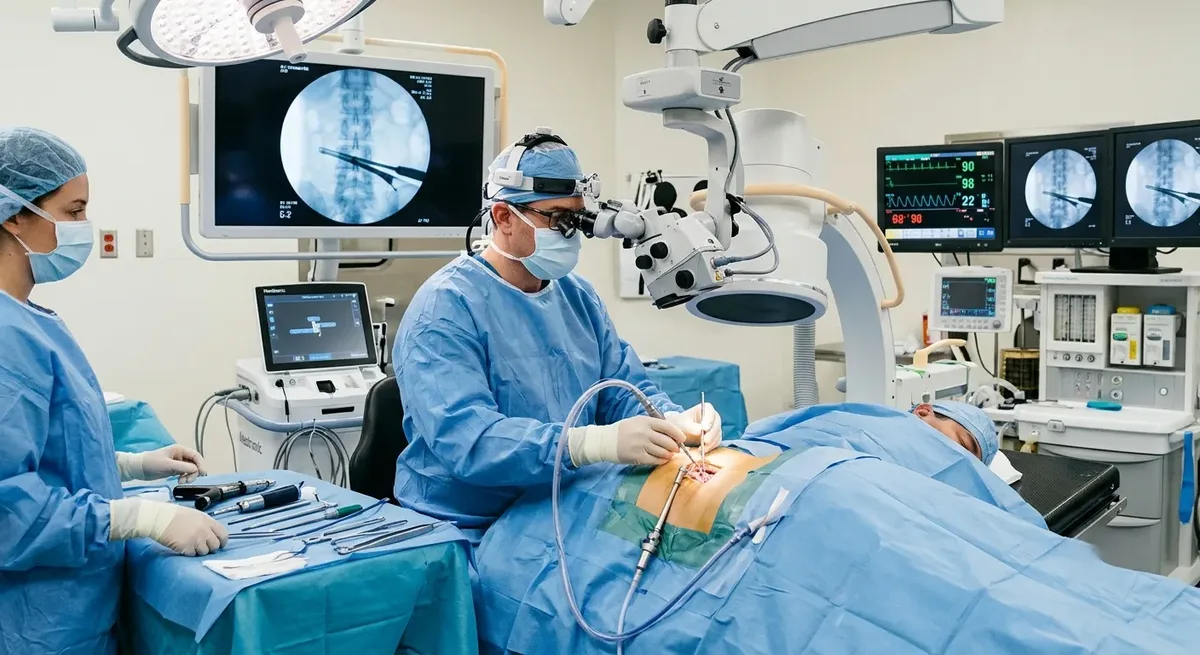
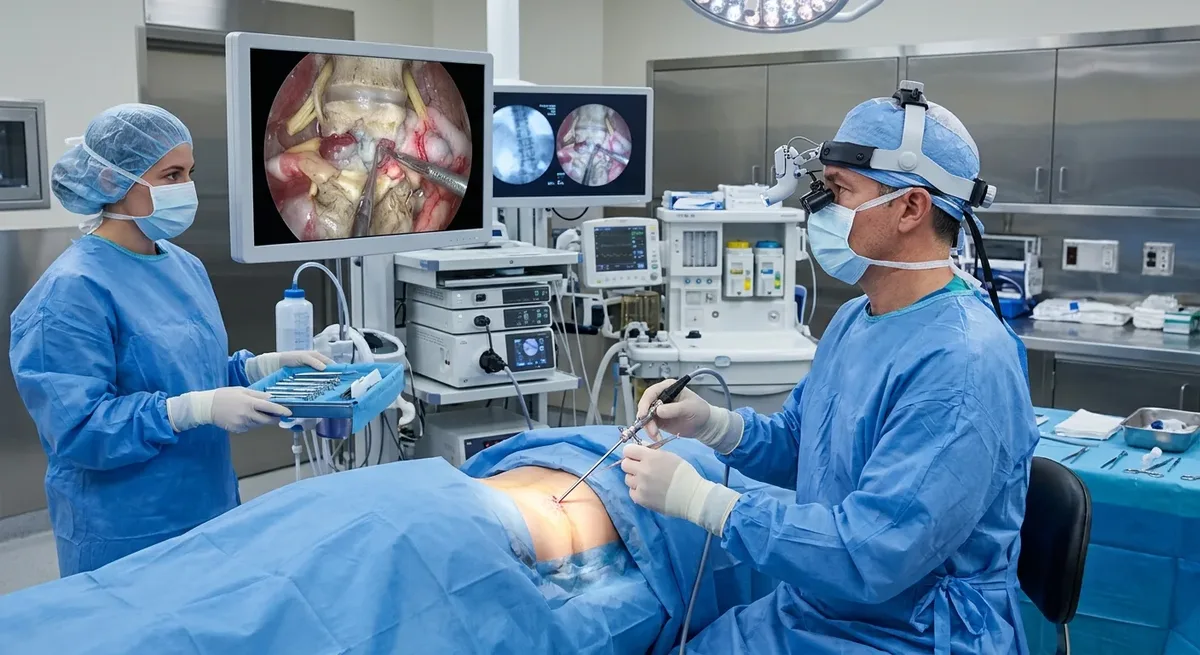
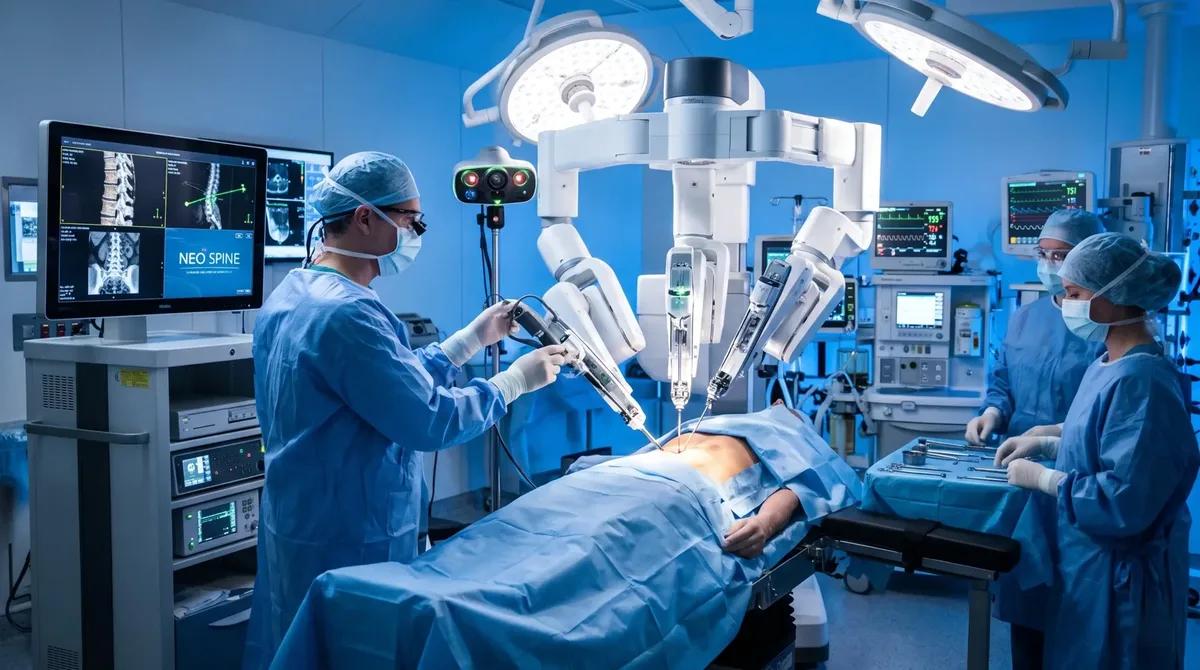
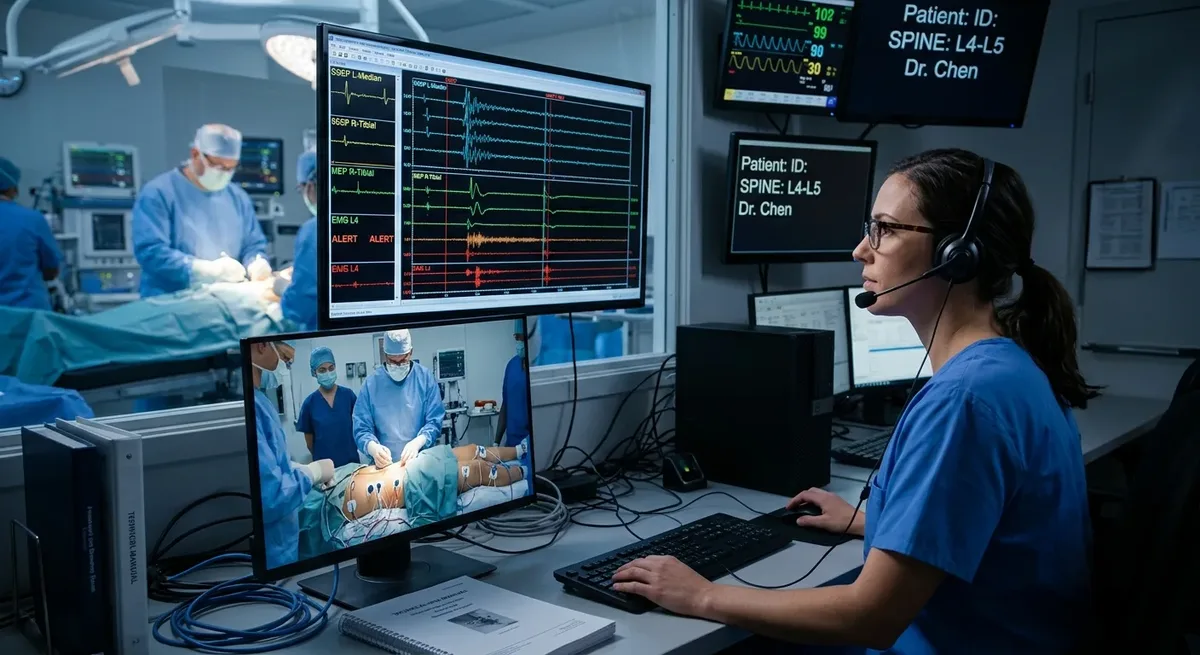
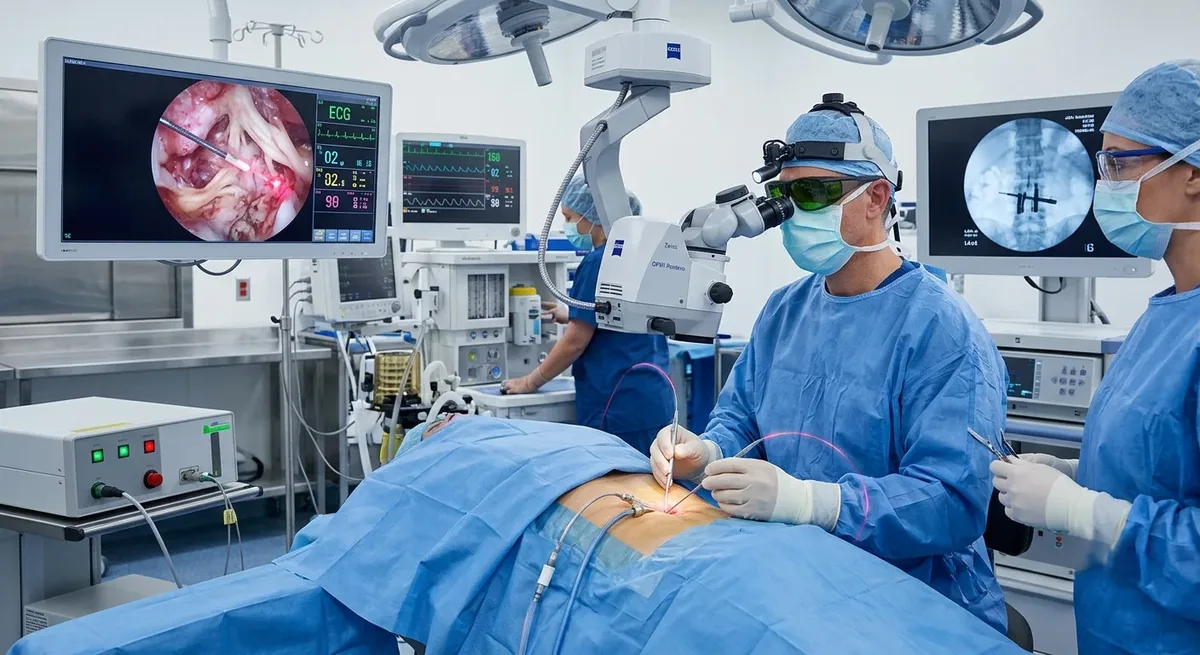
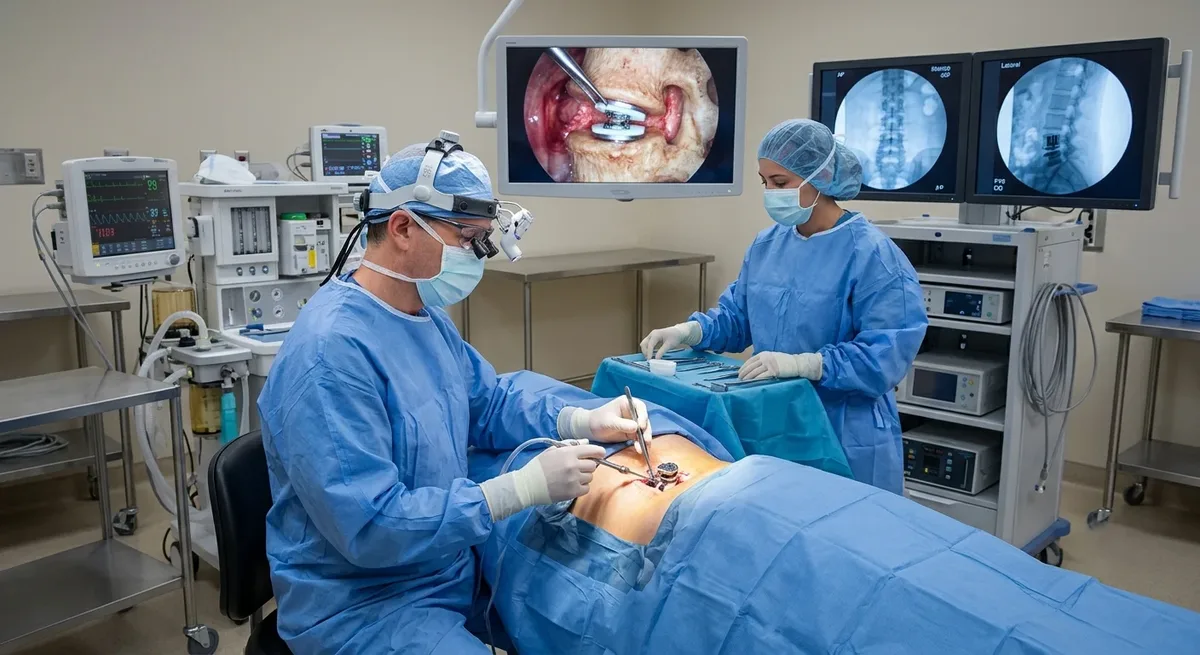
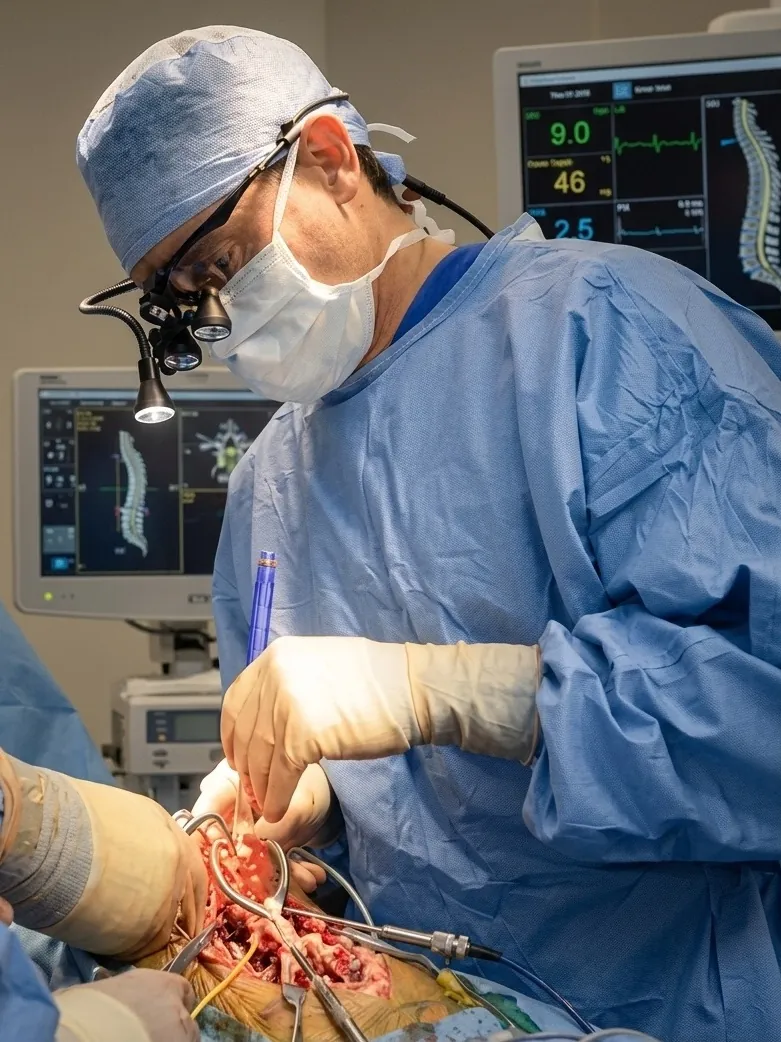
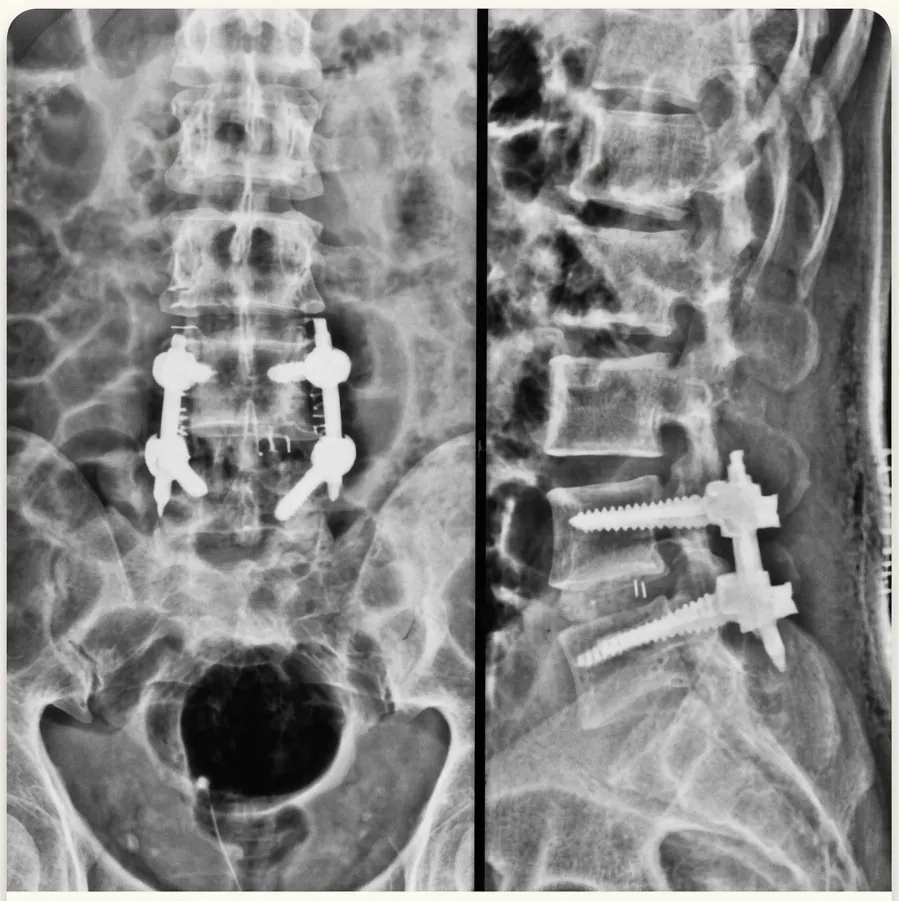
Images supplied by Neo Spine Clinic. Equipment and illustrations show the type of technology involved; Dr. Sharma will explain which tools your own operation needs.
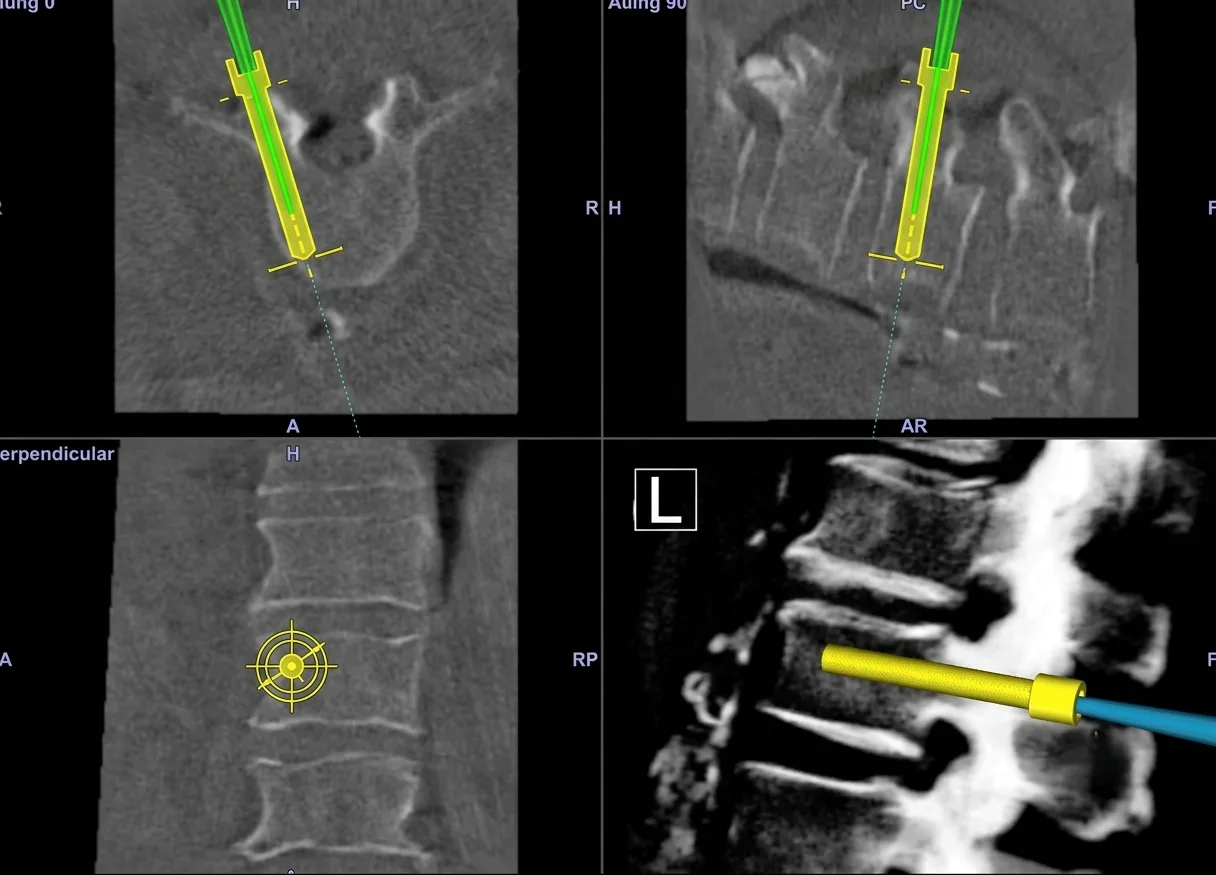 Enlarge image: Navigation screen: the planned screw path is shown on the patient's own 3D scan in several planes.
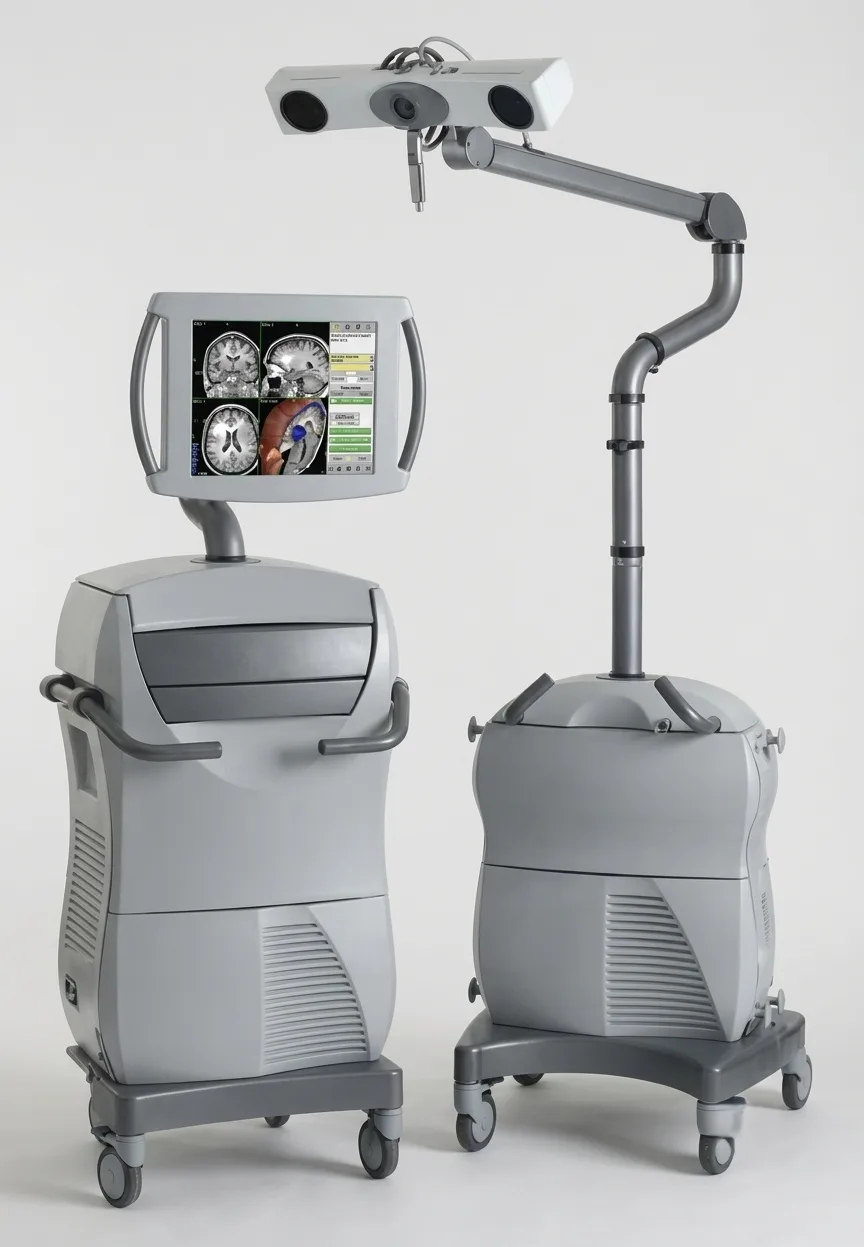 Enlarge image: A spinal navigation system: tracking camera and planning workstation.
What Is Computer-Assisted Spine Surgery?
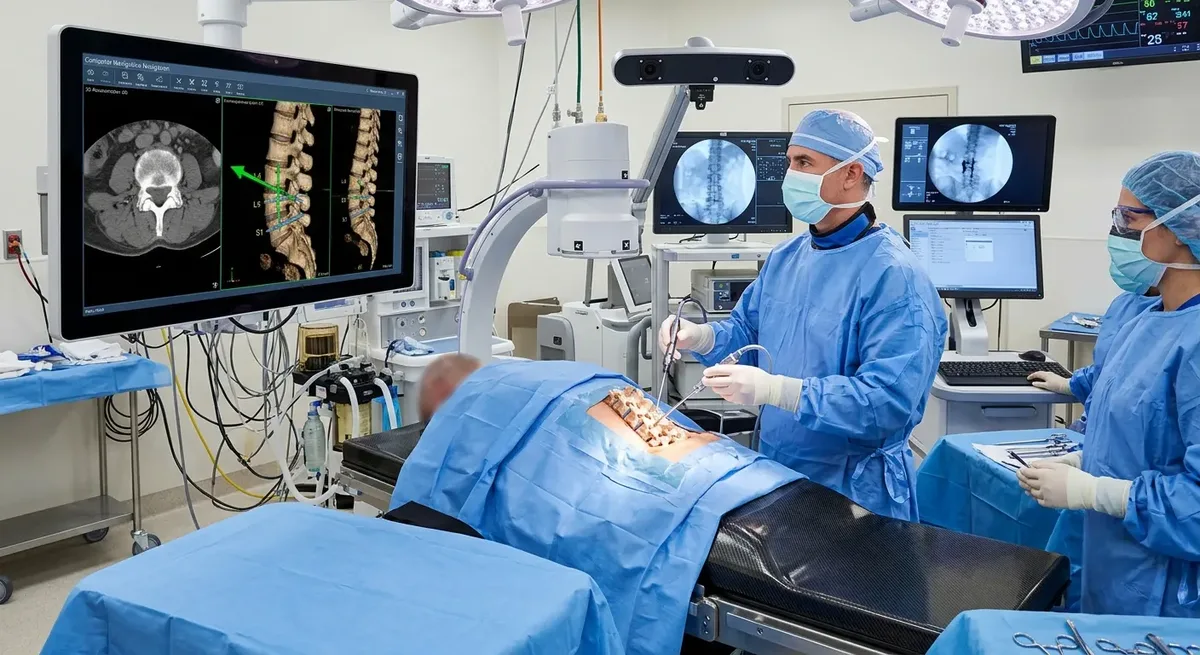
Computer-assisted spine surgery uses advanced imaging and navigation technology to improve the accuracy of spinal instrumentation, particularly the placement of pedicle screws and other implants. Instead of relying only on visible anatomical landmarks, the surgeon can see the position and direction of tracked instruments relative to the patient's spine on a monitor in real time.
Navigation is a guidance system, not an autonomous surgeon
The technology improves visualization and precision, but the operation remains planned, performed and controlled by the spine surgeon.
How Computer Navigation Works
The process starts with detailed imaging of the spine. This may come from a pre-operative CT scan or from imaging acquired during surgery with systems such as an O-arm or C-arm. Specialized software processes the images and reconstructs a three-dimensional representation of the relevant spinal anatomy.
Navigation Workflow
- CT or intra-operative fluoroscopic images are obtained.
- The navigation software reconstructs the spinal anatomy in 3D.
- Infrared reference markers are attached to the patient and tracked surgical instruments.
- The system continuously calculates the instrument position relative to the spine.
- The surgeon follows the live display to plan trajectories and place screws or implants with greater precision.
This image-based guidance is especially valuable when normal landmarks are difficult to see through a small incision or have been altered by deformity or previous surgery.
What Is Robotic Spine Surgery?
Robotic spine surgery builds on computer navigation by adding a robotic arm or positioning system. The screw trajectory is planned using the imaging data, and the robotic system aligns a guide with the intended direction and depth. The surgeon then performs the instrumentation through that planned corridor.
| Technology | Primary Role | Surgeon's Role |
|---|---|---|
| Computer navigation | Tracks instruments and displays their position against 3D spinal anatomy. | Chooses the trajectory and manually guides the instruments using navigation feedback. |
| Robotic assistance | Positions a mechanical guide according to a pre-planned trajectory. | Plans, supervises and performs the actual surgical steps and implant placement. |
Where Navigation and Robotics Can Help Most
Common Situations Where Guidance Is Valuable
- Minimally invasive spine surgery: digital visualization can reduce the need to expose large areas simply to identify bony landmarks.
- Severe scoliosis or kyphosis: rotated or deformed vertebrae can make conventional screw trajectories difficult to judge.
- Cervical instrumentation: the cervical vertebrae are small and lie close to the spinal cord, nerves and vertebral arteries, leaving a narrow safety margin.
- Revision surgery: previous operations may remove or distort the landmarks normally used for freehand screw placement.
Advantages of Computer Navigation and Robotic Assistance
| Potential Advantage | Clinical Value |
|---|---|
| More accurate screw placement | Improved trajectory guidance can reduce the likelihood of malpositioned pedicle screws compared with relying on freehand landmarks alone. |
| Supports MISS | Instrumentation can be guided through smaller access corridors, helping reduce tissue dissection, blood loss and recovery time in suitable cases. |
| Complex anatomy | Three-dimensional guidance is useful when deformity or prior surgery makes anatomy difficult to interpret. |
| Trajectory consistency | Robotic guidance can help maintain the planned direction during instrumentation and reduce variation from manual hand positioning. |
Disadvantages and Limitations
Navigation and robotics improve precision but do not eliminate risk. Registration or calibration errors, mismatch between the images and the patient's actual position, movement of a reference frame, or equipment malfunction can reduce accuracy. The surgeon must recognize when the displayed information does not match the operative anatomy.
Technology still has a margin of error
Navigation should support—not replace—surgical judgment and anatomical verification. A system that is inaccurately registered can provide confidently displayed but incorrect guidance.
- Higher cost: navigation and robotic platforms require expensive equipment, maintenance and procedure-specific instruments.
- Limited availability: these systems are generally concentrated in selected tertiary or high-end hospitals rather than being available in every operating theatre.
Does Every Spine Surgery Need Navigation or Robotics?
No. These technologies are particularly useful for complex deformity, difficult cervical instrumentation, revision surgery and selected minimally invasive procedures, but routine operations do not automatically require them. An experienced surgeon may safely perform many procedures using conventional techniques.
The decision should be based on the complexity of the anatomy, the type of instrumentation required, the expected benefit from image guidance, available technology and cost. The goal is not to use the newest machine in every operation; it is to choose the method that makes the planned surgery safest and most effective for the individual patient.
Frequently Asked Questions
What is computer navigation-assisted spine surgery, and how does it work?
It combines CT or intra-operative imaging, a reconstructed 3D model and tracked instruments so the surgeon can see instrument position and trajectory on a monitor while placing implants.
How is robotic spine surgery different?
Navigation displays guidance; robotic assistance additionally positions a mechanical guide along a pre-planned trajectory. The surgeon remains in control of the procedure.
Is robotic surgery safer than traditional surgery?
It can improve instrumentation precision in selected cases, but it does not make surgery risk-free. Safety still depends on correct planning, registration, surgical technique and clinical judgment.
Do all spine surgeries require navigation or robotics?
No. They are most valuable when anatomy or instrumentation is complex. Many routine procedures can be performed effectively without them.
What is the benefit in minimally invasive surgery?
Digital localization can guide screws without wide exposure of anatomical landmarks, supporting smaller incisions and less tissue disruption.
What are the main risks or limitations?
Residual targeting error, calibration or image-registration problems, equipment failure, additional cost and limited availability are important limitations.
How much does robotic spine surgery cost in India?
The supplied material does not provide a fixed price. Cost varies with the hospital, procedure, implants and robotic or navigation platform used.
Is robotic spine surgery available in Mumbai?
The technology is available at selected advanced hospitals; availability depends on the specific centre and platform.
When is robotic spine surgery recommended?
It may be particularly useful for complex instrumentation, deformity, revision surgery and selected minimally invasive operations where precise trajectory guidance offers a meaningful advantage.
This page is general education written by Dr. Amit Sharma. Whether a technique suits you depends on your diagnosis, imaging and overall health, and is decided at an individual consultation.