See the technology
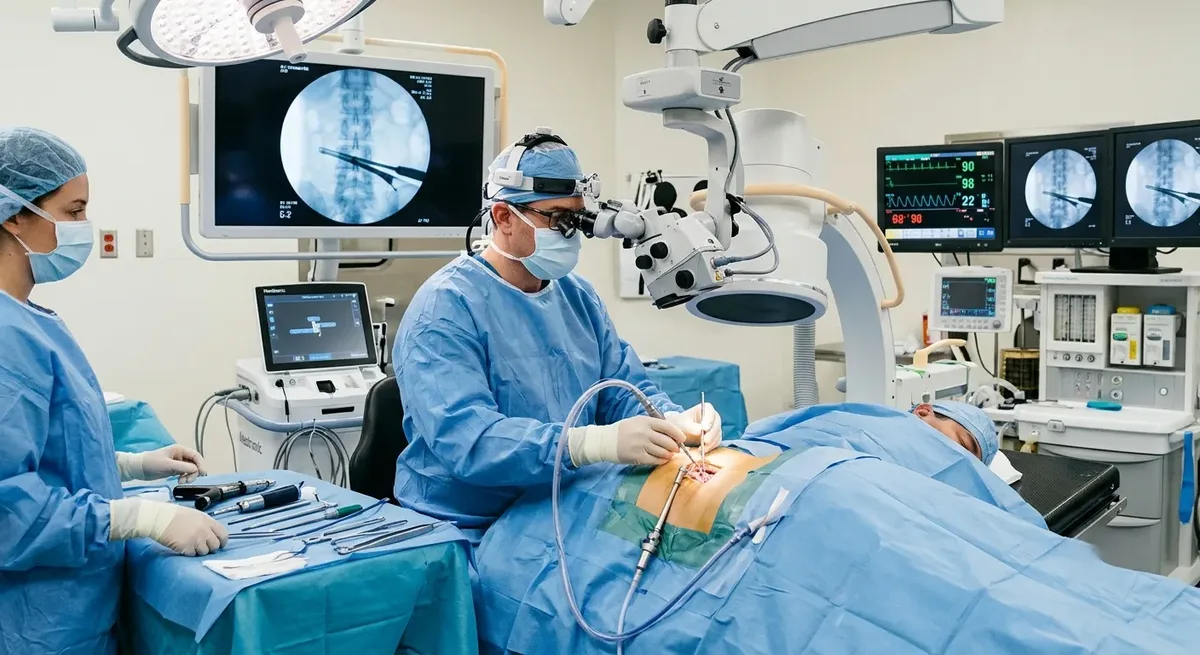
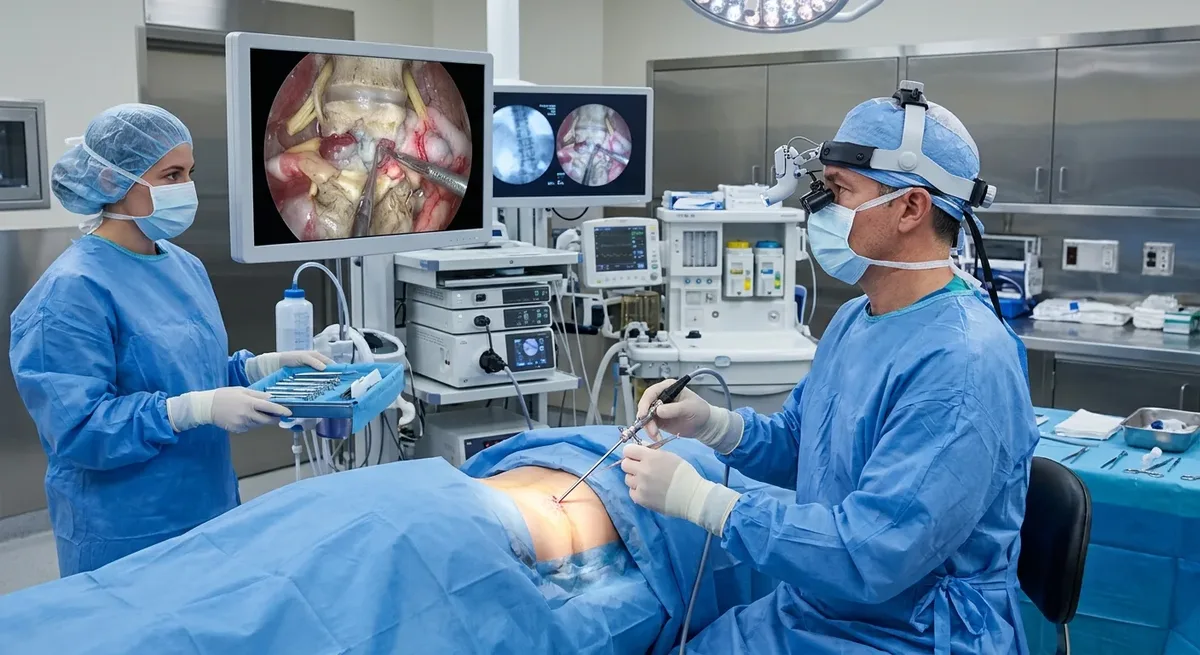
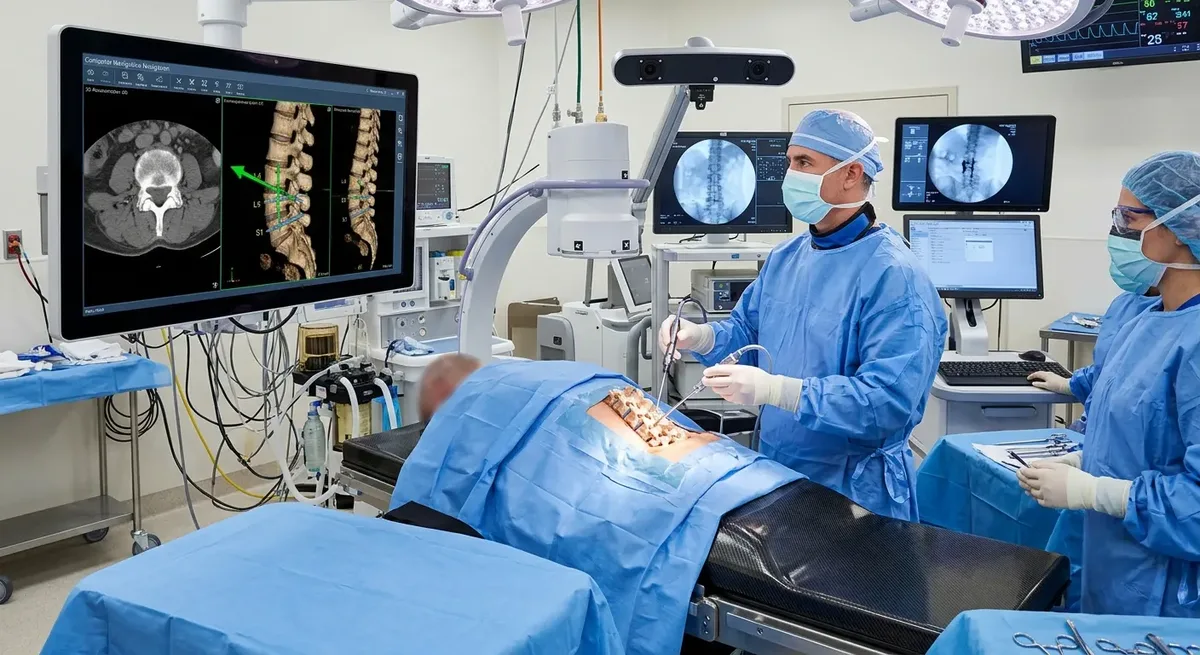
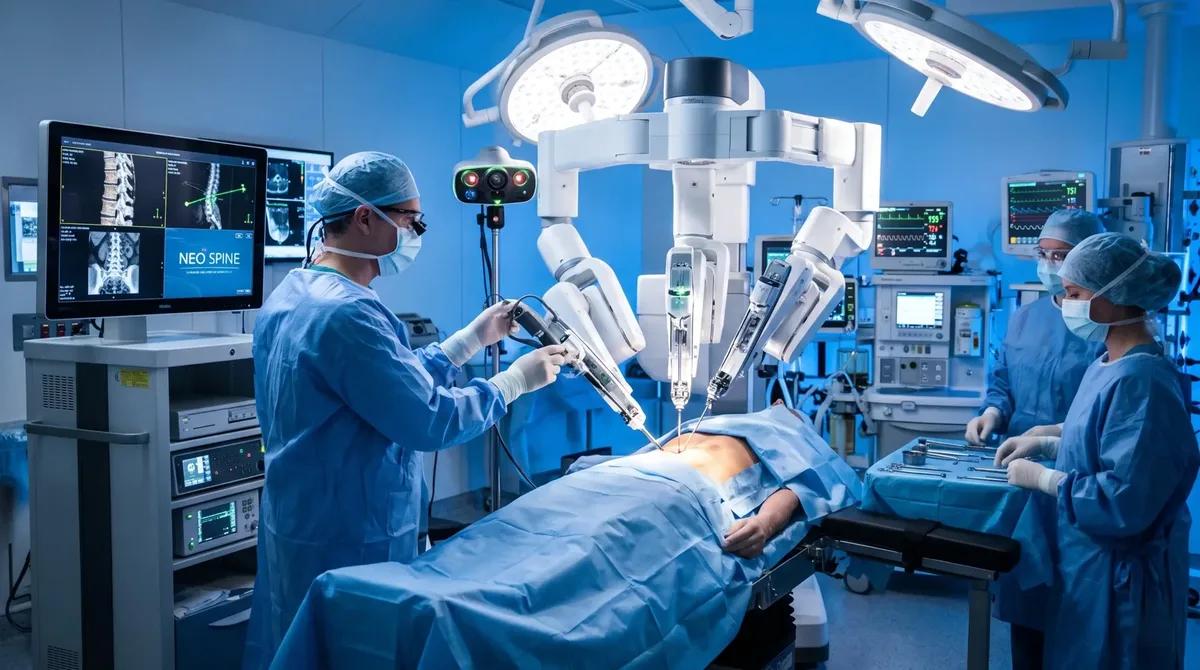
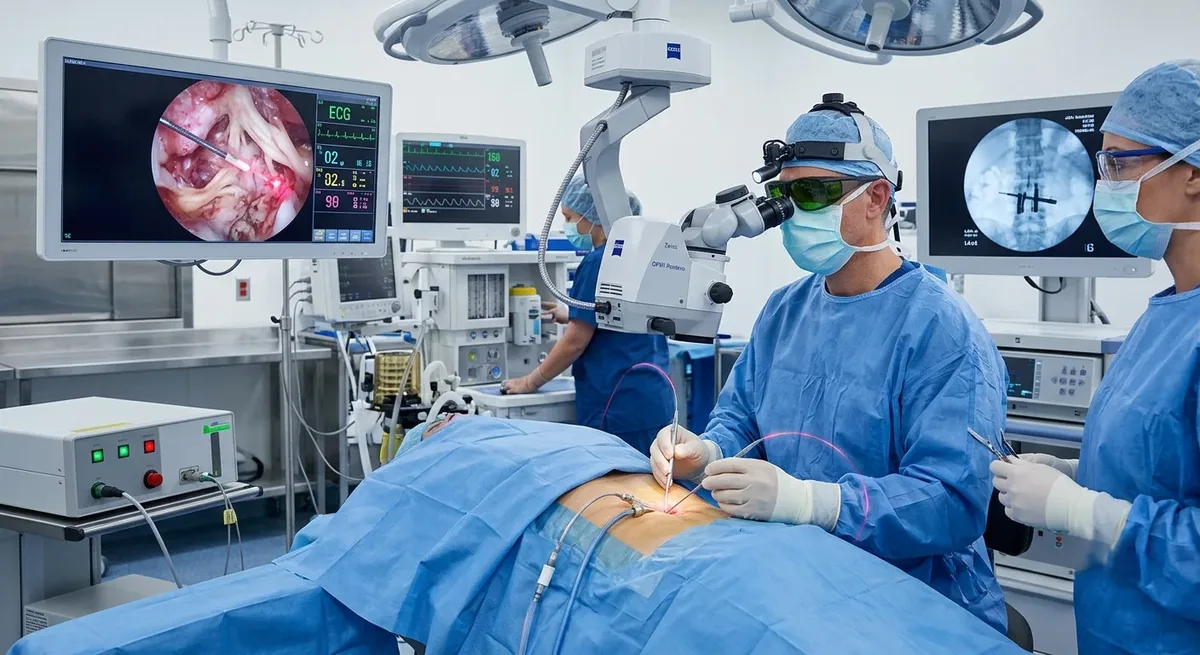
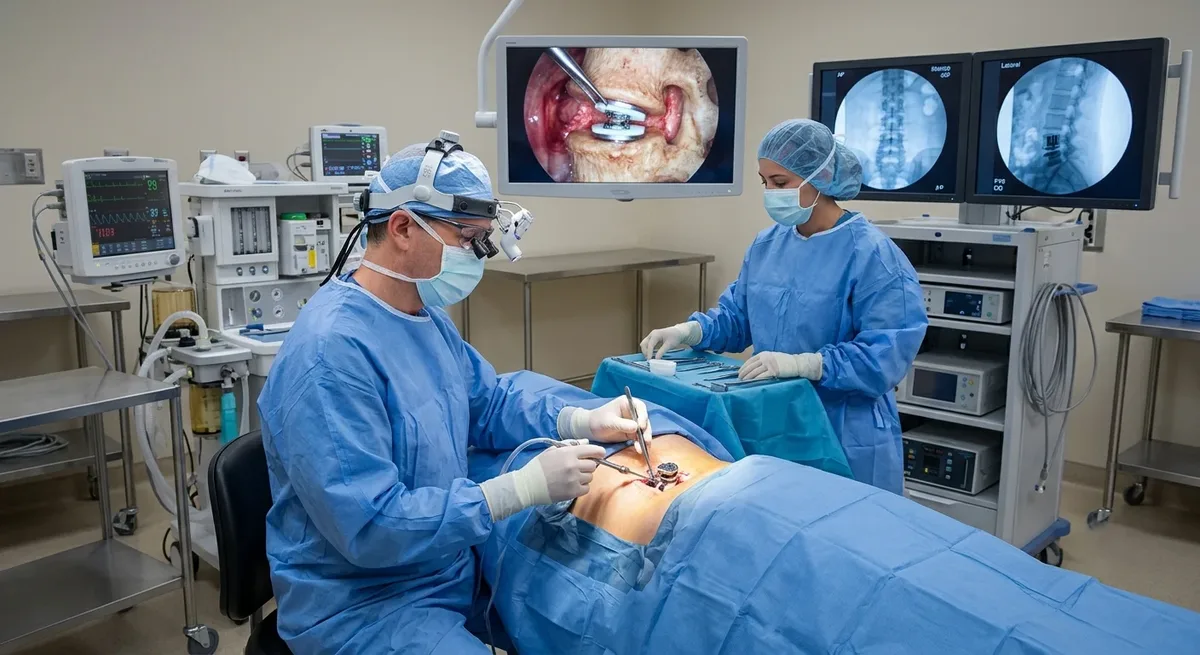
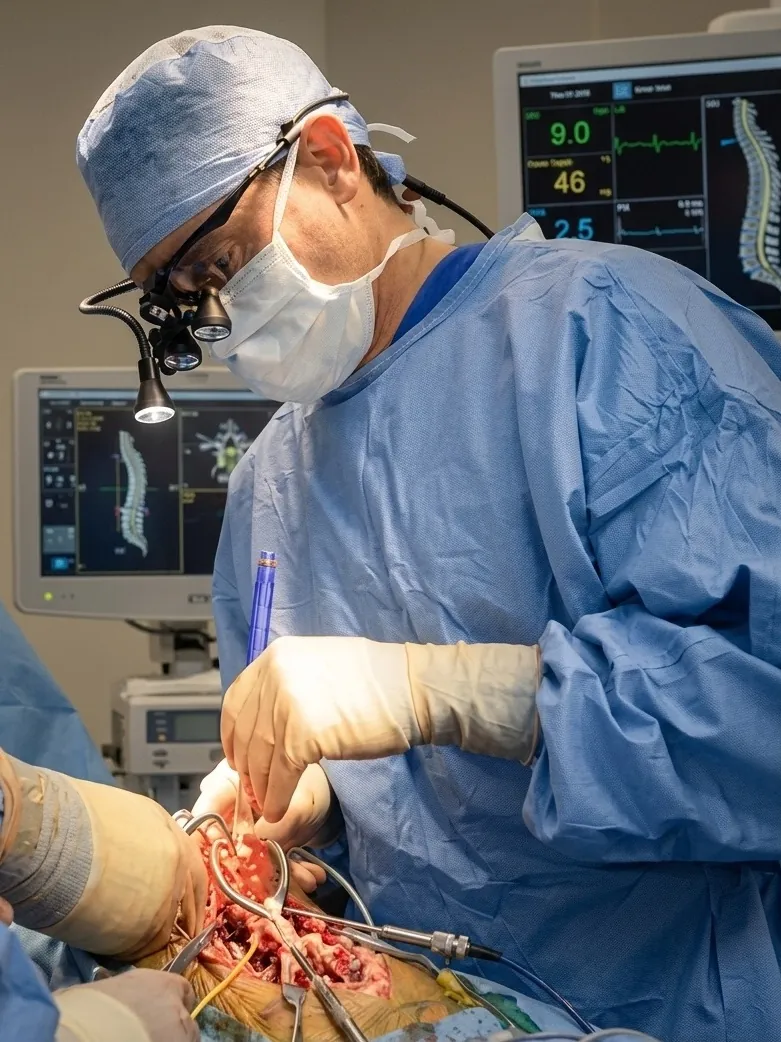
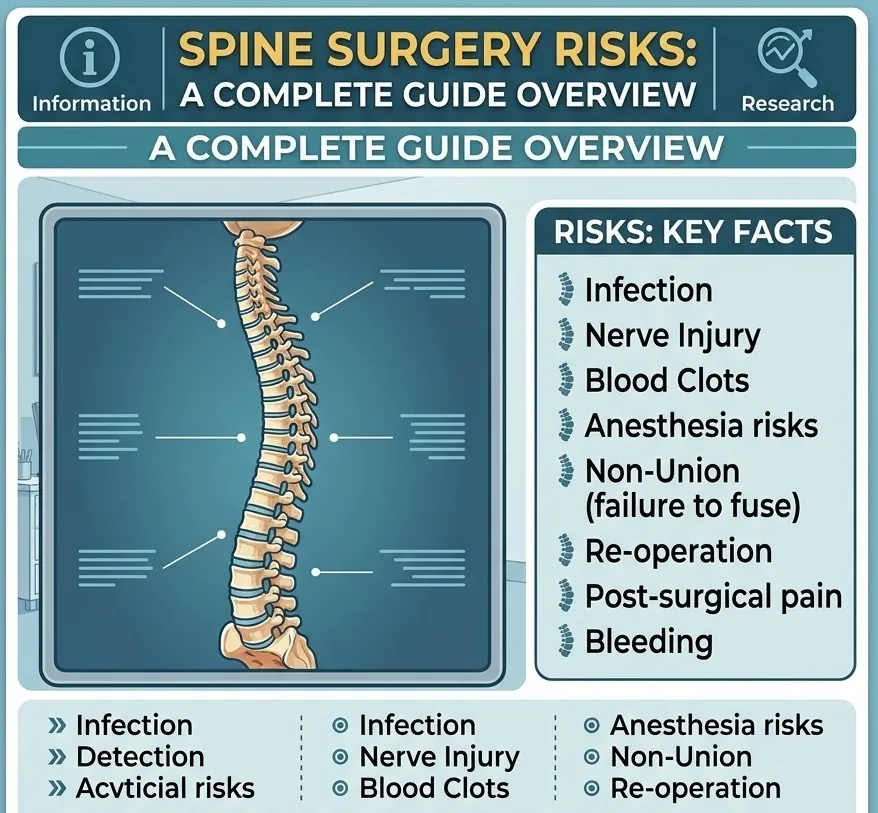
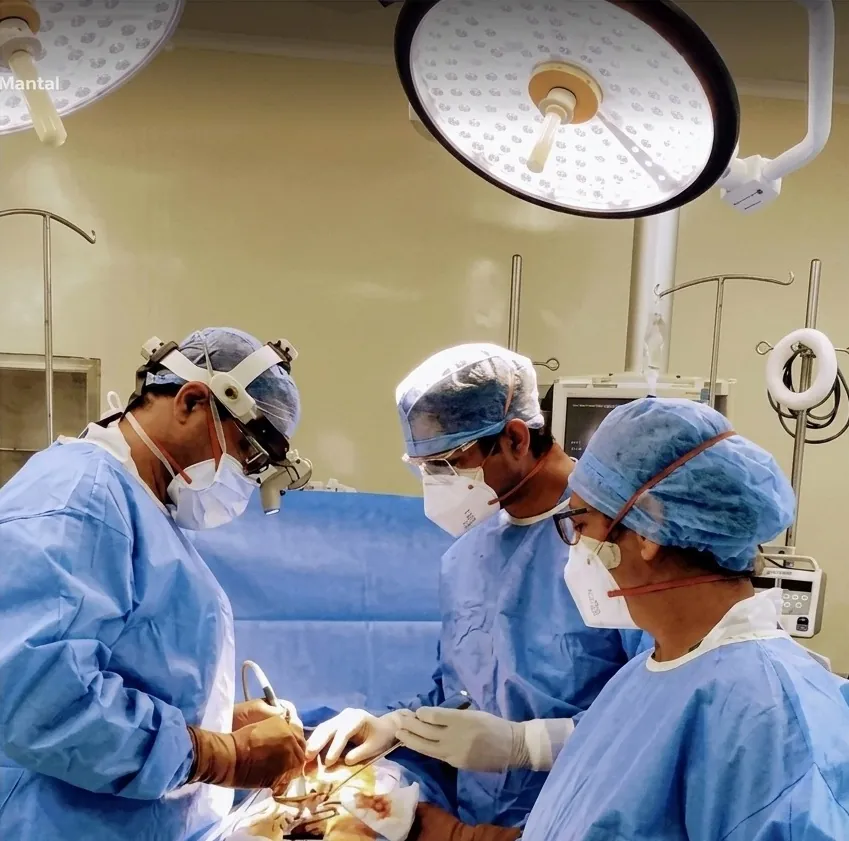
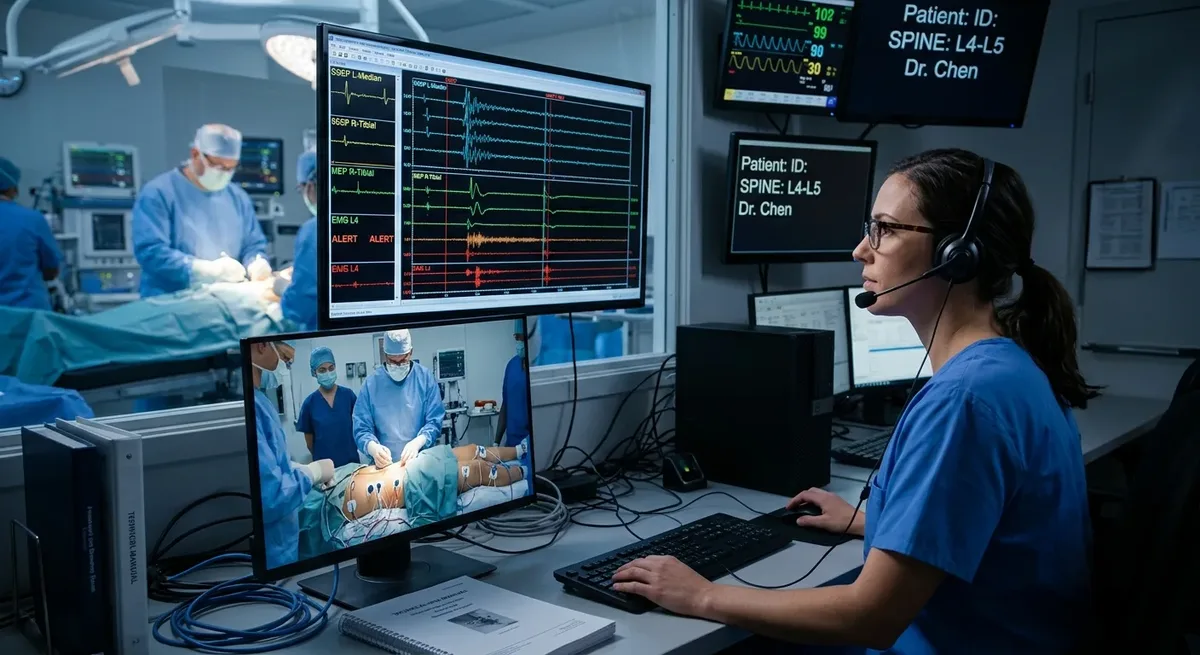
Images supplied by Neo Spine Clinic. Equipment and illustrations show the type of technology involved; Dr. Sharma will explain which tools your own operation needs.
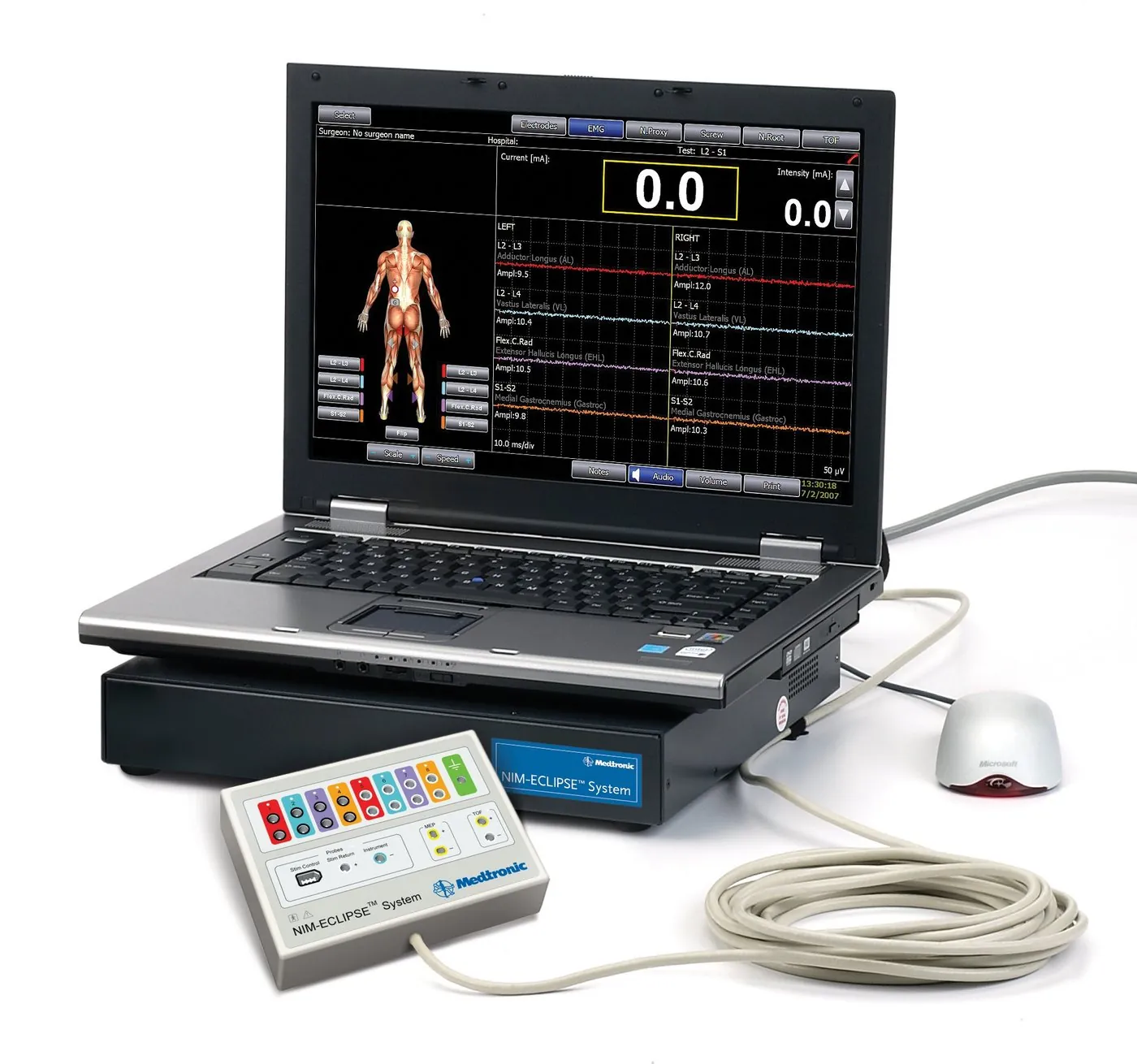 Enlarge image: A neuromonitoring system records nerve and muscle signals throughout the operation.
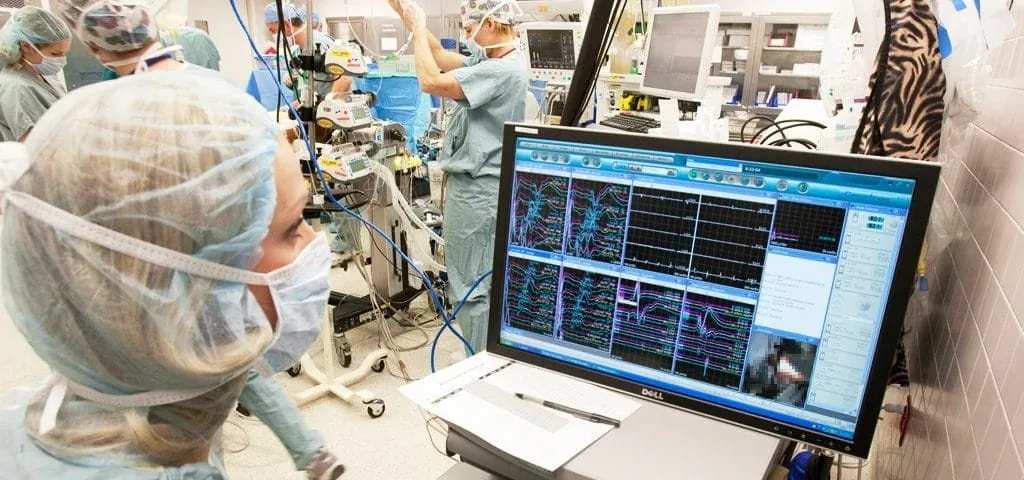 Enlarge image: Neuromonitoring signals are watched continuously in the operating theatre.
What Is Spinal Neuromonitoring?
Spinal neuromonitoring, or intraoperative neurophysiological monitoring (IONM), is a safety technology used during spine surgery to assess the functional integrity of the spinal cord and spinal nerves while the operation is in progress. It gives the surgical team live physiological information that can provide an early warning when neural structures may be under stress.
IONM is an early-warning system
It does not physically protect the spinal cord. Its value is that a meaningful signal change can alert the team early enough to reassess and modify a surgical step before injury becomes permanent.
How Spinal Neuromonitoring Works
Electrodes are placed at selected points on the patient's skin and in specific muscles according to the spinal region being treated. They record electrical activity that occurs spontaneously or in response to controlled stimulation of the brain, spinal cord pathways or peripheral nerves.
What Happens During Monitoring
- Electrodes are positioned before the critical surgical steps begin.
- Baseline electrical responses are recorded.
- Signals are followed during decompression, correction, instrumentation or other high-risk manoeuvres.
- A significant change from baseline is communicated immediately to the surgical and anaesthesia teams.
- The team investigates possible causes and may pause, reverse or modify the relevant step.
The reliability of the signals depends on several factors, including anaesthetic technique, body temperature, blood pressure and technical quality of the electrodes and recording system.
When Is Spinal Neuromonitoring Recommended?
IONM becomes especially valuable when an operation places the spinal cord or important nerve roots at greater risk. The decision depends on the spinal level, complexity of surgery and the structures being manipulated.
| Surgical Situation | Why Monitoring Can Be Valuable |
|---|---|
| Scoliosis or kyphosis correction | Major deformity correction can place the spinal cord under traction or compression. |
| Revision spine surgery | Scar tissue and altered anatomy can make neural structures harder to identify and protect. |
| Tumor, infection or fracture reconstruction | Complex decompression and stabilization may occur close to the spinal cord or nerve roots. |
| High-risk cervical or thoracic surgery | These regions contain the spinal cord, so neurological consequences of injury can be substantial. |
Key Benefits of Spinal Neuromonitoring
- Real-time functional feedback: neural pathways can be followed throughout important parts of the operation.
- Early warning: a significant signal change can identify possible spinal cord or nerve compromise before the procedure continues further.
- Immediate response: the surgeon can stop, reverse or alter a manoeuvre while the anaesthesia team checks physiological causes such as blood pressure or temperature.
- Additional safety in complex cases: deformity correction, tumor surgery and other high-risk procedures gain another layer of information beyond direct visualization and imaging.
Limitations and Risks of IONM
| Limitation | What It Means |
|---|---|
| False negative | Neurological injury can occasionally occur without a warning signal being detected. |
| False positive | Signals can change even when no true injury has occurred, potentially interrupting or altering the operation unnecessarily. |
| Physiological interference | Anaesthesia, temperature, blood pressure and other patient factors can alter signal quality. |
| Technical dependency | Electrode position, equipment and interpretation can influence the reliability of monitoring. |
Monitoring is valuable, but it is not foolproof
A normal tracing cannot guarantee that neurological injury is impossible, and an abnormal tracing does not always mean permanent injury has occurred. The signals must be interpreted in the full surgical and anaesthetic context.
The Role of IONM in Surgical Safety
In complex or high-risk spine surgery, neuromonitoring allows decisions to be made using real-time information about neural function. When a warning occurs, the team can check instrumentation, correction forces, decompression, positioning and physiological factors before proceeding.
IONM is therefore best understood as an additional safety layer. It complements careful surgical technique, imaging, anatomical knowledge and continuous anaesthetic management; it does not replace any of them.
Frequently Asked Questions
What types of spine surgery typically use IONM?
Common examples include scoliosis and kyphosis correction, spinal tumor removal, fracture stabilization, cervical decompression and fusion, revision surgery and thoracic spine procedures. The need depends on neurological risk and spinal level.
How can IONM help prevent paralysis?
A meaningful change in neural signals can warn the team that the spinal cord or nerves may be under stress, allowing the surgeon to stop or modify the relevant step and investigate the cause.
Is spinal neuromonitoring safe?
IONM is used as a monitoring technique during surgery. Its purpose is to add safety information; the exact monitoring method and any procedure-specific considerations are planned by the surgical and neurophysiology teams.
Does every hospital or surgeon use it?
No. Use varies with the procedure, available equipment, trained personnel and local practice. It is particularly valuable in operations with greater risk to the spinal cord or nerve roots.
Can IONM detect every type of nerve damage?
No. False negatives can occur, so neurological injury is still possible despite monitoring.
How accurate is spinal neuromonitoring?
Accuracy is influenced by the monitoring technique, anaesthesia, body temperature, physiological changes and technical factors. Results must be interpreted alongside what is happening surgically.
Is it necessary for a simple lumbar disc operation?
Not necessarily. The decision is based on the expected neurological risk, spinal level and complexity of the operation rather than using IONM automatically for every case.
This page is general education written by Dr. Amit Sharma. Whether a technique suits you depends on your diagnosis, imaging and overall health, and is decided at an individual consultation.