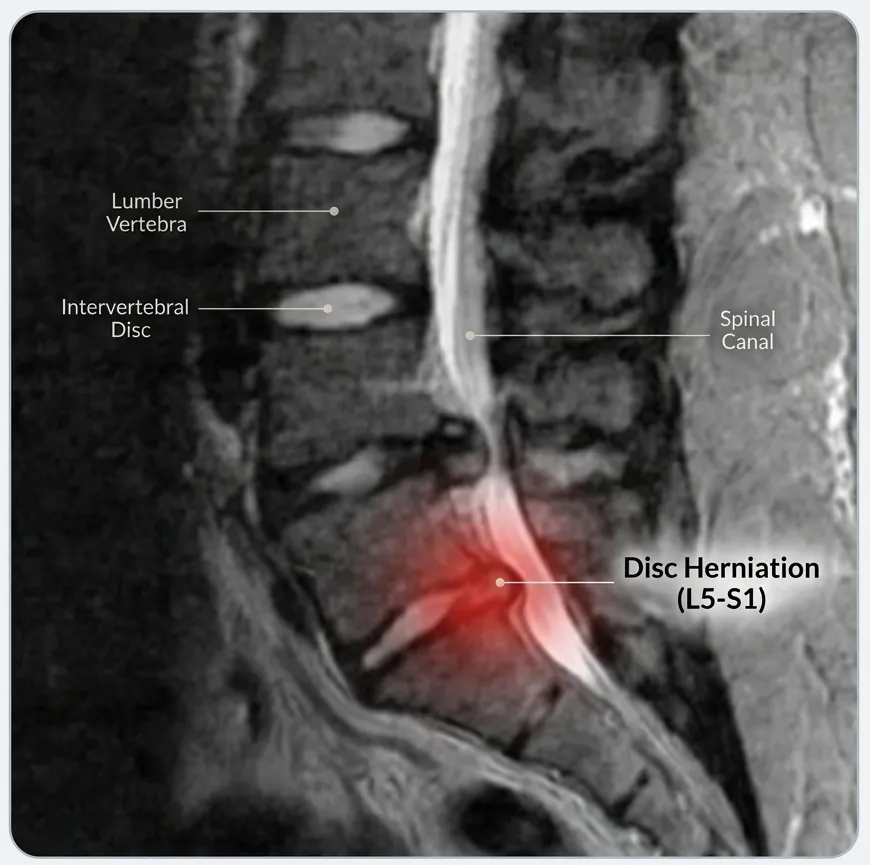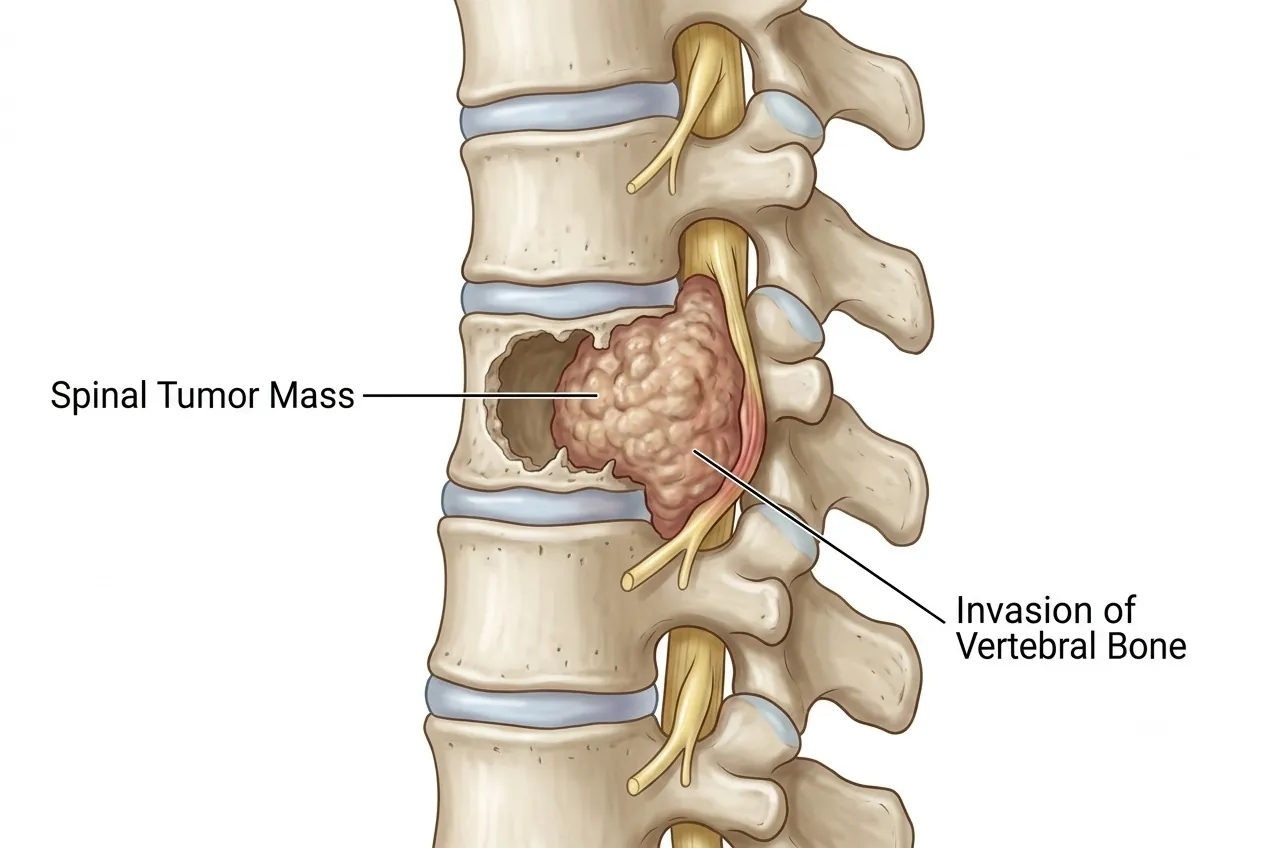
Understanding Spinal Tumors
A spinal tumor is an abnormal growth of tissue involving the vertebral column, spinal cord, spinal nerves or surrounding tissues. Tumors may be benign or malignant. They may originate in the spine itself (primary tumors) or spread to the spine from cancer elsewhere in the body (secondary or metastatic tumors).
Location matters as much as the tumor name
A small tumor inside or immediately around the spinal cord can produce major neurological symptoms, while some vertebral tumors remain silent for a long time. Treatment therefore depends on anatomy, biology, stability and neurological effect.
Types of Spinal Tumors
| Location | Examples and Characteristics |
|---|---|
| Intramedullary | Arise within the spinal cord itself and are usually primary tumors. Examples include astrocytoma, ependymoma and lipoma. Their location can make complete surgical removal technically difficult. |
| Intradural-extramedullary | Develop inside the dura but outside the cord. Meningiomas, schwannomas/neurofibromas and certain ependymomas occur here. Many are benign, although complete removal may not always be possible and recurrence can occur. |
| Extradural | Develop outside the dural sac and commonly involve vertebral bone. Metastases from lung, breast, prostate, gastrointestinal, kidney and thyroid cancers are important causes. Schwannoma/neurofibroma and vertebral hemangioma can also occur in this compartment. |
Intramedullary tumors are uncommon. Vertebral hemangioma is a frequent benign primary vertebral tumor and is often incidental. Overall, metastatic disease is the most frequent form of spinal tumor. Multiple myeloma and lymphoma also commonly involve vertebrae because vertebral bodies contain bone marrow.
Symptoms
Spinal tumors can remain asymptomatic initially. Localized pain or swelling is a common presentation, and persistent pain that progresses or becomes prominent at night deserves evaluation, particularly when accompanied by neurological symptoms or a known history of cancer.
- Spinal-cord or nerve compression: numbness, sensory loss, arm or leg weakness, reduced hand grip or dexterity, loss of balance and leg spasticity.
- Advanced neural compression: bladder or bowel dysfunction.
- Vertebral destruction: severe mechanical pain, spinal instability and deformity such as kyphosis.
- Collapse or displaced bone: can further narrow the canal and compress the spinal cord.
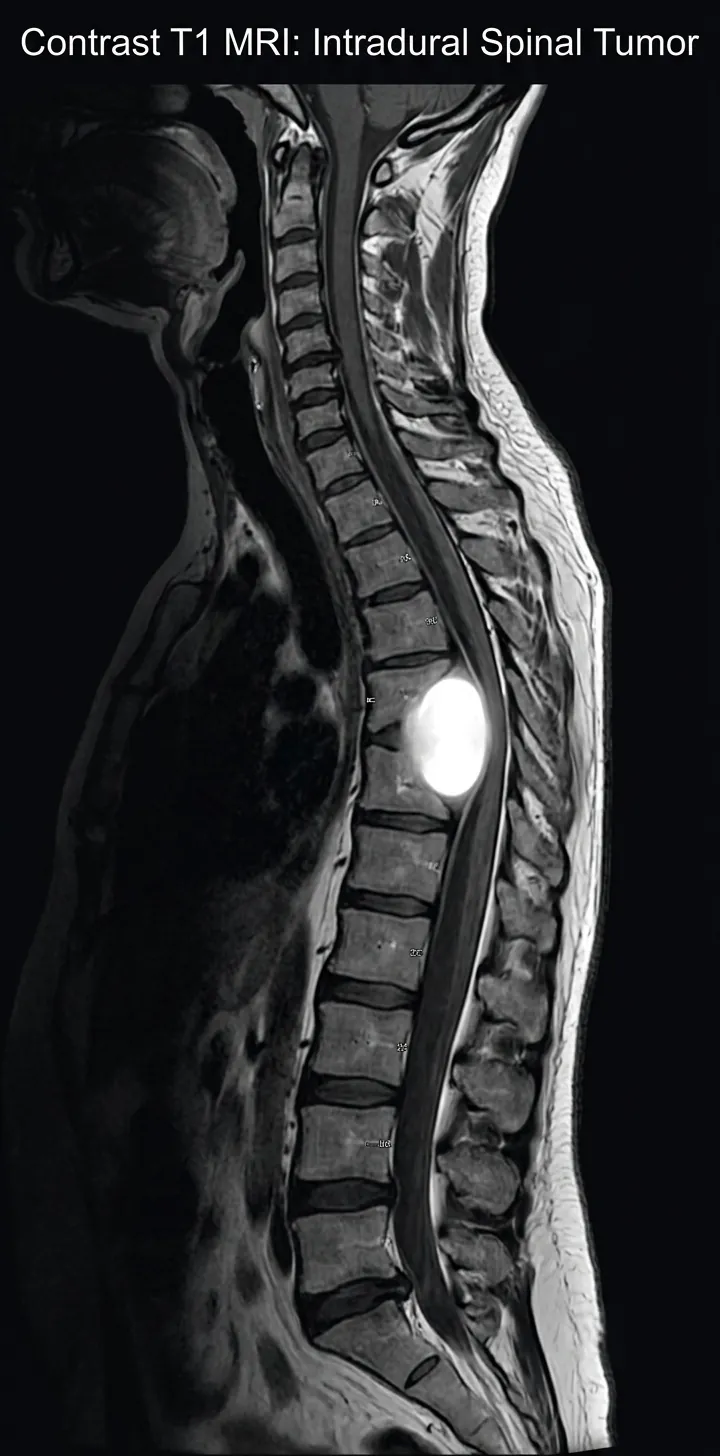 Enlarge image: MRI example used to evaluate a spinal tumor
2-minute self-check
Do your symptoms deserve a closer look?
Tick anything you've noticed recently. Your guidance appears straight below. Everything stays on this page; nothing is stored or sent. This is an educational aid, not a diagnosis of spinal tumors.
Seek urgent medical care today
These symptoms can mean a nerve or the spinal cord is under serious pressure. Go to the nearest emergency department, or call the clinic straight away. Do not wait for a routine appointment.
Book a spine specialist review soon
Arrange an assessment within the next few days, and sooner if things get worse. If you already have an MRI, you can send it for review.
Conservative care is usually a reasonable start
Activity changes, physiotherapy and appropriate medication often help. See a doctor if it is not better in 1–2 weeks, or straight away if any time-sensitive symptom appears.
Guidance only, based on the warning signs described in this guide. It cannot find the cause of your symptoms. If symptoms are severe, getting worse quickly, or you are worried, contact a doctor.
Diagnosis and Staging
A detailed history and neurological examination establish the pattern and urgency of symptoms. Imaging then defines the lesion, its effect on the spinal cord and the structural integrity of the vertebral column.
Imaging, Biopsy and Staging Tests
- X-ray: can reveal vertebral destruction, collapse or other bony abnormalities and helps assess alternative causes of pain.
- MRI: the principal study for defining the spinal lesion, neural compression and local spread.
- CT: provides detailed bone anatomy and is useful when MRI is not possible.
- PET scan: helps identify metabolically active disease elsewhere in the body and contributes to staging.
- Bone scan: may detect skeletal lesions and can also be useful when considering infection or metabolic bone disease in the differential diagnosis.
- Biopsy: provides histopathological diagnosis, distinguishing benign from malignant disease and identifying tumor type.
- Systemic staging: malignant disease may require PET and/or CT imaging of the chest, abdomen and other relevant regions to establish extent and guide treatment.
Non-Surgical Treatment
Spinal-tumor management is multidisciplinary, commonly involving spine surgery, medical oncology and radiation oncology. Treatment is selected according to tumor type, sensitivity to systemic or radiation treatment, symptoms, neurological status, spinal stability and the patient's overall health.
Non-Surgical Options
- Observation: selected benign, asymptomatic and non-progressive tumors can be followed with clinical review and interval MRI.
- Radiation therapy: used for tumors that are radiosensitive, for local disease control or as part of combined treatment.
- Chemotherapy/systemic therapy: chosen according to tumor biology and oncological diagnosis.
Surgical Treatment
Surgery may be necessary when there is severe spinal-cord compression, worsening neurological deficit, major vertebral destruction with instability or deformity, pain that cannot be controlled adequately, or when tissue diagnosis cannot otherwise be obtained.
| Surgical Goal | How It Is Addressed |
|---|---|
| Neural decompression | Removes pressure from the spinal cord or nerves to protect or improve neurological function. |
| Tumor removal / tissue diagnosis | Selected primary tumors may be excised; surgery can also obtain diagnostic tissue when needed. |
| Stabilization and deformity control | Fusion and instrumentation may be required when tumor-related bone destruction makes the spine unstable or causes deformity. |
| Decompression without fusion | Can be appropriate when there is significant neural compression but little vertebral destruction or instability. Intramedullary tumors generally require direct spinal-cord exposure/decompression rather than vertebral reconstruction. |
Adjuvant Treatment and Outcomes
Chemotherapy and radiation may be given before or after surgery depending on tumor type and oncological strategy. Highly vascular tumors may undergo preoperative embolization, in which the vessels feeding the tumor are deliberately blocked to reduce surgical blood loss.
Outcome varies substantially with tumor biology, stage, location, neurological status and overall health. Some primary tumors can be completely removed and potentially cured. In metastatic disease, surgery is more often directed toward pain relief, preservation or restoration of neurological function, mechanical stability and quality of life rather than cure. The appropriateness of major surgery is individualized according to prognosis and expected benefit.
A biopsy can change the entire treatment plan
Spinal lesions that look similar on imaging can require very different treatments. When the diagnosis is uncertain, obtaining the correct tissue diagnosis before definitive treatment is often essential.
Urgent Warning Signs
Immediately
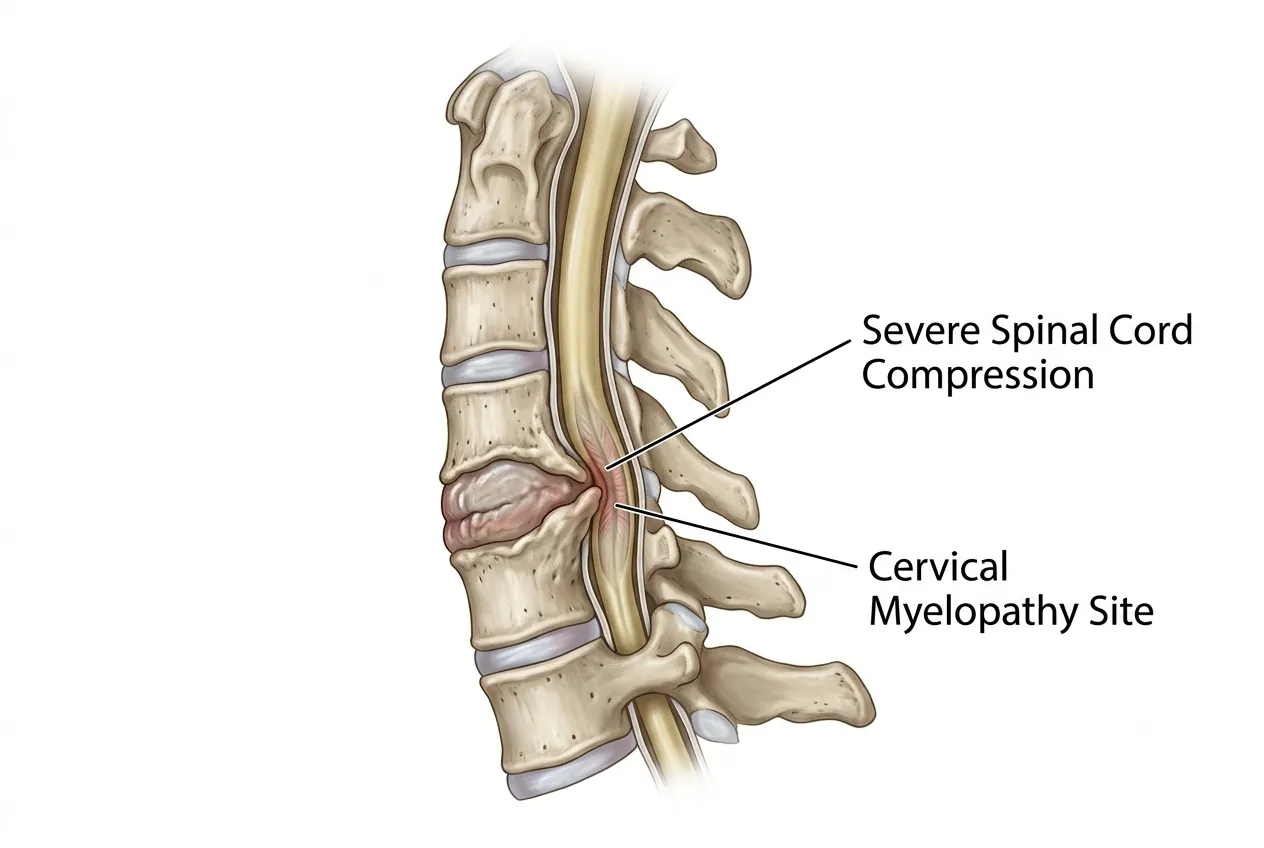
Rapidly progressive weakness, inability to walk, major sensory loss or new bladder/bowel dysfunction may indicate significant spinal-cord compression.
Prompt evaluation
Persistent unexplained night pain, progressive back/neck pain, new neurological symptoms or severe pain in someone with known cancer should be assessed promptly.
Planned follow-up
Known benign, stable and asymptomatic tumors may sometimes be monitored with scheduled clinical review and MRI rather than immediate intervention.
Imaging from Dr. Sharma's practice
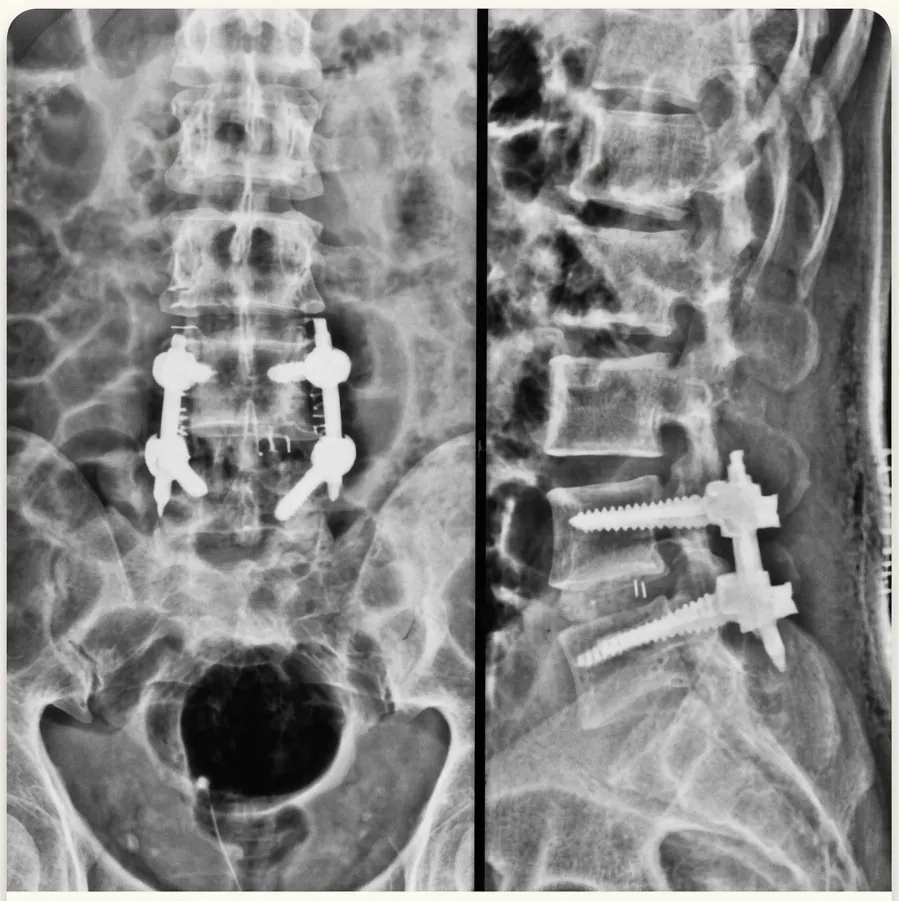
The images below are from Dr. Amit Sharma's practice and are shared for education, without identifying details. Every patient's imaging is different — your own scans need an individual clinical review.
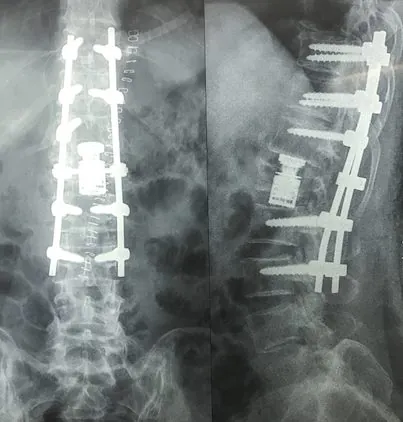 Enlarge image: Post-operative X-rays after spinal tumor surgery and stabilisation.
Frequently Asked Questions
How would I know if I had a spinal tumor?
Warning features include persistent unexplained back or neck pain, pain that becomes prominent at night, progressive tingling or numbness, limb weakness, walking difficulty and, in advanced compression, bladder or bowel dysfunction. Malignant disease can also be accompanied by unexplained weight loss or fatigue.
What symptoms can a cervical spinal tumor cause?
A neck-level lesion can produce neck or arm pain, hand numbness, reduced grip and dexterity, arm or leg weakness, balance difficulty and spasticity when the spinal cord is compressed.
Why can spinal tumor pain be worse at night?
Tumor-related pain may be less dependent on movement or mechanical loading than ordinary musculoskeletal pain, so it can remain prominent at rest or during the night. Night pain alone is not diagnostic, but persistent unexplained night pain warrants assessment.
What are the first symptoms of spinal cancer?
Persistent focal pain is common. Neurological symptoms may follow if the lesion compresses nerves or the spinal cord. The pattern varies with the level and location of disease.
What treatments are available for spinal cancer?
Treatment can include systemic cancer therapy, radiation, surgery for decompression or stabilization, and symptom control. The combination depends on cancer type, extent of disease, spinal stability and neurological function.
What are the symptoms of cancer involving the back?
Progressive back pain, night pain, vertebral collapse, deformity, radiating pain, numbness, weakness or walking difficulty may occur when malignant disease involves the spine.
What can happen in advanced metastatic spinal cancer?
Advanced disease can cause severe pain, pathological fracture, instability, spinal-cord compression and major neurological disability. Stage IV cancer also reflects disease elsewhere in the body, so symptoms depend on the primary cancer and metastatic sites.
Do benign spinal tumors cause symptoms?
Some remain asymptomatic and are discovered incidentally. Others cause pain, numbness, weakness or cord dysfunction because even a benign tumor can compress sensitive neural structures.
What happens in the final stages of spinal cancer?
There is no single pattern. Advanced cancer can produce increasing pain, weakness, reduced mobility and systemic symptoms, but progression varies greatly by cancer type and treatment response. Care is individualized with emphasis on symptom relief, function and quality of life.
Can you feel a spinal tumor with your hand?
Most spinal tumors are deep and cannot be felt through the skin. A superficial mass or swelling can occasionally be palpable, but imaging is required to diagnose a spinal lesion.
This article is general education written by Dr. Amit Sharma. It is not a diagnosis or a substitute for an in-person consultation. If you have sudden weakness, numbness in the groin or saddle area, or new bladder or bowel problems, seek emergency care.