Understanding Osteoporotic Spine Fractures
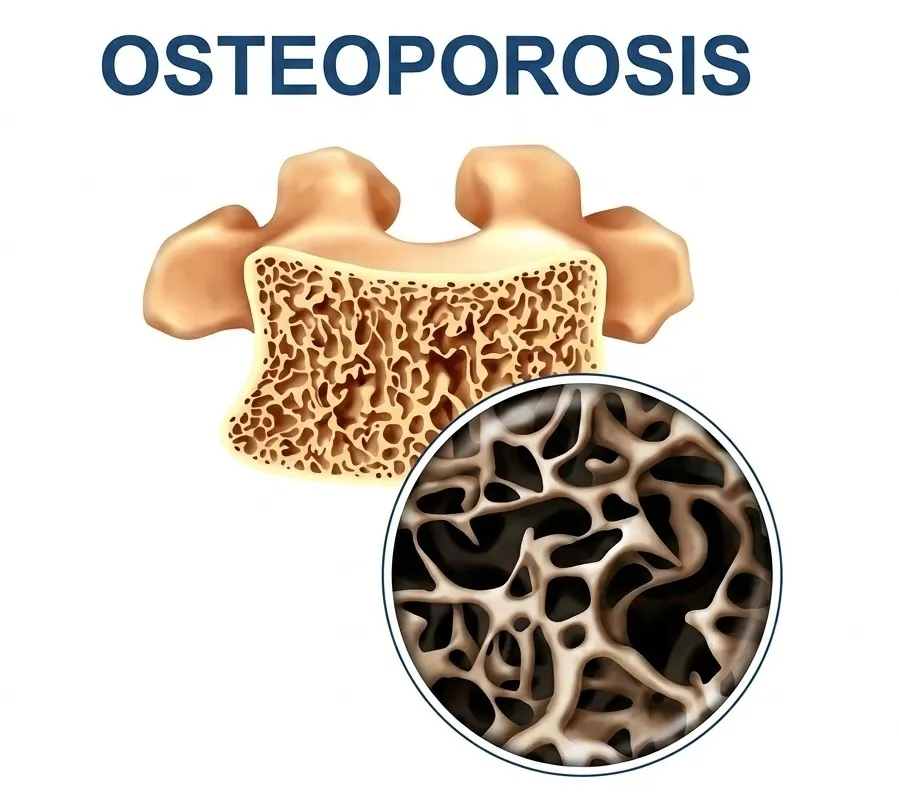
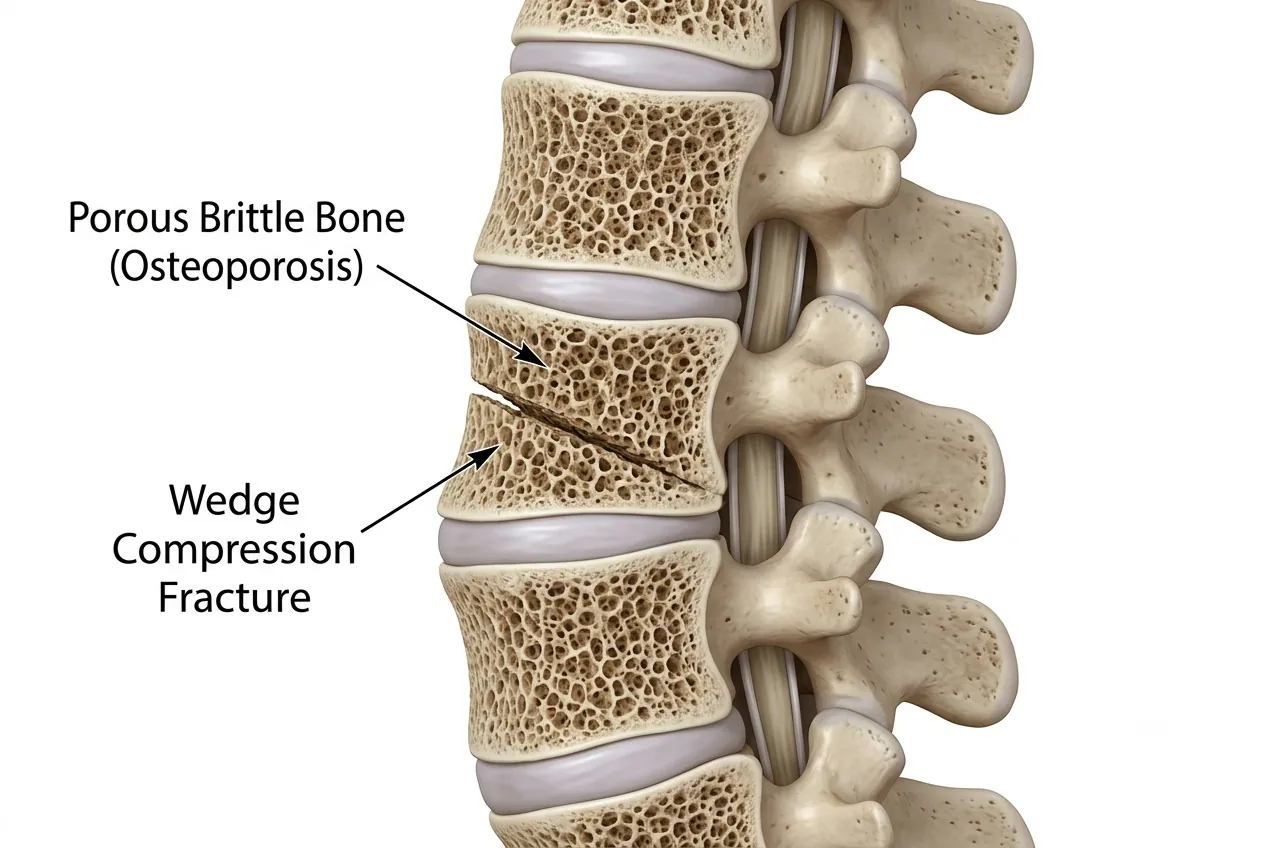
Osteoporosis weakens the internal architecture of bone, making vertebrae vulnerable to compression fractures. These fractures are most frequent in older adults but may occur earlier when medical conditions or treatments cause premature bone loss. The thoracic spine is commonly involved, although lumbar and cervical vertebrae can also fracture.
Because severely weakened bone may fail under ordinary body weight, an osteoporotic vertebral fracture does not always follow a major fall or accident.
Symptoms
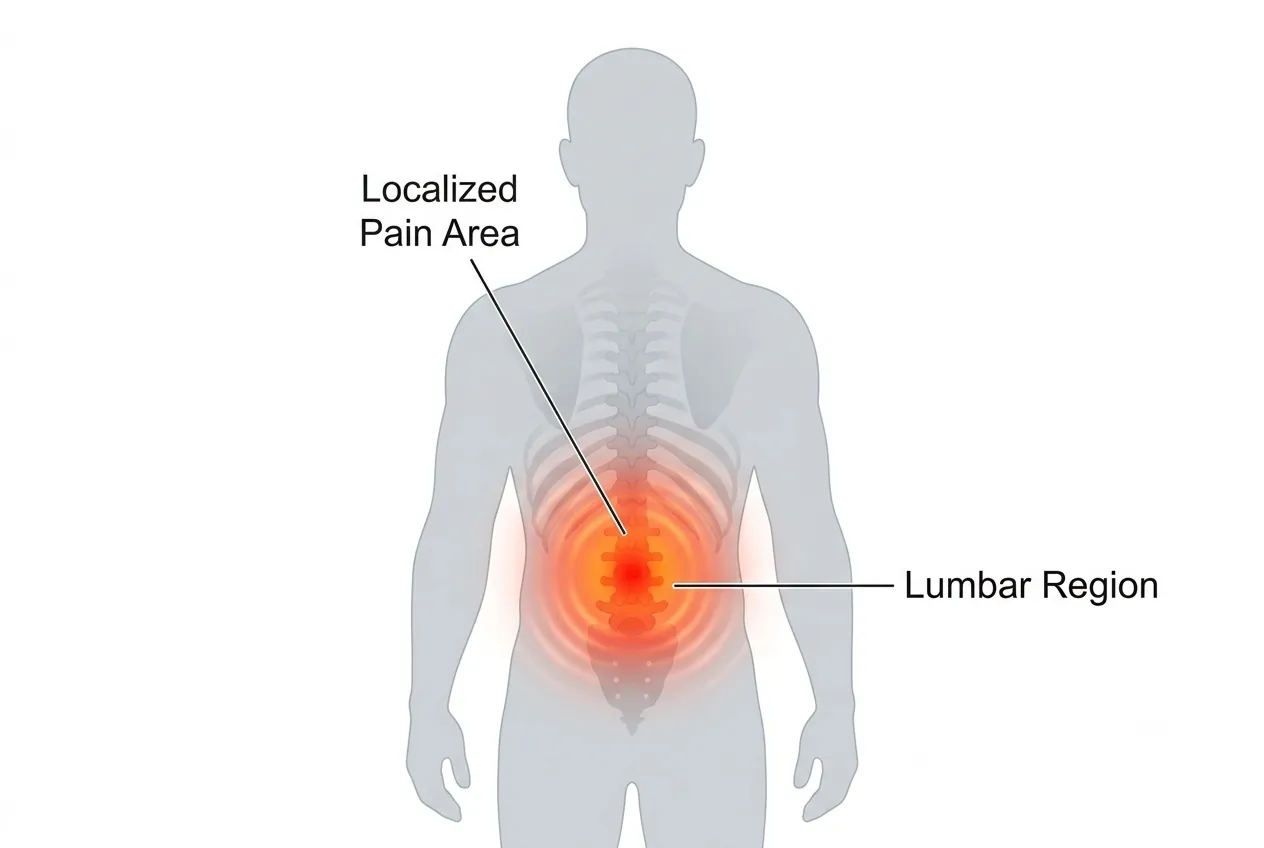
- Localized spinal pain that typically increases while sitting, standing or walking and improves with rest.
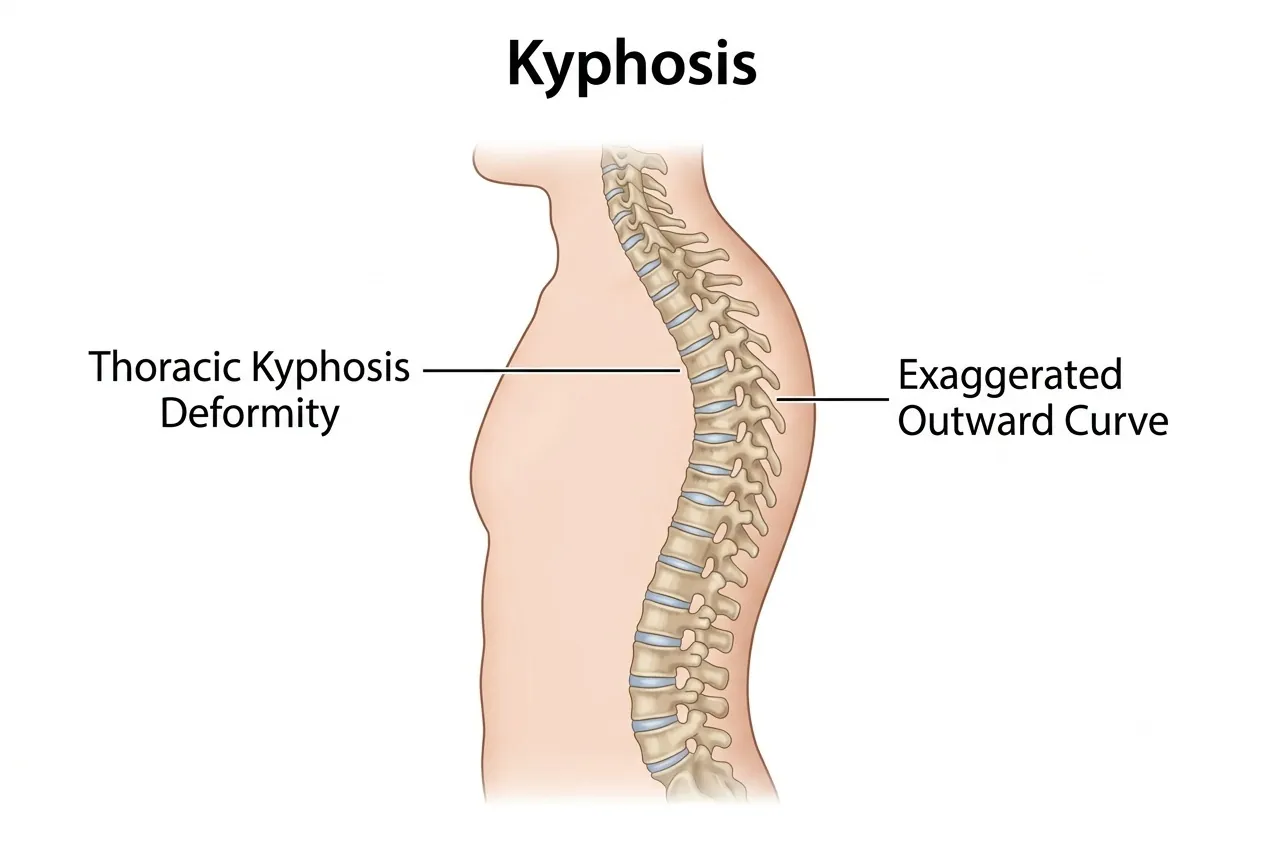
- Visible deformity after vertebral collapse.
- Progressive loss of height and a stooped or kyphotic posture with multiple or chronic compression fractures.
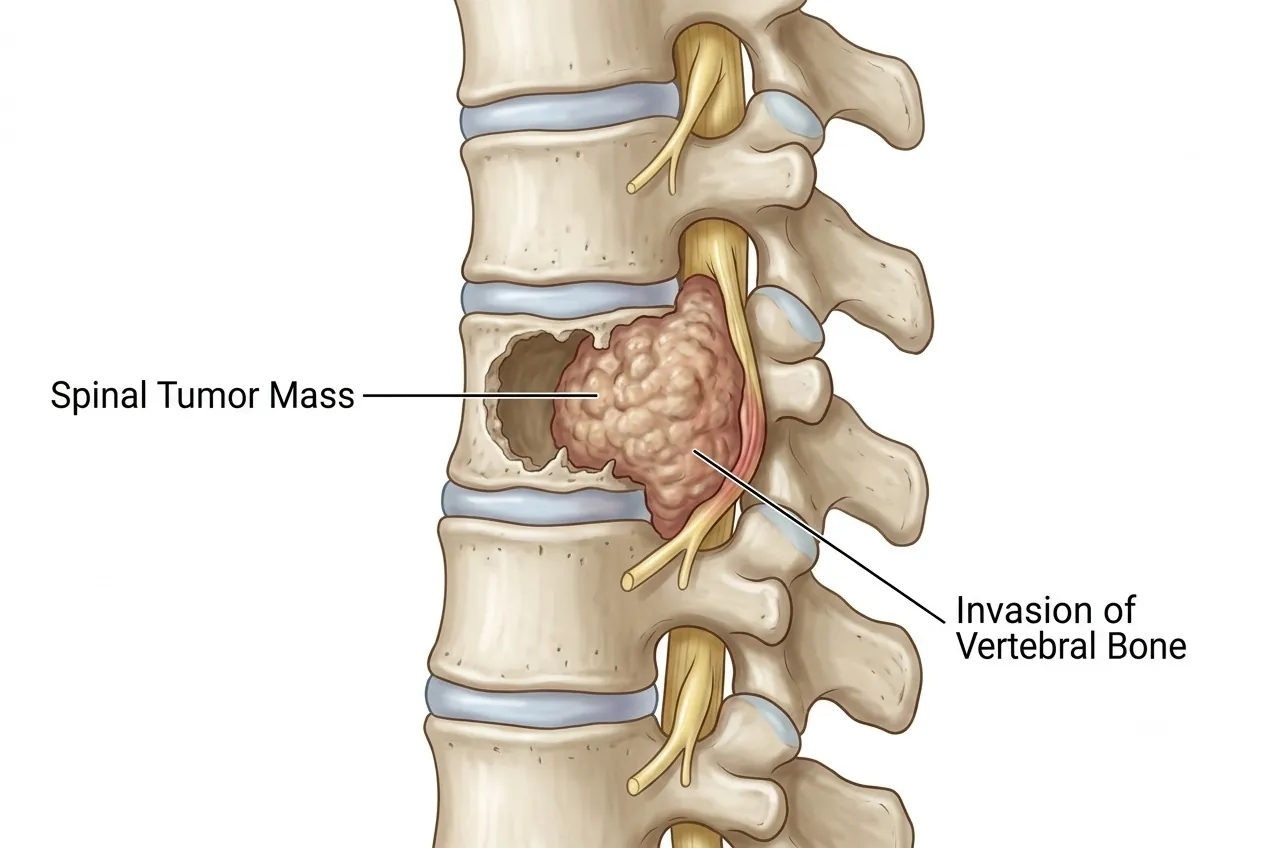
- Radiating limb pain, tingling, numbness or leg weakness if collapsed bone compromises neural structures.
- Bladder or bowel dysfunction in severe spinal-canal compromise.
Urgent
New weakness, major sensory loss or bladder/bowel dysfunction after a spinal fracture needs prompt assessment.
Prompt review
New severe back pain after a minor fall, progressive deformity or persistent weight-bearing pain warrants evaluation.
Prevention matters
A vertebral fragility fracture should trigger assessment and treatment of the underlying osteoporosis, not fracture care alone.
2-minute self-check
Do your symptoms deserve a closer look?
Tick anything you've noticed recently. Your guidance appears straight below. Everything stays on this page; nothing is stored or sent. This is an educational aid, not a diagnosis of osteoporotic spine fracture.
Seek urgent medical care today
These symptoms can mean a nerve or the spinal cord is under serious pressure. Go to the nearest emergency department, or call the clinic straight away. Do not wait for a routine appointment.
Book a spine specialist review soon
Arrange an assessment within the next few days, and sooner if things get worse. If you already have an MRI, you can send it for review.
Conservative care is usually a reasonable start
Activity changes, physiotherapy and appropriate medication often help. See a doctor if it is not better in 1–2 weeks, or straight away if any time-sensitive symptom appears.
Guidance only, based on the warning signs described in this guide. It cannot find the cause of your symptoms. If symptoms are severe, getting worse quickly, or you are worried, contact a doctor.
Diagnosis
Assessment combines the history of trauma or sudden pain with imaging and evaluation of bone density. Some fractures are discovered after apparently spontaneous pain because the vertebra was too weak to tolerate normal load.
Imaging and Bone-Health Tests
- X-ray: first-line assessment for vertebral collapse, deformity and reduced bone density.
- MRI: helps assess fracture activity, adjacent vertebrae, spinal stenosis, neural compression and underlying pathology, particularly when surgery is considered.
- DEXA: standard bone-density testing used to classify osteoporosis, estimate fracture risk, guide treatment and monitor response.
- CT: provides detailed bony anatomy and can be useful when MRI is contraindicated; CT-based bone-density assessment may also contribute in selected settings.
- Blood tests: investigate secondary causes of osteoporosis when indicated.
Conservative Treatment
Most stable osteoporotic vertebral fractures can heal without surgery. Management must balance fracture protection against the risks of prolonged immobility.
- Short-term rest during the most painful phase, followed by progressive mobilization as medically appropriate.
- A spinal brace to reduce painful motion and support the fractured segment.
- Analgesic or anti-inflammatory medication when suitable.
- Calcium and vitamin D supplementation when indicated as part of bone-health treatment.
- Gradual rehabilitation and physiotherapy, with stepwise brace weaning commonly occurring over the following weeks.
- Follow-up X-rays when required to monitor healing and detect progressive vertebral collapse.
Surgical Treatment
Surgery is considered for persistent severe pain, progressive collapse, instability, deformity or clinically important spinal-cord/nerve compression.
| Procedure | Role |
|---|---|
| Vertebroplasty / Kyphoplasty | Minimally invasive cement augmentation can stabilize selected painful compression fractures and may provide rapid pain relief. |
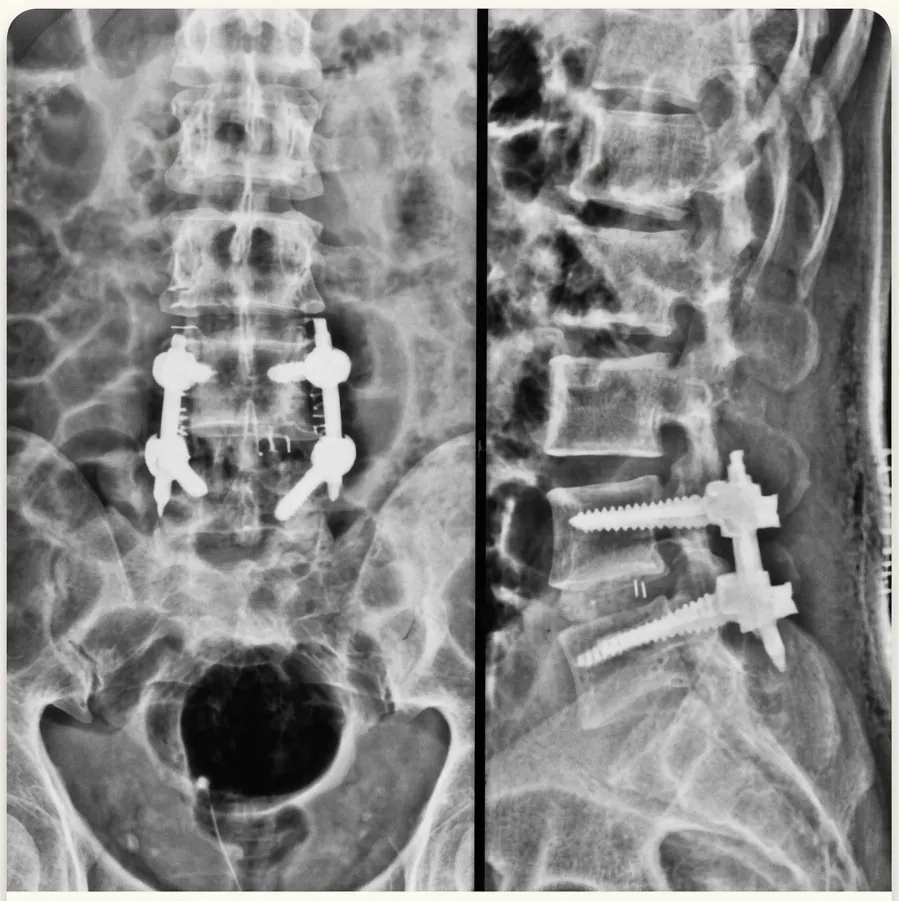
| Decompression + instrumentation | Used when neural compression or instability cannot be managed by cement augmentation alone. Screws and rods stabilize the spine after decompression. |
| Reconstruction | Severe collapse may require reconstruction, sometimes with a cage and cement augmentation. Cemented or specially coated pedicle screws can improve fixation in poor-quality bone. |
Treating the Underlying Osteoporosis
Osteoporosis is a systemic skeletal disease, so successful fracture treatment must also reduce the risk of the next fracture.
Bone-Strengthening Treatment Options
- Calcium and vitamin D: support bone mineralization when dietary intake or levels are inadequate.
- Bisphosphonates: reduce bone resorption and are widely used for osteoporosis.
- Calcitonin: may be used in selected situations and can also have an analgesic role in acute vertebral fracture pain.
- Denosumab: an anti-resorptive monoclonal antibody that increases bone density and lowers fracture risk.
- Teriparatide: an anabolic therapy that stimulates new bone formation in appropriately selected patients.
Recovery and Prevention
Healing time depends on fracture severity, bone quality, age, associated illness and whether surgery is required. Rehabilitation focuses on safe mobility, posture, muscle conditioning and fall prevention. Long-term bone-health treatment and periodic monitoring are essential because one fragility fracture increases concern for future fractures.
Treat the fracture and the disease
Fixing or healing one vertebra is only half the job. Bone-density treatment, nutrition, fall prevention and follow-up are necessary to reduce the chance of another osteoporotic fracture.
Imaging from Dr. Sharma's practice
The images below are from Dr. Amit Sharma's practice and are shared for education, without identifying details. Every patient's imaging is different — your own scans need an individual clinical review.
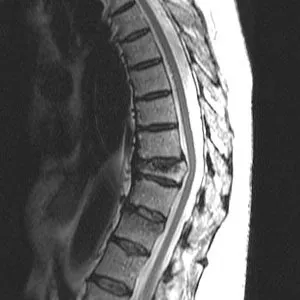 Enlarge image: Sagittal MRI showing a vertebral compression fracture.
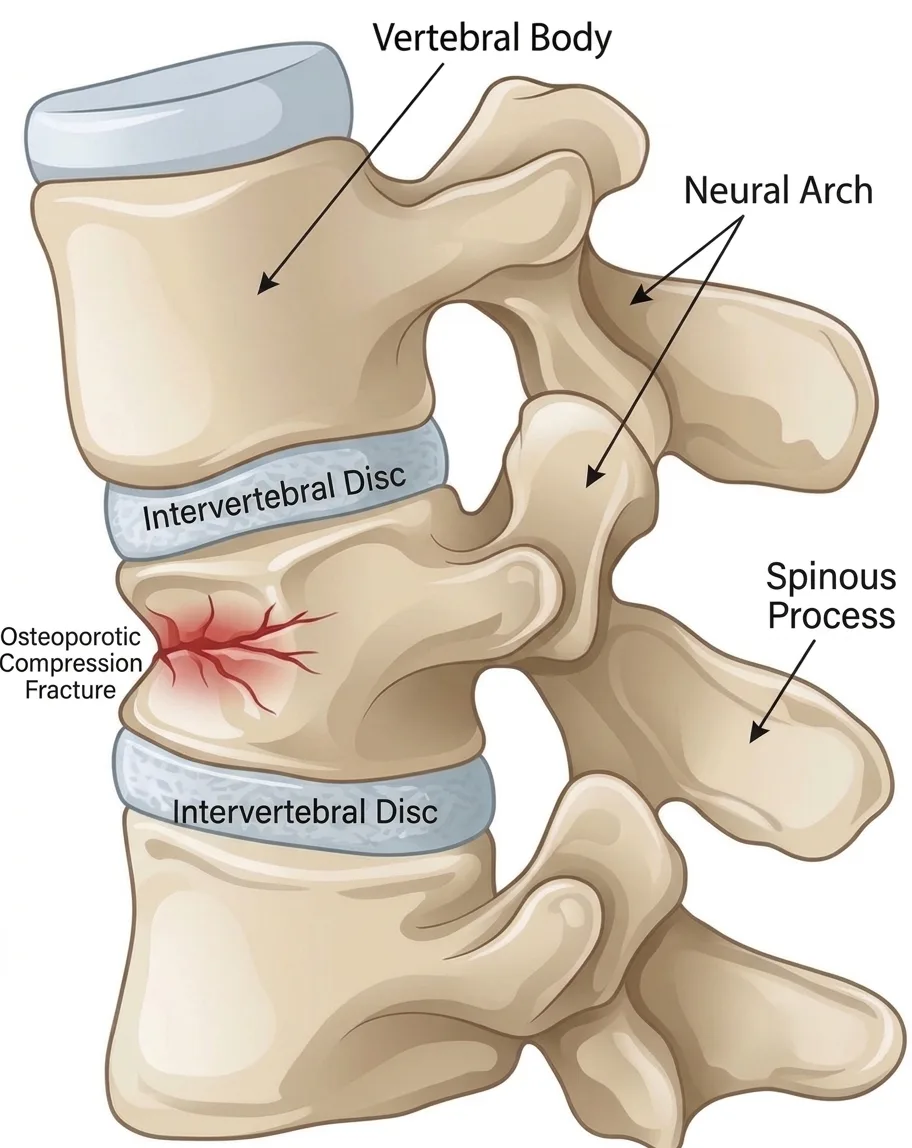 Enlarge image: Illustration of a vertebral compression fracture.
Frequently Asked Questions
What are early warning signs of osteoporosis?
Osteoporosis is often silent until a fragility fracture occurs. Warning clues include fractures after minor trauma, loss of height, stooped posture and persistent back pain from vertebral compression. Bone-density testing is appropriate when risk is suspected.
Can osteoporosis be completely cured?
It is usually managed rather than permanently “cured.” Treatment can substantially improve bone strength and lower future fracture risk.
What injectable treatments are available?
Options include anti-resorptive therapy such as denosumab and bone-forming treatments such as teriparatide; selection depends on fracture risk, bone density and the patient's medical profile.
How is lumbar-spine osteoporosis treated?
Treatment combines adequate calcium/vitamin D when indicated, prescription osteoporosis medication, exercise and fall prevention, with separate management of any existing vertebral fracture.
How long does an osteoporotic fracture take to heal?
Many stable fractures improve over several weeks, but pain and functional recovery vary. Severe collapse, poor bone quality and advanced age can prolong recovery.
What symptoms can osteoporosis cause?
Before fracture it may cause none. Once vertebral fractures occur, back pain, height loss, kyphosis, reduced mobility and recurrent fractures may develop.
How serious is spinal osteoporosis?
It can lead to repeated vertebral fractures, chronic pain, deformity and loss of independence, making prevention of additional fractures important.
What is recovery like in an elderly patient?
Recovery depends on mobility before injury, fracture stability and general health. Early safe rehabilitation is important because prolonged bed rest carries its own risks.
How should someone live with spinal osteoporosis?
Follow prescribed bone treatment, maintain safe weight-bearing activity, reduce fall hazards, use good lifting technique, maintain adequate nutrition and attend follow-up bone-density and fracture-risk reviews.
This article is general education written by Dr. Amit Sharma. It is not a diagnosis or a substitute for an in-person consultation. If you have sudden weakness, numbness in the groin or saddle area, or new bladder or bowel problems, seek emergency care.