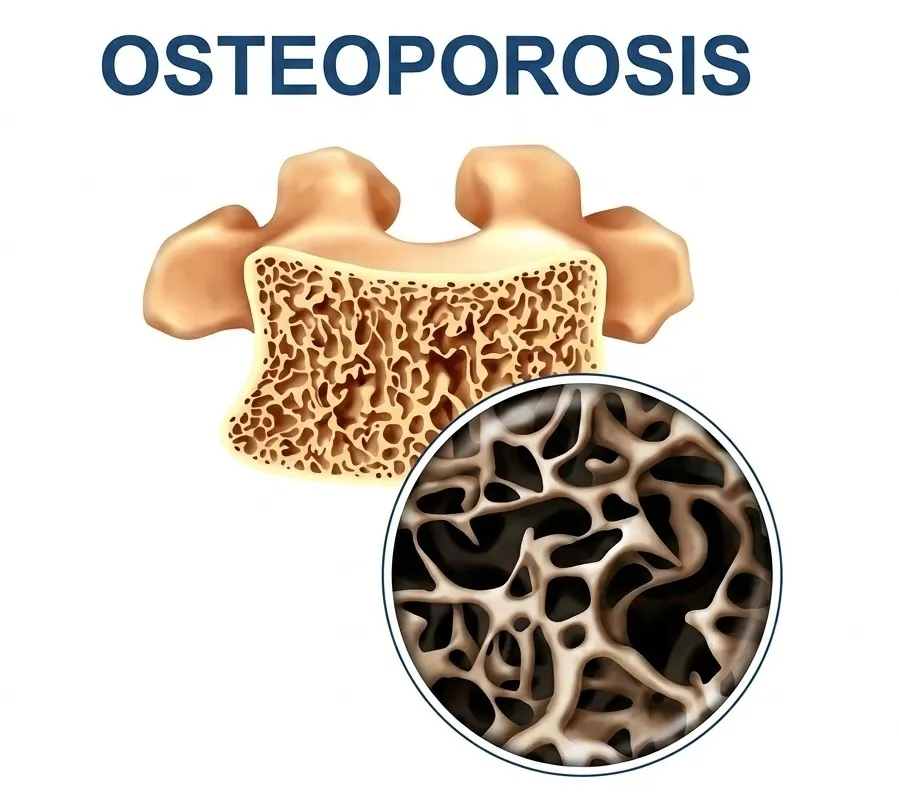
What Is Osteoporosis?
Osteoporosis is a chronic disorder in which bone mass and internal bone architecture deteriorate, making the skeleton more fragile and prone to fracture. It is common with advancing age, but younger people can also develop osteoporosis because of medical disease, hormonal problems or long-term medication exposure.
Osteoporosis can be silent
Many people have no warning symptoms until a low-energy fracture occurs. Identifying high-risk patients before the first fracture is therefore important.
Who Is at Risk?
| Less modifiable | Potentially modifiable / treatable |
|---|---|
|
|
Symptoms and Consequences
- Persistent back pain from vertebral compression or microfractures.
- Pain with weight bearing when a fracture is present.
- Loss of height or increasingly stooped posture after vertebral collapse.
- Hip, wrist or spinal fracture after a relatively minor fall or injury.
- Rarely, a severe spinal fracture can narrow the canal or affect neural structures, producing numbness or weakness.
Prevention and Fall Reduction
Protecting bone strength
- Regular weight-bearing activity such as walking and appropriate stair climbing.
- Progressive resistance training to support bone, muscle and balance.
- Adequate dietary calcium, protein and vitamin D; supplements when clinically indicated.
- Safe sunlight exposure appropriate to the individual and local conditions.
- Smoking cessation and limiting excess alcohol.
- Review medicines and medical disorders that can accelerate bone loss.
Reducing falls in older adults
- Improve lighting and remove loose rugs, clutter and trip hazards.
- Use handrails and bathroom supports where needed.
- Wear stable footwear.
- Address vision, balance and muscle weakness.
- Use a walking aid when advised rather than risking an unsupported fall.
How Is Osteoporosis Diagnosed?
| Test | Role |
|---|---|
| X-ray | Can identify compression fractures and advanced loss of bone density but is not sensitive for early osteoporosis. |
| DEXA scan | Standard bone-mineral-density measurement, usually at the hip and lumbar spine, used to diagnose low bone density and estimate fracture risk. |
| MRI / CT | Used when a fracture needs detailed assessment, to distinguish acute from older vertebral injury or evaluate neural compression. |
| Blood tests | Can assess calcium/vitamin D status and look for secondary medical or hormonal causes. |
Treatment of Osteoporosis
Medical treatment categories
- Calcium and vitamin D: correct inadequate intake or deficiency and support prescribed osteoporosis therapy.
- Antiresorptive treatment: medicines such as bisphosphonates or other agents can slow bone breakdown; formulations and dosing schedules vary.
- Bone-forming treatment: anabolic therapies may be selected for very high fracture risk or severe osteoporosis.
- Treat secondary causes: endocrine, renal, inflammatory or medication-related contributors should be addressed whenever possible.
Medication choice depends on age, fracture history, kidney function, bone-density results, other illnesses and previous treatment. Osteoporosis therapy should therefore be individualized and monitored rather than self-started.
Managing Osteoporotic Spine Fractures
Many stable vertebral compression fractures are treated with pain control, temporary bracing when appropriate, osteoporosis treatment and gradual mobilization. Persistent severe pain from selected recent compression fractures may be considered for vertebral augmentation procedures such as vertebroplasty or kyphoplasty after specialist evaluation.
Urgent assessment
A fracture with new weakness, numbness, bladder/bowel symptoms or major trauma needs prompt evaluation for neural compression or instability.
Arrange review
Sudden severe back pain after a minor fall, new height loss or persistent pain in a high-risk patient should be investigated for vertebral fracture.
Prevention matters
After one fragility fracture, treating the underlying osteoporosis is essential because future fracture risk is higher.
This article is general education written by Dr. Amit Sharma. It is not a diagnosis or a substitute for an in-person consultation.