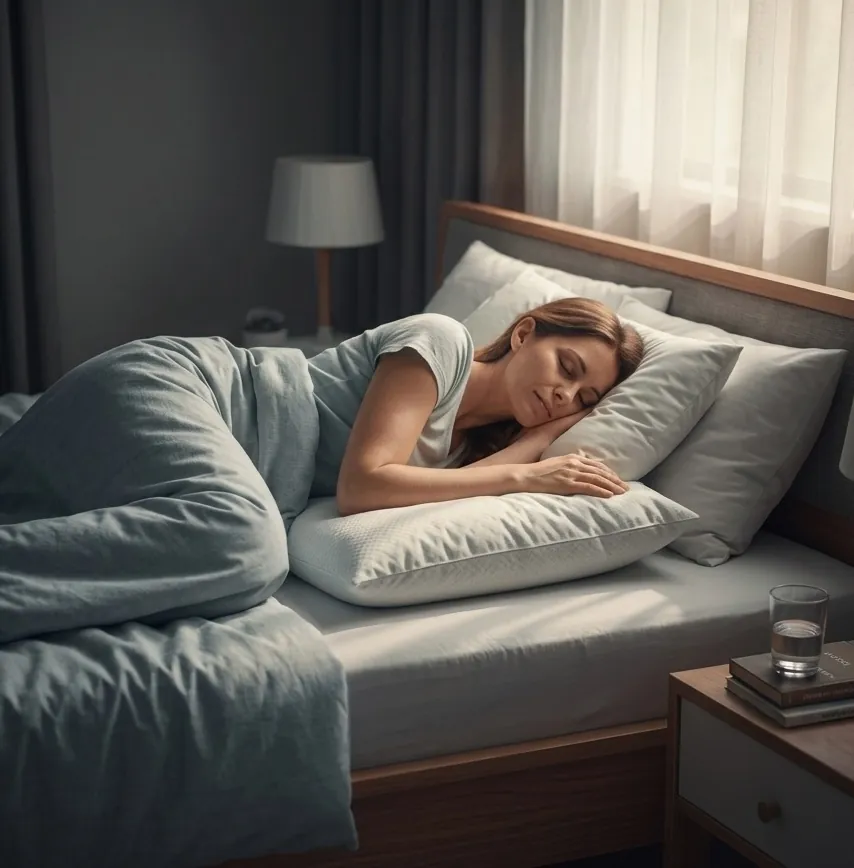
Posture matters while you are awake, but the position in which you spend several hours every night also affects comfort. Sleep should give the muscles and joints time to relax rather than repeatedly holding the neck or lower back in a strained position.
Why Sleep Matters for the Spine
During restful sleep, spinal muscles and other soft tissues are relieved from much of the active loading of the day. Poor support, however, can aggravate symptoms associated with disc problems, cervical spondylosis, sciatica or muscular lower-back pain.
| Poor support may contribute to | Good support aims to promote |
|---|---|
|
|
Best Sleeping Positions for Back Pain
Back and side sleeping
- On the back: a small pillow beneath the knees can reduce tension through the lumbar curve and distribute body weight more evenly.
- On the side: a pillow between the knees can prevent the upper leg from rotating the pelvis and lower spine excessively.
Stomach and reclining positions
- Stomach sleeping: generally places more rotational and extension stress on the neck and lower back. If unavoidable, a thin support beneath the abdomen/hips may reduce lumbar arching.
- Reclined sleeping: some people with spinal stenosis or degenerative conditions are more comfortable with the trunk and knees slightly elevated, particularly when flexion eases their symptoms.
Turn without twisting
When changing position, especially with an acutely painful back or during recovery, roll the shoulders, trunk and hips together rather than sharply twisting through the waist.
Pillow and Neck Support
The pillow should fill the space between the head and mattress while preserving a comfortable neutral neck position. A pillow that is too high can push the neck into flexion; one that is too low may allow it to drop sideways or backward.
People with chronic neck pain or cervical spondylosis may find a contoured cervical pillow comfortable, but there is no single pillow height or shape that is correct for every patient. Body size, sleeping position and mattress firmness all change the amount of support required.
Choosing the Right Mattress
| Feature | What to look for |
|---|---|
| Support | A supportive, often medium-firm surface that does not allow the trunk to sag excessively. |
| Pressure relief | Side sleepers may need enough surface cushioning at the shoulder and hip to remain comfortable. |
| Condition | Deep sagging or permanent depressions can compromise support. Replacement should be based on condition and comfort rather than age alone. |
| Individual fit | The best mattress is one that supports your body and allows you to wake without new or worsening pain. |
Healthy Sleep Habits for a Pain-Free Back
Improve sleep quality as well as posture
- Keep a reasonably consistent sleep and wake schedule.
- Avoid heavy meals, excess alcohol and late caffeine close to bedtime.
- Keep the bedroom calm, dark and quiet.
- Reduce stimulating screen use before bed.
- Gentle stretching or breathing exercises may help relax tense muscles before sleep.
When to See a Spine Specialist
Urgent symptoms
New major weakness, bladder/bowel disturbance or rapidly progressive neurological symptoms require urgent medical assessment.
Arrange a consultation
Persistent morning pain, repeated sleep disruption, worsening known spine disease or pain radiating into an arm or leg should be evaluated.
Optimize support
Occasional stiffness that settles with movement may respond to better sleep support, activity and daytime ergonomics.
Sleep is an important part of recovery and long-term spine care. The right position, pillow, mattress and sleep routine should leave the spine supported and the body rested—not more painful in the morning.
This article is general education written by Dr. Amit Sharma. It is not a diagnosis or a substitute for an in-person consultation.