What Is Cervical Spondylosis?
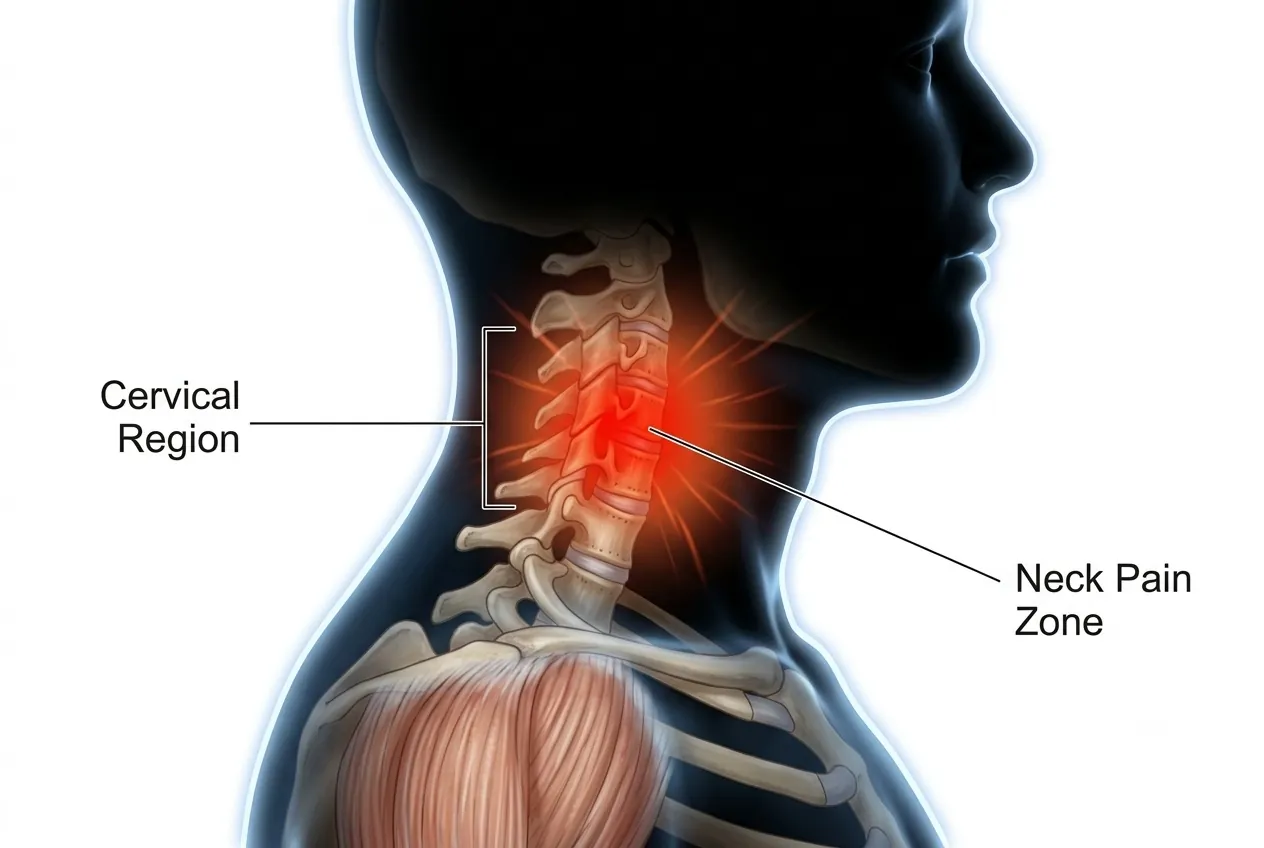
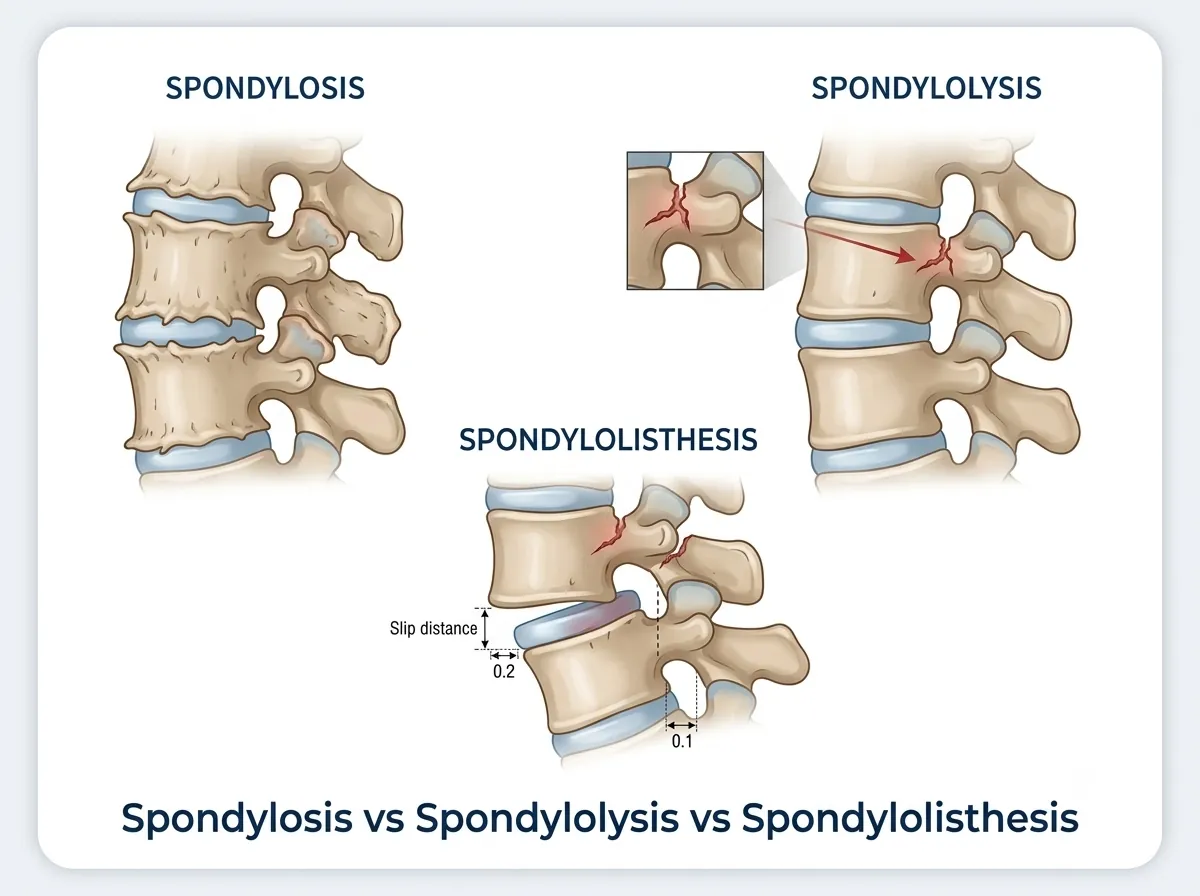
Cervical spondylosis, sometimes called cervical spondylitis, cervical osteoarthritis or neck arthritis, describes progressive degenerative changes affecting the discs, facet joints, vertebral margins and supporting ligaments of the cervical spine. These changes become increasingly common with age and are particularly frequent after the fourth decade of life.
The condition has a wide clinical spectrum. Some people have substantial degenerative changes on imaging but little or no discomfort. Others develop persistent neck pain, restricted movement, nerve-root compression or spinal-cord compression with neurological symptoms.
Degeneration does not automatically mean disability
Cervical spondylosis is common with ageing. Treatment is guided by symptoms and neurological findings—not simply by the presence of wear-and-tear changes on an X-ray or MRI.
How Degeneration Develops
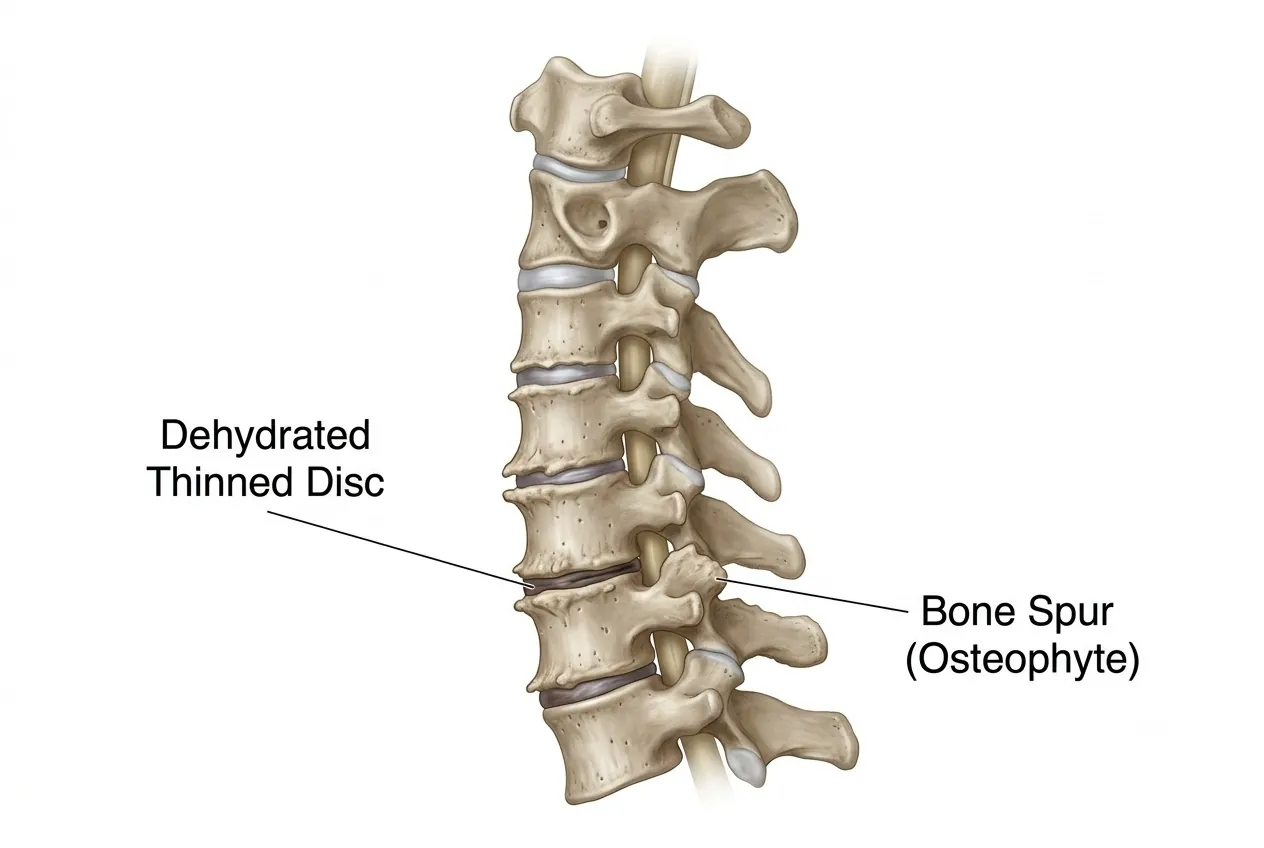
The degenerative process usually begins as cervical discs gradually lose water and elasticity. This changes how forces are distributed through the neck and can trigger secondary changes in the joints, bones and ligaments.
| Degenerative Change | What Happens | Possible Effect |
|---|---|---|
| Disc desiccation | The nucleus pulposus loses water and the disc becomes less elastic and may lose height. | Reduced shock absorption and altered cervical biomechanics. |
| Osteophyte formation | Bone spurs develop around vertebral margins as the spine responds to degeneration. | Osteophytes may narrow the foramina or spinal canal and irritate neural structures. |
| Facet-joint degeneration | The small joints at the back of the cervical spine develop arthritic change. | Neck pain, stiffness and reduced range of motion. |
| Ligamentous hypertrophy | Ligaments, including the ligamentum flavum, may thicken or buckle inward. | Further narrowing of the canal or neural foramina. |
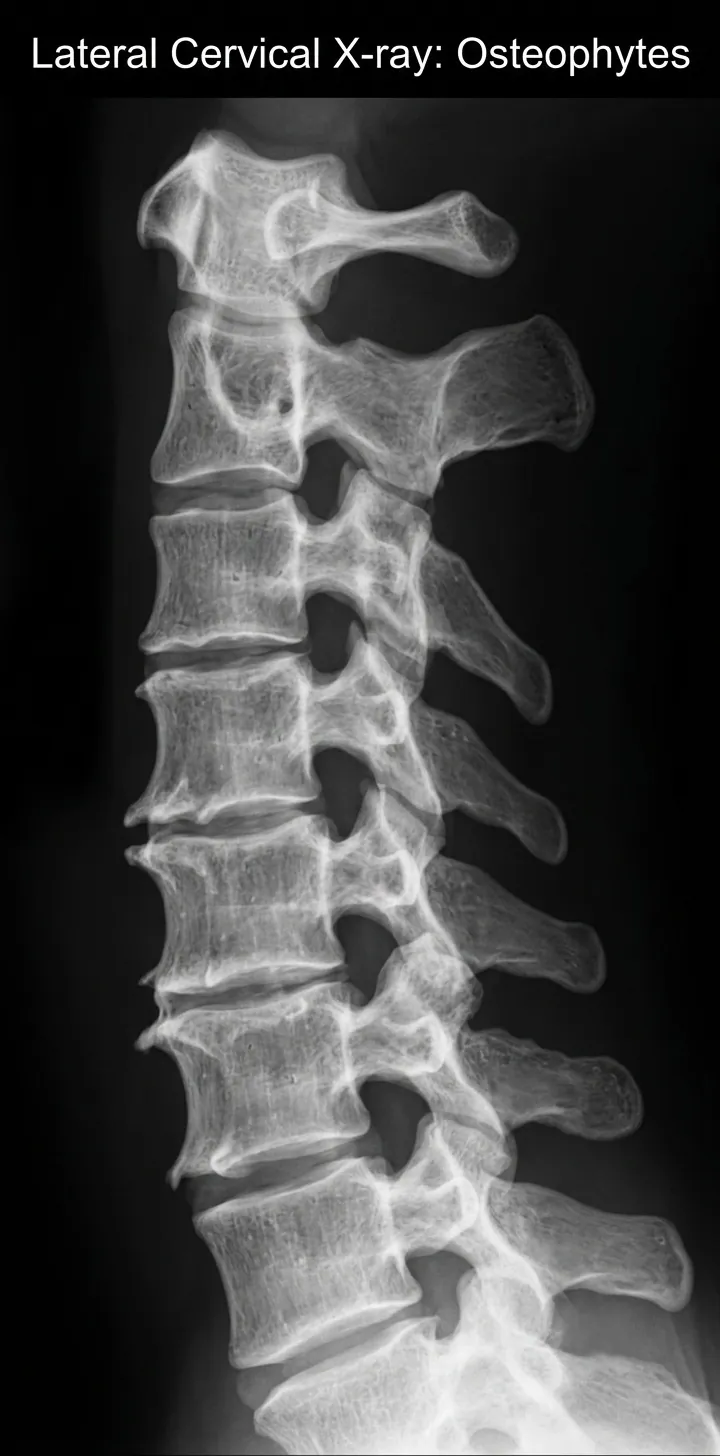 Enlarge image: X-ray showing cervical spondylosis
Risk Factors
Ageing is the principal driver, but several factors can accelerate degenerative change or make symptoms more likely.
- Repetitive microtrauma: occupations or activities involving repeated neck movements or prolonged static posture can increase mechanical stress.
- Previous neck injury: trauma, including whiplash-type injuries, may contribute to or aggravate later degenerative changes.
- Genetic predisposition: cervical degeneration can cluster in families, suggesting an inherited component in susceptibility.
- Smoking: tobacco exposure is associated with poorer disc health and accelerated degeneration.
- Obesity and physical inactivity: reduced conditioning and adverse lifestyle factors can contribute to musculoskeletal symptoms and overall degenerative burden.
Types and Symptoms
Cervical spondylosis can be described according to the severity of degeneration and, more importantly, whether the changes affect only the neck, a nerve root or the spinal cord.
| Clinical Pattern | Typical Features |
|---|---|
| Mild spondylosis | Early degenerative change with intermittent stiffness or mild neck discomfort. |
| Moderate spondylosis | More established disc and joint degeneration with persistent pain, stiffness and reduced cervical movement. |
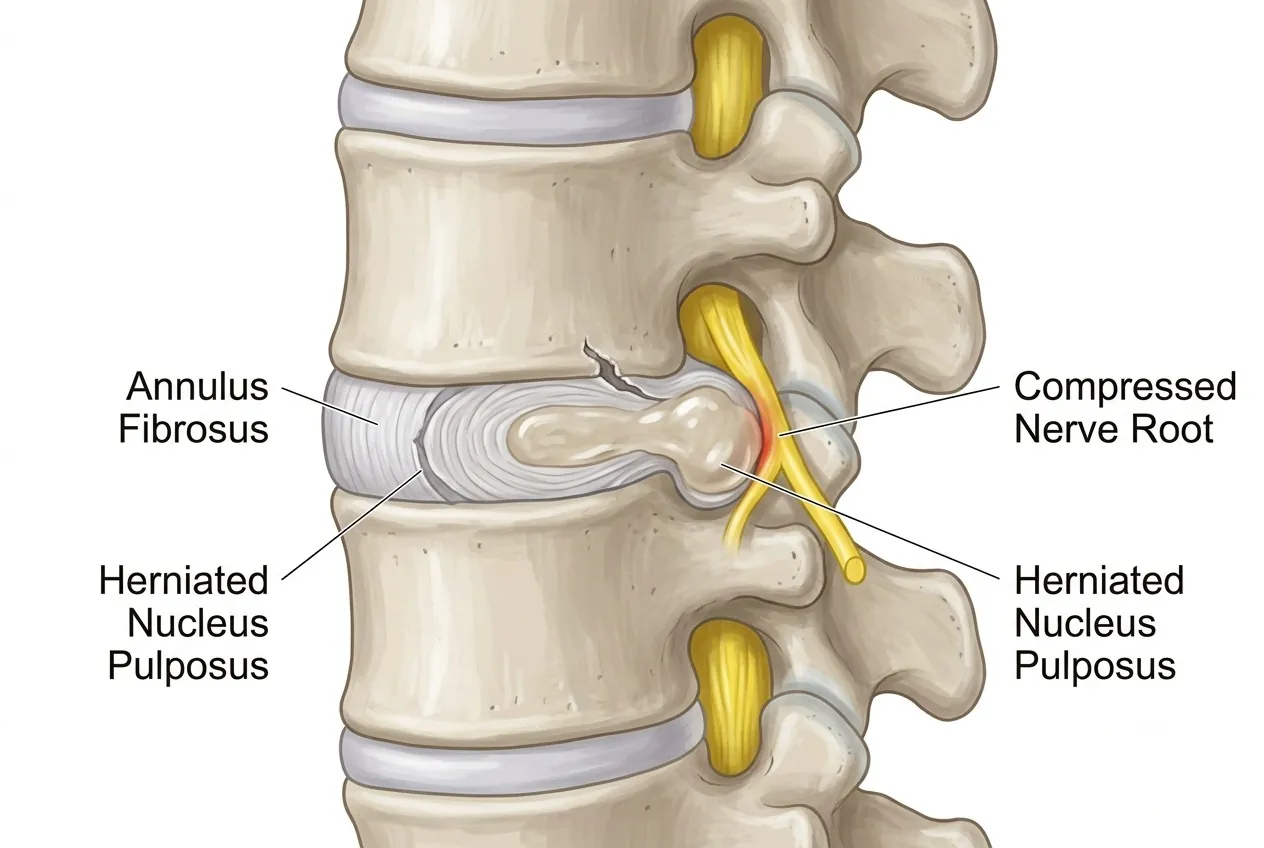
| Cervical radiculopathy | Compression or irritation of a cervical nerve root causing pain into the shoulder or arm, tingling, numbness or weakness in a nerve-root distribution. |
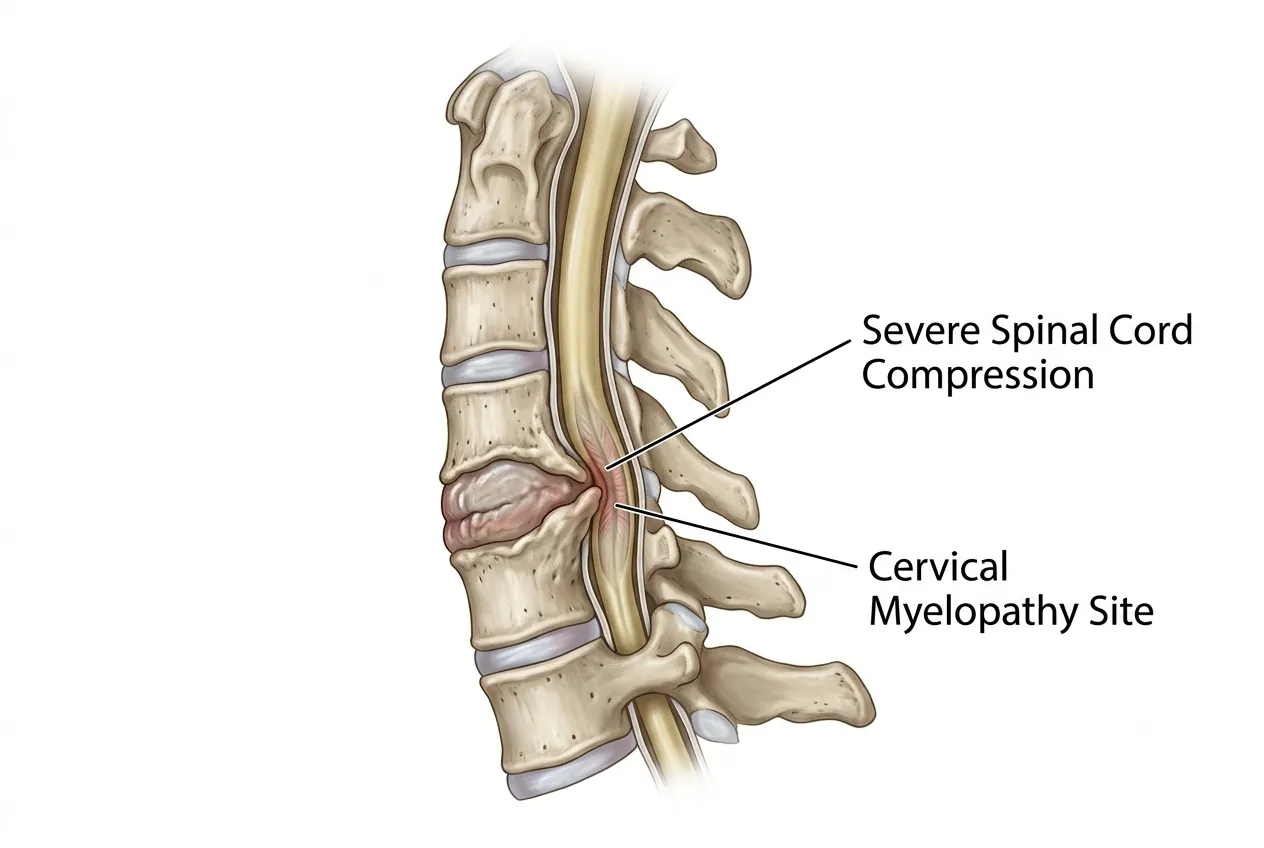
| Cervical spondylotic myelopathy | Spinal-cord compression causing hand clumsiness, gait disturbance, limb weakness or stiffness, abnormal reflexes and, in advanced disease, bladder or bowel dysfunction. |
Other symptoms can include neck stiffness aggravated by prolonged posture or activity, occipital headache extending from the back of the head, shoulder pain, numbness in the hands or fingers and reduced neck range of motion. Some patients also report dizziness, vertigo or tinnitus; these symptoms have many possible causes and should not automatically be attributed to cervical spondylosis without appropriate evaluation.
2-minute self-check
Do your symptoms deserve a closer look?
Tick anything you've noticed recently. Your guidance appears straight below. Everything stays on this page; nothing is stored or sent. This is an educational aid, not a diagnosis of cervical spondylosis.
Seek urgent medical care today
These symptoms can mean a nerve or the spinal cord is under serious pressure. Go to the nearest emergency department, or call the clinic straight away. Do not wait for a routine appointment.
Book a spine specialist review soon
Arrange an assessment within the next few days, and sooner if things get worse. If you already have an MRI, you can send it for review.
Conservative care is usually a reasonable start
Activity changes, physiotherapy and appropriate medication often help. See a doctor if it is not better in 1–2 weeks, or straight away if any time-sensitive symptom appears.
Guidance only, based on the warning signs described in this guide. It cannot find the cause of your symptoms. If symptoms are severe, getting worse quickly, or you are worried, contact a doctor.
Diagnosis
A careful clinical examination is essential. Strength, sensation, reflexes, hand function, gait and other neurological signs help determine whether symptoms represent local cervical pain, radiculopathy or spinal-cord involvement.
Tests Used in Cervical Spondylosis
- Plain X-rays: assess cervical alignment, disc-space height, osteophytes and other bony degenerative changes.
- MRI: provides detailed assessment of discs, nerve roots, the spinal canal and spinal cord and is particularly important when radiculopathy or myelopathy is suspected.
- CT scan: gives detailed information about bone, osteophytes and canal anatomy and may complement other imaging in selected cases.
- EMG and nerve-conduction studies: can help evaluate nerve function when radiculopathy needs clarification or symptoms may have another peripheral nerve cause.
Non-Surgical Treatment
Most patients without progressive neurological compromise begin with conservative treatment. The programme is tailored to the dominant problem—mechanical neck pain, stiffness or nerve-root irritation.
Conservative Treatment Options
- Medication: appropriate analgesics or anti-inflammatory medicines may be used for pain; selected patients may also require short-term muscle relaxants or medication for neuropathic pain.
- Physiotherapy: targeted rehabilitation can improve mobility, cervical and shoulder-girdle strength, posture and movement control.
- Cervical traction: may be considered in selected patients with nerve-root symptoms when clinically appropriate.
- Cervical support: a collar or orthosis may occasionally be used for short-term support, but prolonged routine immobilisation is generally avoided unless specifically advised.
- Injections: epidural or targeted spinal injections may be considered for selected patients with persistent radicular pain.
When to Seek Medical Care
Neck pain alone is often manageable conservatively, but neurological symptoms change the urgency of assessment.
Seek urgent assessment
New bladder or bowel dysfunction, rapidly worsening limb weakness, major walking deterioration or severe symptoms suggesting spinal-cord compression require prompt medical evaluation.
Arrange specialist review
Persistent arm pain, increasing numbness, loss of grip strength, hand clumsiness, balance difficulty or progressive limitation should be assessed by a spine specialist.
Routine conservative care
Mild stable neck pain or stiffness without neurological deficit can often begin with posture correction, activity modification, appropriate medication and physiotherapy.
Surgical Treatment
Surgery is generally reserved for clinically significant spinal-cord compression, progressive myelopathy, persistent disabling radiculopathy despite appropriate non-operative care or another clear structural indication. The operation is selected according to the number and location of affected levels, direction of compression, cervical alignment and stability.
| Procedure | Purpose |
|---|---|
| Anterior Cervical Discectomy and Fusion (ACDF) | The diseased disc and compressive structures are removed from the front of the neck, followed by fusion of the treated segment. |
| Cervical laminectomy / laminoplasty | Posterior decompression procedures create additional space for the spinal cord, particularly in selected multilevel disease. |
| Artificial disc replacement | In carefully selected patients, the diseased disc is replaced with a motion-preserving implant rather than performing fusion. |
Surgery is based on neurological compression—not age alone
Degenerative changes are common on scans. Surgery is considered when those changes clearly correlate with significant nerve-root or spinal-cord symptoms and the expected benefit outweighs the risks.
Prevention and Home Care
Age-related changes cannot be completely prevented or reversed, but good spinal habits can reduce unnecessary strain and help maintain function.
- Maintain a comfortable, upright posture during work and daily activities.
- Set up screens and workstations ergonomically to reduce prolonged neck flexion.
- Take regular movement breaks rather than holding one neck position for long periods.
- Perform appropriate cervical mobility and strengthening exercises regularly.
- Use a supportive pillow that keeps the neck in a comfortable neutral position rather than forcing it into excessive flexion or extension.
- Avoid unnecessary heavy lifting and repeated activities that markedly aggravate neck or arm symptoms.
- Maintain general fitness and address modifiable lifestyle factors such as smoking and excess body weight.
Imaging from Dr. Sharma's practice
The images below are from Dr. Amit Sharma's practice and are shared for education, without identifying details. Every patient's imaging is different — your own scans need an individual clinical review.
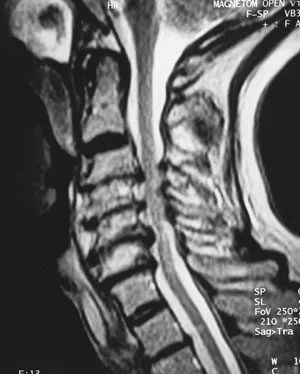 Enlarge image: Sagittal MRI of the cervical spine with multilevel degenerative (spondylotic) change.
Frequently Asked Questions
What is cervical spondylosis and why does it happen?
It is age-related degeneration of cervical discs, joints and supporting structures. Discs gradually lose hydration and height, joints become arthritic and osteophytes may develop. These changes can cause stiffness and pain or, when neural structures are compressed, neurological symptoms.
What are the early symptoms?
Early symptoms commonly include intermittent neck stiffness, aching discomfort and reduced range of motion, particularly after prolonged posture or activity.
Can cervical spondylosis cause dizziness or vertigo?
Some patients with neck problems report dizziness, but vertigo has many possible inner-ear, neurological, cardiovascular and other causes. It should not automatically be attributed to cervical degeneration without assessment.
Is cervical spondylosis reversible or permanently curable?
Established age-related structural degeneration cannot usually be restored to a completely normal youthful spine. Symptoms, however, can often be controlled effectively with conservative care, and surgery can decompress neural structures when necessary.
What lifestyle factors can worsen symptoms?
Smoking, inactivity, poor conditioning, prolonged static posture, repetitive neck strain and excess body weight may contribute to symptom burden or degeneration.
How is cervical spondylosis diagnosed?
Diagnosis combines clinical and neurological examination with imaging when indicated. X-rays assess bony degeneration and alignment; MRI is particularly valuable for nerve-root or spinal-cord compression.
What is the best treatment without surgery?
There is no single treatment for everyone. A combination of appropriate medication, physiotherapy, posture and ergonomic correction, activity modification and occasionally traction or injections is selected according to the patient's symptoms.
Can it cause pain in the arms or fingers?
Yes. Foraminal narrowing or a disc-osteophyte complex can compress a cervical nerve root and cause radiating arm pain, tingling, numbness or weakness.
Does cervical spondylosis always get worse?
Structural degeneration can progress with age, but symptoms do not necessarily worsen at the same rate. Many people remain stable or experience intermittent episodes that respond to conservative treatment.
What pillow is best?
The aim is neutral, comfortable neck alignment. Pillow height and firmness should suit the patient's sleeping position and body build; there is no single pillow design that is best for everyone.
When is surgery required?
Surgery is considered for progressive myelopathy, significant spinal-cord compression, progressive neurological deficit or persistent disabling radiculopathy that has not responded to appropriate conservative treatment.
Can exercises make cervical spondylosis worse?
Appropriate exercise is usually helpful, but forceful or unsuitable movements can aggravate symptoms. Exercises that repeatedly increase radiating arm pain, numbness, weakness or neurological symptoms should be stopped and reviewed.
How can progression be reduced?
Maintain regular physical activity, improve posture and ergonomics, avoid smoking, control body weight, minimise repetitive neck strain and seek assessment when neurological symptoms appear.
This article is general education written by Dr. Amit Sharma. It is not a diagnosis or a substitute for an in-person consultation. If you have sudden weakness, numbness in the groin or saddle area, or new bladder or bowel problems, seek emergency care.