Spine problems range from short-lived muscle strain and postural pain to disc disease, stenosis, instability and neurological compression. Most uncomplicated problems improve without surgery. Treatment should progress according to the diagnosis, severity of symptoms and neurological findings rather than jumping directly to an invasive procedure.
1. Conservative Care
Medication, support and activity modification
- Pain-relieving or anti-inflammatory medication may be used when medically appropriate.
- Muscle relaxants can be considered for significant spasm.
- Neuropathic medicines may be prescribed when nerve-type pain is present.
- Vitamin or mineral deficiencies should be corrected when identified rather than supplemented indiscriminately.
- Cervical collars or lumbar supports may have a short-term role during selected acute episodes but are not substitutes for rehabilitation.
Complete bed rest is rarely the answer
Prolonged inactivity causes deconditioning and can delay recovery. Unless there is a specific medical reason to restrict activity, patients are generally encouraged to remain mobile within tolerable limits.
2. Physiotherapy and Rehabilitation
Physiotherapy is central to many non-surgical treatment plans. It is used to rebuild spinal and core support, improve flexibility, reduce protective muscle spasm and correct movements or postures that repeatedly provoke symptoms.
Common rehabilitation components
- Strengthening: improves muscular support and load sharing.
- Stretching and mobility: addresses stiffness and spasm.
- Postural and movement retraining: reduces repeated mechanical stress.
- IFT and TENS: electrical modalities sometimes used for symptom modulation.
- Short-wave diathermy: a heat-based modality used in selected rehabilitation settings.
Exercise should be individualized. If a prescribed program repeatedly aggravates pain or produces new neurological symptoms, the diagnosis and treatment plan should be reassessed.
3. Spinal Injections and Pain Procedures
Targeted procedures may be considered when pain remains severe despite initial care, when a specific pain generator is suspected, or when temporary symptom control is needed while natural recovery continues.
| Procedure | Typical target |
|---|---|
| Epidural steroid injection | Selected radicular pain from disc or stenotic inflammation. |
| Facet block | Suspected facet-joint pain. |
| SI-joint injection | Pain arising from the sacroiliac joint. |
| Selective nerve-root block | A particular symptomatic nerve root. |
| Caudal epidural | Selected lower-back and leg-pain patterns. |
| Radiofrequency ablation | Selected chronic pain carried by identified sensory branches. |
Injections can be therapeutic and sometimes diagnostic: meaningful temporary relief after accurately targeted anesthetic can support the suspected source of pain. They may also help patients who are poor surgical candidates or provide symptom control while a stable condition is observed.
Injections require screening
Steroid injections need particular caution with uncontrolled diabetes. Anticoagulants, bleeding risk, fever and active infection must also be reviewed before a spinal procedure.
4. What Non-Surgical Treatment Can—and Cannot—Do
Medication, therapy and injections primarily control pain and inflammation and improve function while the body recovers. They do not reverse every structural change visible on an MRI. A herniated disc, for example, may shrink or become less inflammatory with time, while underlying disc degeneration remains.
Long-term posture, ergonomics, strength, sensible lifting technique, weight management and activity modification remain important even after symptoms settle.
5. When Is Surgery Considered?
Urgent assessment
New bladder/bowel dysfunction or rapidly progressive neurological weakness can require urgent surgical evaluation.
Escalate treatment
Persistent disabling pain, worsening numbness/weakness or failure of an adequate conservative trial warrants specialist reassessment.
Continue conservative care
Improving symptoms without neurological decline are usually managed progressively without surgery.
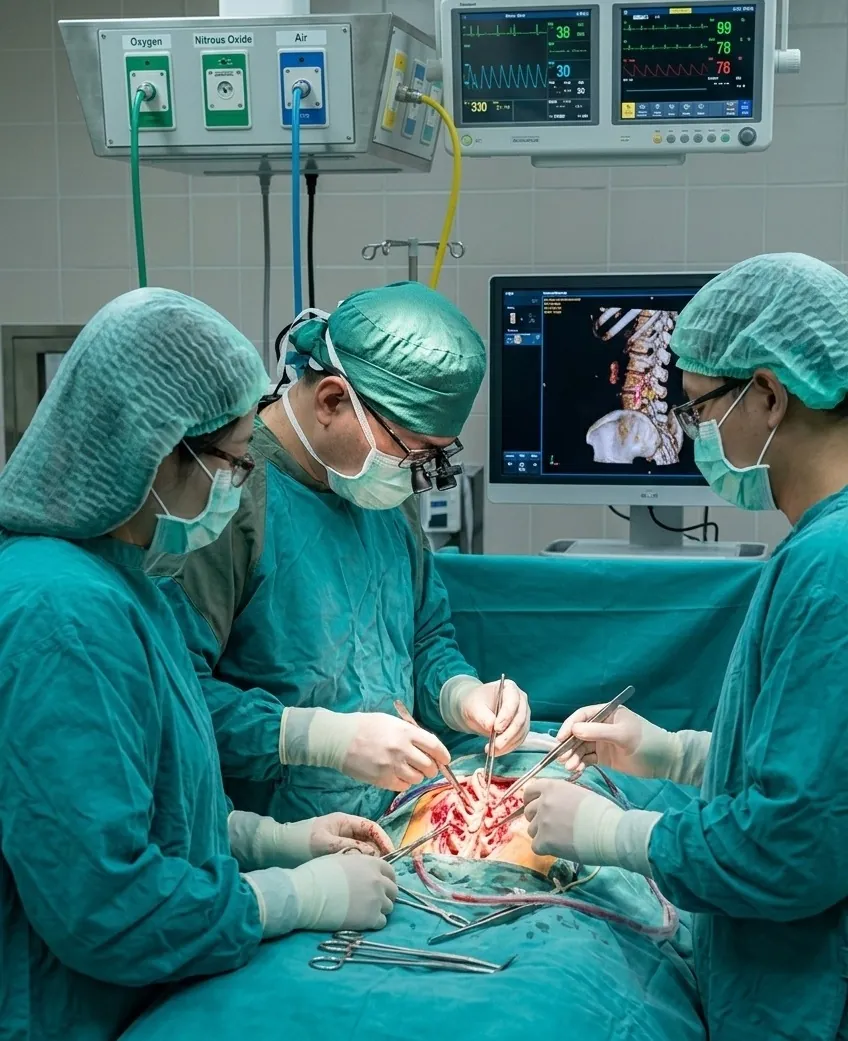
For elective surgery, symptoms and examination should correlate with a surgically correctable lesion on imaging. Duration of conservative care is individualized; a 6–8 week trial is common for many stable conditions but is not appropriate when neurological deterioration or another urgent indication is present.
6. A Stepwise Approach
The best treatment is the least invasive option that safely addresses the actual problem. For most patients this begins with education, activity modification, medication when appropriate and rehabilitation, progresses to targeted procedures when indicated, and reaches surgery only when the expected benefit clearly justifies it.
This article is general education written by Dr. Amit Sharma. It is not a diagnosis or a substitute for an in-person consultation.