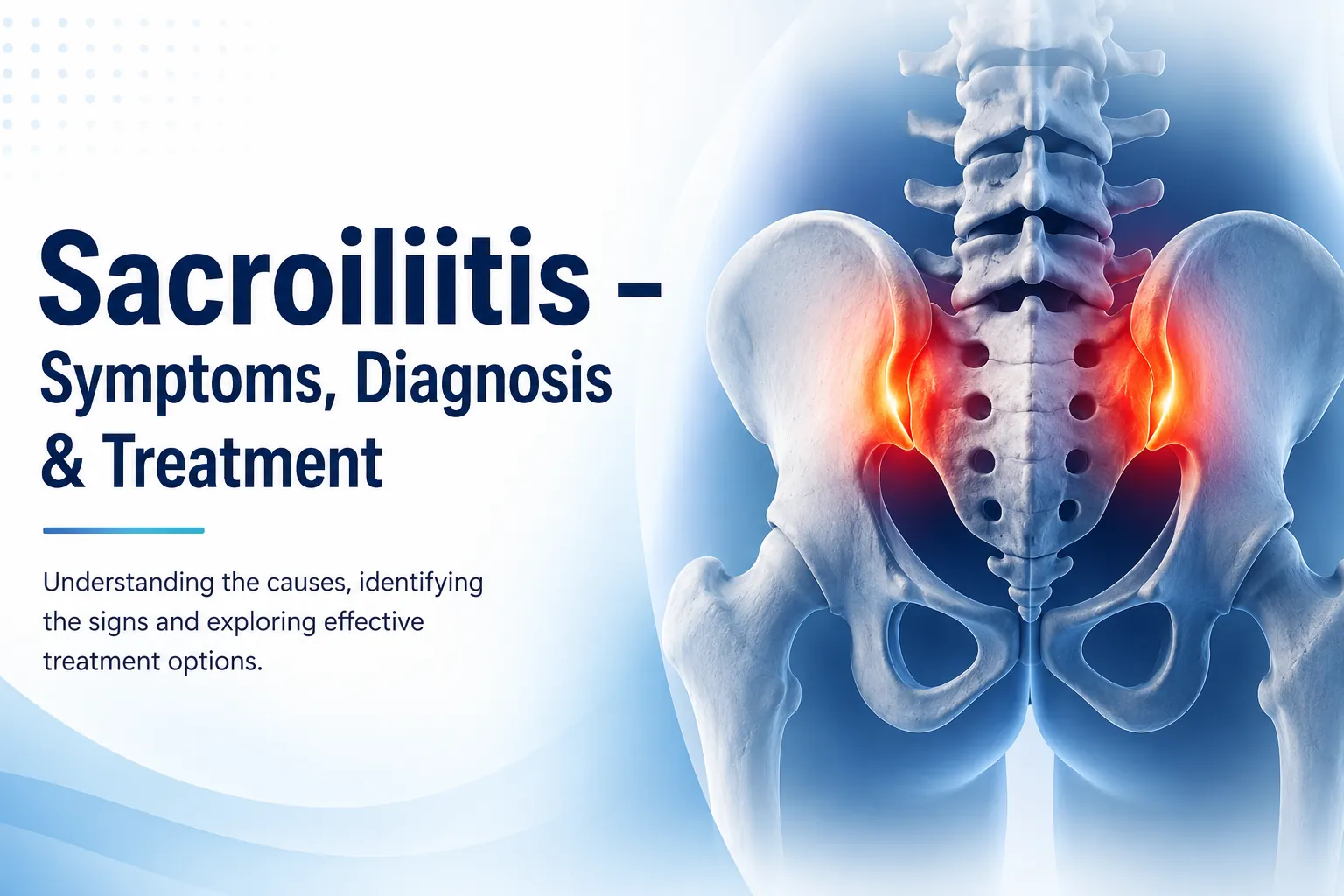
Sacroiliitis is inflammation affecting one or both sacroiliac (SI) joints, where the sacrum at the base of the spine meets the pelvic bones. These joints transfer load between the trunk and legs and contribute to pelvic stability. When inflamed or mechanically irritated, they can produce lower-back and buttock pain that closely resembles pain arising from the lumbar spine.
Symptoms of Sacroiliitis
- Pain on one or both sides of the lower back, commonly extending into the buttock or thigh.
- Discomfort that can spread upward into nearby paraspinal muscles.
- Occasionally leg pain with tingling or numbness, creating a sciatica-like presentation that requires differentiation from nerve-root compression.
- Pain aggravated by prolonged standing, stair climbing, running or lying on the affected side.
- Stiffness after rest or on waking.
SI-joint pain can imitate a slipped disc
Symptoms alone may not identify the source. Examination, imaging and sometimes a diagnostic injection are needed to distinguish SI-joint pain from lumbar disc or nerve-root disease.
Common Causes
Mechanical and degenerative causes
- Trauma: a fall or direct pelvic injury can inflame the joint; fractures extending through it may later cause arthritis.
- Osteoarthritis: age-related wear can produce chronic SI-joint degeneration.
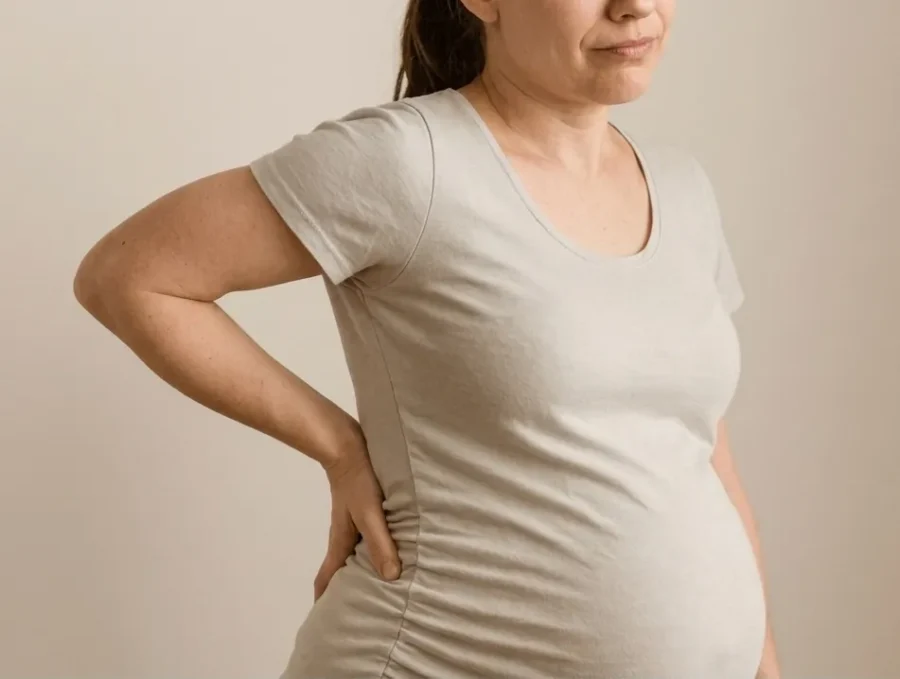
- Pregnancy and childbirth: ligament laxity and altered pelvic loading can strain the joint, with difficult or prolonged delivery adding further stress.
- Previous lumbosacral fusion: altered biomechanics can transfer greater load to the SI joints.
Inflammatory and infectious causes
- Inflammatory disorders such as ankylosing spondylitis/axial spondyloarthritis, psoriatic arthritis and reactive arthritis can involve the SI joints.
- Systemic autoimmune disease can also be part of the differential diagnosis when symptoms and laboratory findings suggest inflammatory disease.
- Bacterial or tubercular infection can involve the SI joint and may cause severe inflammation or joint destruction, particularly when diagnosis is delayed.
How Sacroiliitis Is Diagnosed
| Assessment | What it contributes |
|---|---|
| Clinical examination | Local SI tenderness and provocative maneuvers such as FABER/Patrick and Gaenslen tests can reproduce typical pain. |
| X-ray | May show joint narrowing, sclerosis or erosion in established disease. |
| MRI | Useful for early inflammatory change, marrow edema, fluid and suspected infection. |
| CT | Defines bony irregularity, subtle fracture and structural arthritic change. |
| Blood tests | ESR/CRP can support inflammatory or infectious disease; HLA-B27 is used selectively when spondyloarthritis is suspected. |
| Image-guided diagnostic injection | Substantial temporary relief after accurately placed local anesthetic supports the SI joint as the pain generator. |
Treatment Options
Conservative and interventional treatment
- Activity modification: temporarily reduce movements that repeatedly provoke symptoms.
- Physiotherapy: strengthen core and pelvic stabilizers and improve movement mechanics.
- Heat or cold: may reduce stiffness or acute discomfort.
- Anti-inflammatory/pain medication: used when appropriate for the individual patient.
- Image-guided steroid injection: may reduce inflammation in selected degenerative or inflammatory SI-joint pain.
- Radiofrequency ablation: selected sensory branches can be treated when chronic SI-joint pain is confirmed and other measures have failed.
When infection is suspected, image-guided aspiration or biopsy may be needed to identify the organism and guide antimicrobial treatment. Infectious sacroiliitis should not be managed as routine mechanical back pain.
When Is Surgery Needed?
SI-joint fusion is reserved for carefully selected severe cases after conservative and interventional options have failed, or when structural damage requires stabilization. The joint can be prepared for fusion and stabilized with implants while bone graft promotes union.
Potential indications include persistent disabling confirmed SI-joint pain, selected fractures involving the joint, and specific destructive/infectious situations requiring surgical debridement or stabilization.
When to Seek Medical Care
Urgent assessment
Severe pain with fever, systemic illness, rapidly worsening neurological symptoms or concern for infection needs prompt evaluation.
Arrange a review
Persistent buttock/lower-back pain, recurrent night pain or symptoms that fail to improve with usual care deserve a targeted assessment.
Routine conservative care
Mild improving mechanical symptoms can often begin with activity modification and guided rehabilitation.
Accurate diagnosis matters because sacroiliitis can resemble lumbar disc disease, sciatica and other causes of low-back pain. Once the pain generator and underlying cause are identified, most patients can be treated without fusion surgery.
This article is general education written by Dr. Amit Sharma. It is not a diagnosis or a substitute for an in-person consultation.