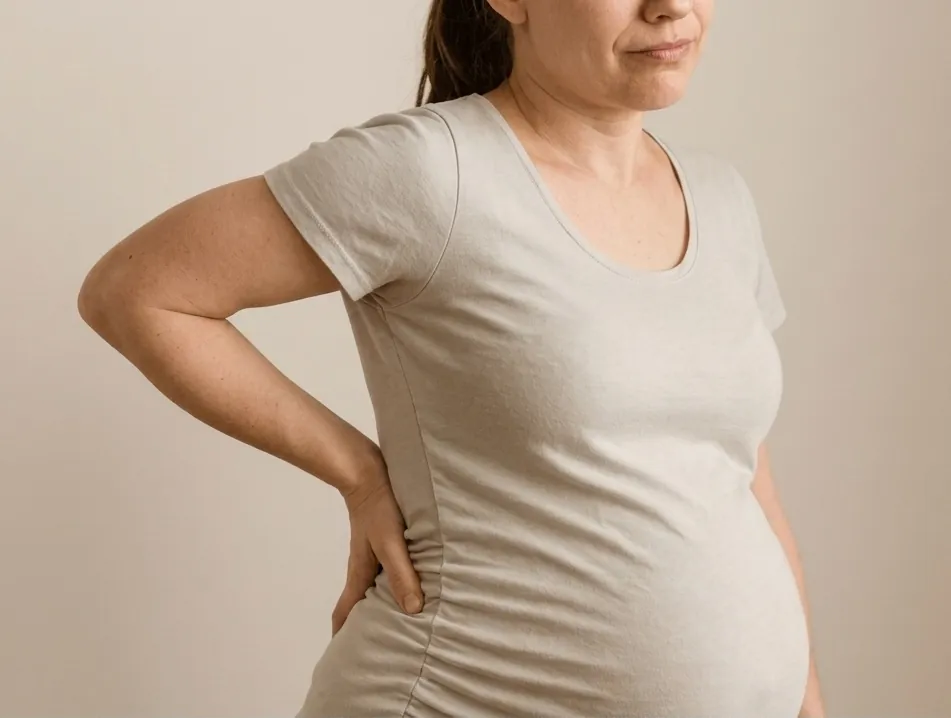
Back pain is common during pregnancy because the spine and pelvis must adapt to increasing load, a changing center of gravity, ligament laxity and altered muscle support. Symptoms are often mechanical and manageable, but pregnancy also changes how pain should be assessed and which treatments are appropriate.
Why Does Back Pain Happen During Pregnancy?
| Change | Effect on the back and pelvis |
|---|---|
| Weight gain | The growing fetus, placenta, fluid and maternal tissue increase the load carried by the lumbar spine. |
| Center-of-gravity shift | As the abdomen grows forward, posture changes to maintain balance, increasing demand on lumbar muscles and joints. |
| Hormonal ligament laxity | Pregnancy-related hormones, including relaxin, increase ligament flexibility and can reduce pelvic/SI-joint stability. |
| Abdominal stretching | The abdominal wall lengthens as the uterus expands, changing the muscular support available to the trunk. |
| Stress and muscle tension | Poor sleep, anxiety and physical stress can increase muscular tension and pain sensitivity. |
Pre-existing disc, joint or muscular problems may become more noticeable as pregnancy advances, although new back pain during pregnancy is not automatically evidence of a serious spinal disorder.
Activity and Posture Strategies
Everyday ways to reduce spinal strain
- Squat by bending the knees instead of repeatedly bending forward from the waist.
- Keep objects close to the body and distribute carried weight as evenly as possible.
- Use a supportive chair and avoid prolonged slouched sitting in very soft seating.
- During prolonged standing, periodically resting one foot on a low support may reduce lumbar strain.
- Use a supportive sleep surface and pillows to maintain a comfortable position.
- Side sleeping is commonly more comfortable as pregnancy advances; a pillow between the knees can reduce pelvic rotation.
- Choose stable, supportive footwear rather than high heels.
- Turn with the feet and whole body rather than repeatedly twisting the trunk while carrying a load.
Pain-Relief Measures
- Warm or cold packs can be used for short periods if comfortable and applied safely.
- A warm bath or gentle massage may relax muscular spasm.
- Adequate rest is useful, but prolonged inactivity can worsen deconditioning.
- Topical products and medicines should be discussed with the obstetric clinician because pregnancy changes medication safety.
Check medicines during pregnancy
Do not assume an over-the-counter painkiller or topical gel is pregnancy-safe. Paracetamol/acetaminophen is commonly used when clinically appropriate, but medication choice and dose should still be confirmed with the treating obstetric or medical team.
Exercise and Therapy
For an uncomplicated pregnancy, remaining active can help maintain strength and reduce stiffness. Walking, pregnancy-adapted physiotherapy, prenatal yoga or water-based exercise may be useful when approved by the obstetric team.
What a guided program may include
- Gentle pelvic-control exercises.
- Pregnancy-appropriate stretching for tight muscle groups.
- Modified core and hip strengthening.
- Postural and lifting education for daily activities.
- Exercise adjustments as the pregnancy progresses.
When Should You See a Doctor?
Seek prompt medical assessment
Back pain with vaginal bleeding, significant cramping, fever/chills, urinary burning, rapidly worsening weakness, or sudden rhythmic/severe pain late in pregnancy needs medical evaluation because the cause may not be purely spinal.
Arrange a clinical review
Persistent or worsening pain despite basic measures, or leg numbness, tingling or weakness, should be assessed rather than repeatedly self-treated.
Routine self-care
Mild mechanical discomfort that improves with posture changes, rest and gentle activity can usually be managed conservatively while being discussed at routine prenatal visits.
Not every pregnancy-related backache comes from the spine
Urinary infection, obstetric causes and labor can also present with back discomfort. Warning signs should therefore be discussed with the maternity team promptly.
Final Thoughts
Pregnancy-related back pain is often manageable with sensible movement, supportive posture, pregnancy-safe exercise and carefully selected symptom relief. Treatment should protect both maternal comfort and pregnancy safety, so persistent or severe symptoms deserve coordinated assessment rather than unsupervised medication or exercise.
This article is general education written by Dr. Amit Sharma. It is not a diagnosis or a substitute for an in-person consultation.