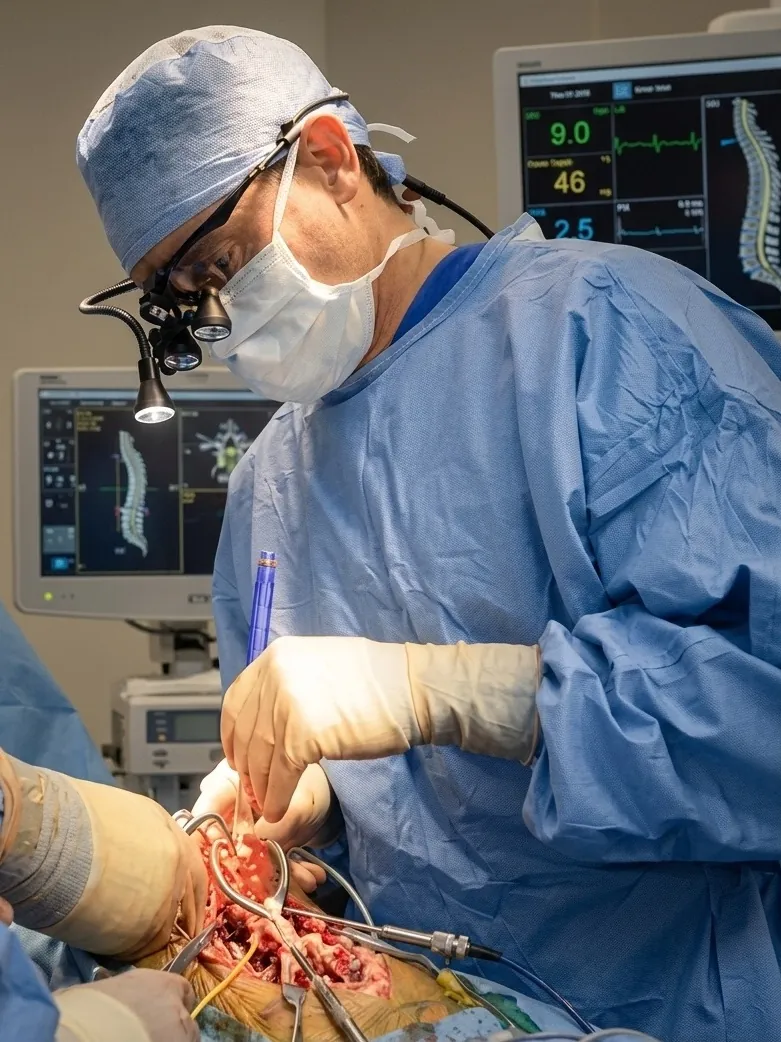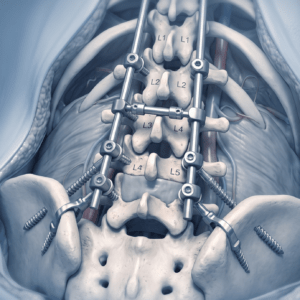
Being told that spine surgery may be necessary can be unsettling. The decision should not be based on an MRI alone or on fear of pain. It should combine the diagnosis, severity and progression of symptoms, neurological examination, imaging findings, response to non-surgical care and the patient's goals.
When Is Spine Surgery Considered Necessary?
Surgery is not the first treatment for most back or neck pain. Many patients improve with medication, physiotherapy, lifestyle changes and, when appropriate, spinal injections.
- Appropriate non-surgical treatment has failed.
- Pain, weakness or other symptoms are substantially limiting daily life.
- Symptoms persist beyond a reasonable period or continue to worsen.
- There is a clear structural problem that surgery can correct.
- Urgent neurological or structural red flags make waiting unsafe.
The Standard Stepwise Approach
| Step | Typical approach |
|---|---|
| 1. Non-surgical care | Anti-inflammatory or nerve-pain medication when appropriate, physiotherapy, posture/activity modification, heat and selected braces. |
| 2. Spine injections | Epidural steroid or other targeted injections may be considered for selected pain generators when simpler treatment is insufficient. |
| 3. Surgical evaluation | Considered when symptoms remain disabling, the condition progresses, or there is a clear indication that cannot safely wait. |
The goal is not to avoid surgery at all costs
The goal is to avoid unnecessary surgery while also not delaying an operation when neurological function or long-term recovery is at risk.
When Is Immediate Spine Surgery Recommended?
Situations that can require urgent surgical assessment
- Progressive or significant weakness/numbness in an arm or leg.
- Loss of bladder or bowel control associated with spinal nerve compression.
- Acute unstable spinal fracture.
- Spinal infection producing instability, severe compression or uncontrolled symptoms.
- Imaging showing a serious or rapidly worsening lesion that matches the clinical findings.
Immediate assessment
Bladder/bowel loss, rapidly progressive weakness or a suspected unstable fracture should not be managed by simply waiting for routine follow-up.
Timely specialist review
Persistent disabling pain, worsening numbness/weakness or symptoms that repeatedly defeat appropriate treatment need reassessment.
Conservative care is often appropriate
Stable symptoms without dangerous neurological findings can often be treated step by step before surgery is considered.
Should You Get a Second Opinion?
Yes. A second opinion is reasonable before elective spine surgery. Surgeons may differ in training, preferred approach and threshold for intervention, so the exact technique can vary even when the diagnosis is the same.
What may differ between surgical opinions
- How long to continue conservative treatment.
- Whether decompression alone or decompression plus fusion is appropriate.
- Open, minimally invasive or endoscopic access when more than one technique is technically suitable.
- The expected balance between symptom relief, surgical risk and recovery time.
Minimally invasive surgery can reduce muscle disruption, hospital stay and recovery time in suitable cases, but the least invasive operation is the one that safely and adequately treats the actual problem—not simply the operation with the smallest incision.
Signs That Surgery May Offer the Best Chance of Recovery
- Long-standing symptoms that are not improving.
- Pain or weakness severely disrupting normal activity.
- Clear MRI/X-ray pathology that matches the symptoms and examination.
- Progressive neurological deterioration.
- Imaging or clinical red flags that create a risk of future complication.
- A specialist assessment showing that surgery has a clear, realistic treatment target.
Making the Right Decision
Spine surgery is individualized. The right decision comes from matching symptoms and examination to imaging, understanding what has already been tried, identifying what surgery can realistically improve and weighing that benefit against the risks of both operating and waiting.
This article is general education written by Dr. Amit Sharma. It is not a diagnosis or a substitute for an in-person consultation.