Most back and neck pain improves without an operation. When surgery is genuinely required, safety depends on more than a single device or technique: correct diagnosis, appropriate patient selection, careful planning, experienced surgical and anesthesia teams, precise execution and structured recovery all matter.
When Is Spine Surgery Needed?
- Persistent symptoms despite an appropriate course of non-surgical treatment.
- Numbness, tingling or weakness caused by nerve or spinal-cord compression.
- Herniated disc, stenosis, instability, deformity or fracture with a clear surgical indication.
- Difficulty walking or bladder/bowel dysfunction related to significant neural compression.
Timing can be part of surgical safety
When neurological function is deteriorating, delaying an indicated operation can reduce the chance of complete recovery. Elective pain surgery and urgent neurological surgery should not be treated as the same situation.
Minimally Invasive Spine Surgery
MISS uses smaller working corridors and specialized instruments, often with image guidance, to reach the surgical target while limiting unnecessary muscle disruption.
Potential advantages in suitable patients
- Less muscle injury and blood loss.
- Reduced postoperative pain in many procedures.
- Smaller wounds and potentially lower wound-related risk.
- Earlier mobilization and shorter hospital stay in selected operations.
Microscope and Endoscope-Assisted Surgery
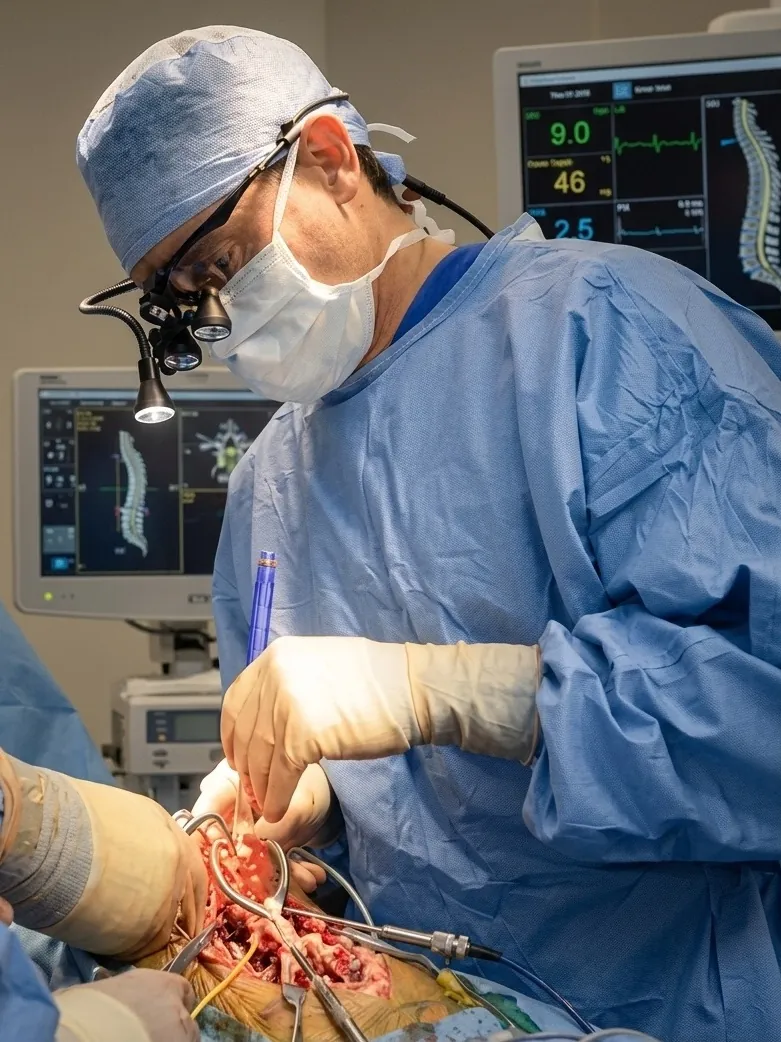
High-definition microscopes and endoscopes magnify and illuminate the operative field. This can help the surgeon work precisely around nerves and perform targeted decompression while minimizing unnecessary tissue disturbance.
| Technology | Primary role |
|---|---|
| Microscope / endoscope | Magnified visualization and precise decompression around neural structures. |
| Neuromonitoring | Tracks selected spinal-cord and nerve signals during complex surgery. |
| Navigation / robotic guidance | Supports planned trajectories and implant placement using 3D spatial guidance. |
Neuromonitoring for Nerve Protection
Intraoperative neuromonitoring (IONM) may be used in complex procedures to monitor selected electrical signals from the spinal cord and nerves. A meaningful change alerts the team to reassess factors such as positioning, anesthesia, blood pressure, correction manoeuvres or implant placement.
Computer Navigation and Robotic Guidance
Navigation creates a 3D spatial reference for the patient's anatomy and instruments. Robotic guidance can help execute a planned screw trajectory. These tools are particularly useful in selected fusion, deformity and revision procedures where anatomy may be complex.
Technology supports the surgeon; it does not replace judgment
Navigation, robotics and monitoring can improve information and precision, but safe surgery still depends on correct indication, planning, surgical technique and the team's ability to respond when anatomy or conditions differ from the plan.
Modern Implants and Fusion Materials
Common fusion-support materials
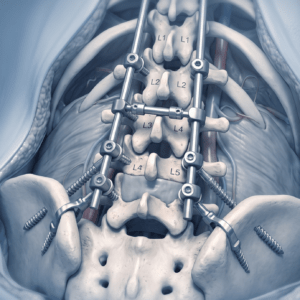
- Biocompatible screws, rods and cages provide mechanical stability when fusion is required.
- Bone-graft options can include the patient's own bone, donor bone and synthetic substitutes such as calcium-phosphate materials.
- Bone morphogenetic proteins may be considered in selected circumstances; choice of graft material should be individualized because benefits, risks and indications differ.
What to Expect After Minimally Invasive Surgery
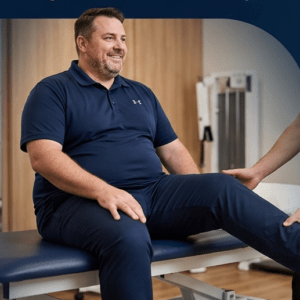
Many patients undergoing suitable minimally invasive procedures begin walking on the day of surgery or the following day. Short-stay pathways may allow discharge within roughly one to two days, while return to work and full activity depends on the operation, occupation and neurological recovery.
A personalized postoperative plan—wound care, walking, physiotherapy, medication, activity progression and follow-up—is part of safe surgery, not an afterthought.
This article is general education written by Dr. Amit Sharma. It is not a diagnosis or a substitute for an in-person consultation.