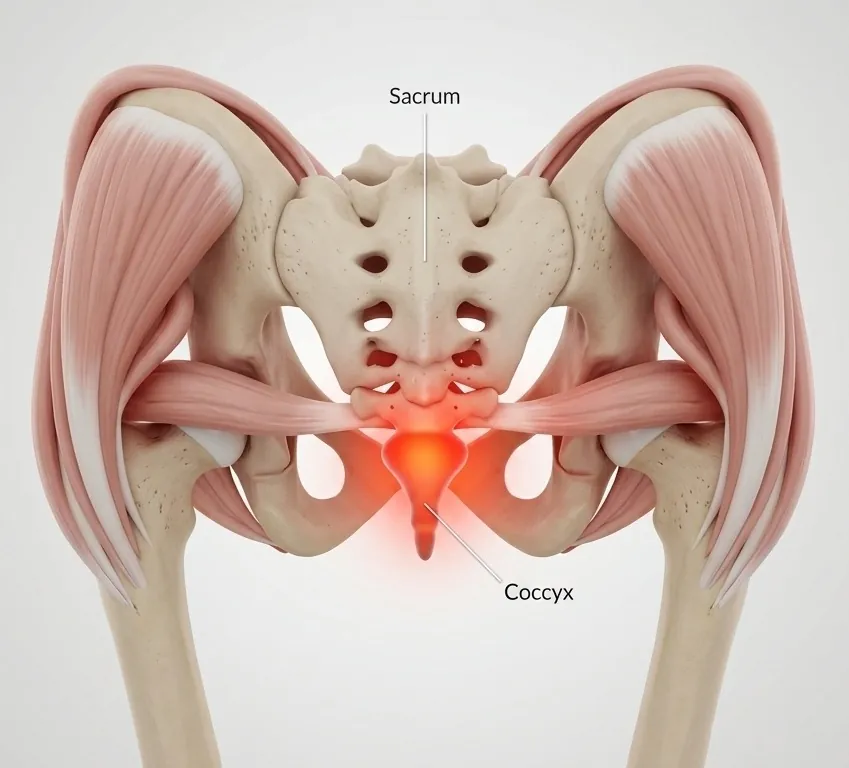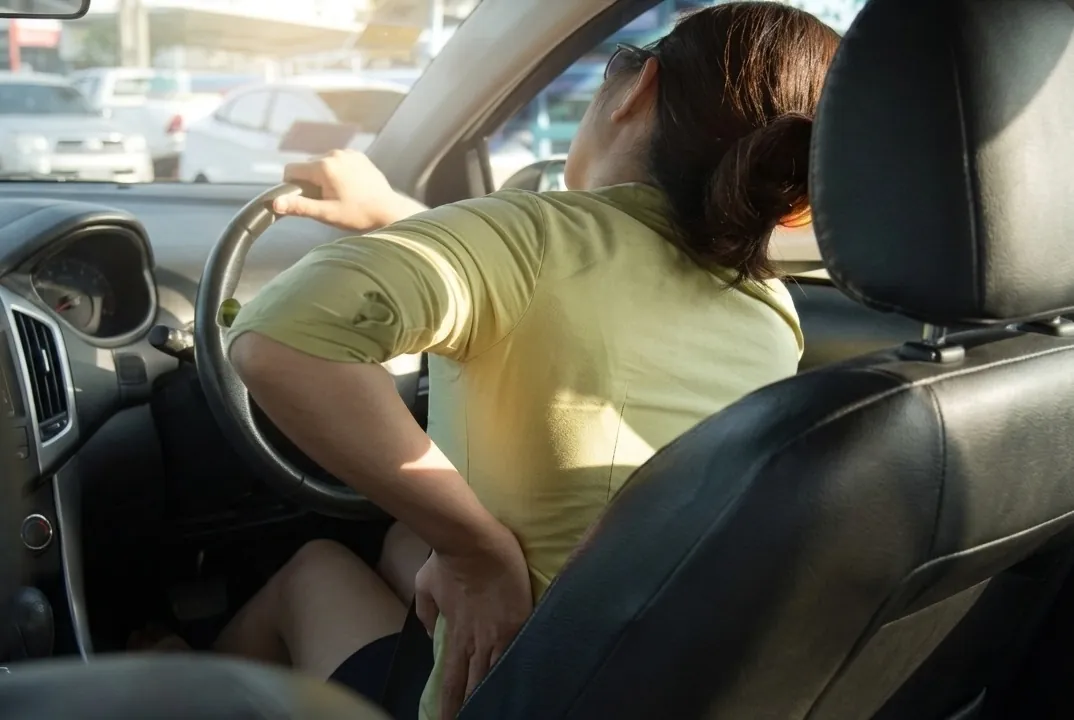
Driving combines prolonged sitting, limited movement and repeated vibration from the road. This can produce lower-back pain, tailbone discomfort and neck stiffness even in otherwise healthy people, while a pre-existing disc problem, sciatica or muscle spasm may be aggravated by a long journey.
Why Driving Can Hurt the Back
| Driving factor | Effect |
|---|---|
| Prolonged sitting | Maintains the spine in one loaded position and can increase stiffness. |
| Slouched/reaching posture | Adds sustained load to lumbar and neck muscles. |
| Road vibration and jolts | Repeated vibration can irritate already sensitive spinal and muscular structures. |
| Lack of movement | Reduces normal position changes and can contribute to muscular fatigue. |
Set Up the Seat Before You Drive
A practical driving-position checklist
- Remove a bulky wallet, phone or other object from the back pocket before sitting.
- Move close enough to the steering wheel and pedals that you do not have to reach or lean forward.
- Keep the backrest upright with a small comfortable recline rather than lying far back.
- Support the lumbar curve with the seat or a small lumbar cushion if required.
- Support the thighs and keep the knees around hip level or slightly lower.
- Position the feet so the pedals can be operated without stretching the leg or pelvis forward.
Vehicle condition also matters on long journeys. Supportive seats, properly maintained tyres and suspension, and avoiding unnecessarily rough routes can reduce vibration and repeated jolting.
Take Breaks and Keep Moving
On long drives, stop roughly every 1.5–2 hours when practical and safe. A short 5–10 minute walk and gentle stretch changes the loading on the spine and helps relieve stiffness.
Between stops, small comfortable changes in posture can prevent the body from remaining locked in one position. On very long journeys, sharing driving duties with another qualified driver reduces continuous exposure.
The best posture is not a frozen posture
A well-adjusted seat is important, but regular movement is equally important. Even a good position can become uncomfortable when held for hours without change.
Build a More Resilient Back
Regular stretching and progressive core and back strengthening improve the body's tolerance for prolonged sitting. This matters particularly for people who commute daily or spend substantial time in a vehicle.
Supportive accessories
- A small lumbar cushion can improve support when the vehicle seat does not fit the lower back well.
- A coccyx cushion may reduce direct pressure for selected patients with tailbone pain.
- Braces or cervical collars should not be used routinely simply because a journey is long; use them only when specifically recommended for the underlying condition.
Managing Back Pain During a Journey
If pain begins, pull over at a safe location rather than forcing yourself to continue in increasing discomfort. Walk, stretch gently and reassess whether you can operate the vehicle comfortably and safely.
Symptom-relief measures for known back pain
- Heat or cold may be used during a break if it is normally helpful and safe for you.
- Topical pain relief or prescribed medication should be used only as directed.
- Do not drive if a pain medicine or muscle relaxant makes you sleepy, dizzy or slows reaction time.
- Any preventive medication before travel should be taken only when your treating doctor has specifically advised it.
Pain is a signal to change something
Increasing pain during a journey should prompt a safe stop, movement and reassessment. Repeatedly driving through significant symptoms can aggravate the problem and may also impair safe vehicle control.
When to Seek Medical Attention
Urgent assessment
New major weakness, bladder/bowel disturbance or rapidly progressive neurological symptoms require urgent medical evaluation.
Book a review
Pain lasting more than a few days, pain radiating into an arm or leg, persistent numbness/tingling, weakness or difficulty walking deserves specialist assessment.
Modify the journey
Temporary stiffness that settles after a break often responds to better seat setup, regular movement and gradual conditioning.
This article is general education written by Dr. Amit Sharma. It is not a diagnosis or a substitute for an in-person consultation.