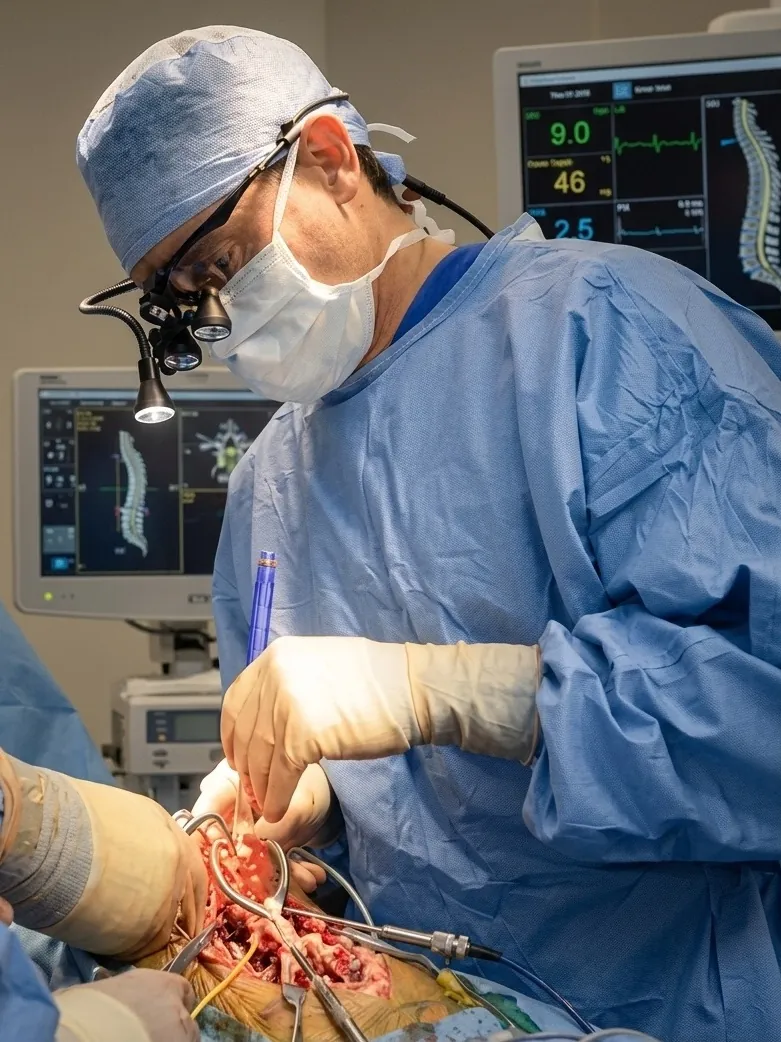
Spine surgery is highly specialized, and there is no single fixed price that applies to every patient. The final hospital bill depends on the operation, hospital category, room selection, operating-theatre time, implants, technology used and length of stay.
What Drives the Cost of Spine Surgery?
Hospital room category and facility
- Room category: in many Indian hospitals, choosing a private or deluxe room can increase more than room rent; OT charges, investigations, professional fees and nursing charges may also be linked to the room category.
- General/shared accommodation: can therefore lower the overall package substantially.
- Hospital type: tertiary/corporate hospitals may cost more because they provide advanced imaging, navigation, ICU backup and round-the-clock multidisciplinary support.
- Smaller specialized hospitals: may be more economical when they still have the surgeon, equipment, postoperative facilities and emergency/ICU backup required for the planned case.
Procedure Complexity and Operating-Theatre Time
A short decompression or discectomy is very different from multilevel fusion or deformity correction. More complex operations generally require longer theatre time, more anesthesia and medication, and sometimes greater blood-management requirements.
| Procedure category | Typical cost drivers |
|---|---|
| Discectomy / laminectomy | Shorter procedure, usually no major instrumentation. |
| Fusion | Implants, bone graft material and longer theatre time. |
| MISS / endoscopic surgery | Specialized instruments/technology, often balanced by shorter stay in suitable cases. |
| Multilevel/deformity correction | Longer surgery, many implants, advanced monitoring/navigation and greater perioperative resources. |
Implants and Hospital Stay
Implants and devices
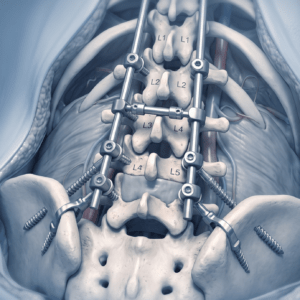
- Titanium screws and rods.
- Interbody cages.
- Artificial discs where indicated.
- Bone-graft substitutes.
- Imported systems may cost more than Indian-manufactured alternatives, while multilevel constructs require more screws, rods and cages than a single-level operation.
Every additional inpatient day adds room charges, doctor visits, medicines, nursing and sometimes physiotherapy. In selected patients, minimally invasive or endoscopic surgery may reduce length of stay and some associated costs.
Approximate Spine Surgery Costs in India
| Procedure | Approximate range in supplied guide |
|---|---|
| Microdiscectomy / Laminectomy | ₹1,00,000–₹2,50,000 |
| Single-level spinal fusion | ₹2,50,000–₹4,50,000 |
| Multilevel fusion | ₹4,50,000–₹8,00,000 |
| Endoscopic spine surgery | ₹1,50,000–₹3,00,000 |
| MIS TLIF | ₹3,50,000–₹6,50,000 |
| Scoliosis / kyphosis deformity correction | ₹6,00,000–₹10,00,000+ |
These figures are estimates, not quotations
Actual cost can vary substantially with city, hospital, surgeon, diagnosis, implant brand/quantity, complications and length of stay. A patient-specific estimate should follow clinical evaluation and surgical planning.
How to Reduce Cost Without Compromising Safety
- Choose a general or semi-private room if clinically appropriate and acceptable to you.
- Discuss implant options and their pricing with the surgeon instead of assuming the most expensive implant is automatically necessary.
- Consider a specialized smaller hospital only when the required surgical equipment, trained staff and emergency/ICU backup are available.
- Ask whether a minimally invasive or endoscopic approach is genuinely suitable; it can reduce stay in selected cases but should not be chosen for cost alone.
- Check mediclaim, cashless authorization, exclusions, co-payments and implant limits before admission.
Planning Your Surgery
Compare the complete treatment plan—not just one number
A useful estimate should identify the procedure, expected stay, room category, implant assumptions and major inclusions/exclusions. This makes financial planning clearer and reduces surprises.
This article is general education written by Dr. Amit Sharma. It is not a diagnosis or a substitute for an in-person consultation.