Understanding Endoscopic Spine Surgery
Endoscopic spine surgery is an advanced minimally invasive technique in which a thin tubular camera system—the endoscope—is introduced to the spine through a very small incision. The camera provides a magnified, high-definition and brightly illuminated view of the operative anatomy on a monitor, allowing the surgeon to work precisely around nerves, discs, bone and ligaments while limiting unnecessary soft-tissue disruption.
Compared with traditional open exposure, endoscopic access generally requires less muscle dissection. In appropriately selected cases this can mean less postoperative pain, lower blood loss, a smaller scar, earlier mobilization and a shorter hospital stay. Some procedures can be performed under local or regional anaesthesia with sedation and may be suitable as day-care surgery, which can be particularly useful for selected elderly patients or people in whom a larger operation carries greater medical risk.
The endoscope changes the access—not the surgical goal
The aim remains complete and safe treatment of the actual problem, such as removing a herniated disc or decompressing a nerve. A tiny incision is useful only when adequate treatment can be achieved through it.
See the technology
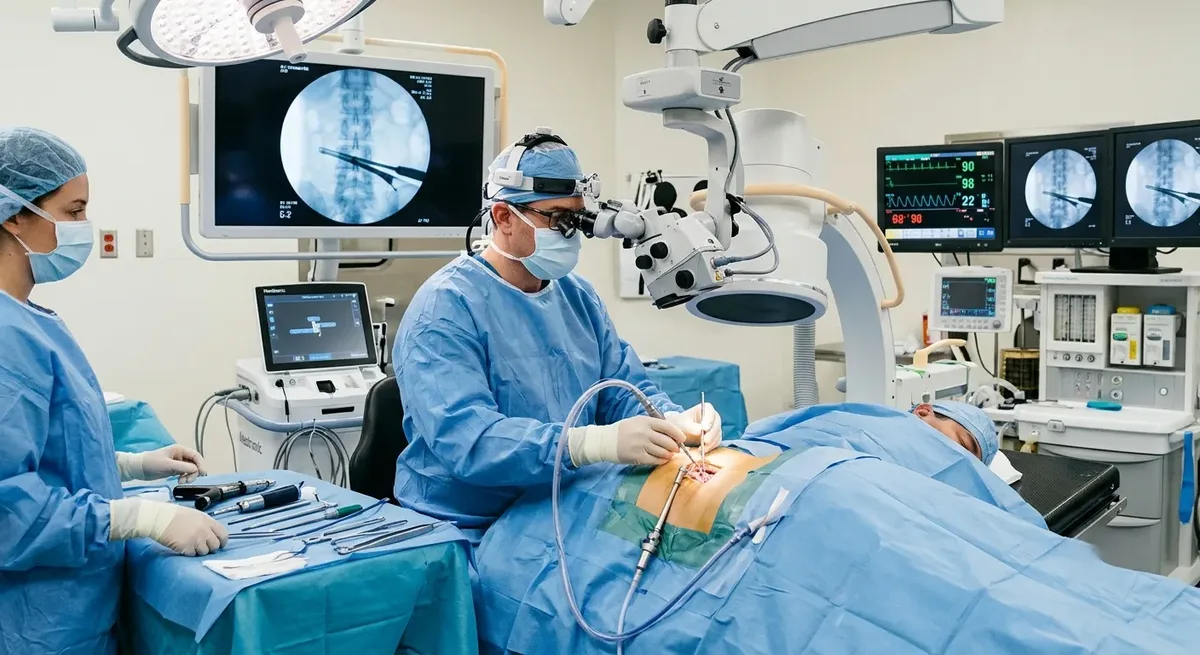
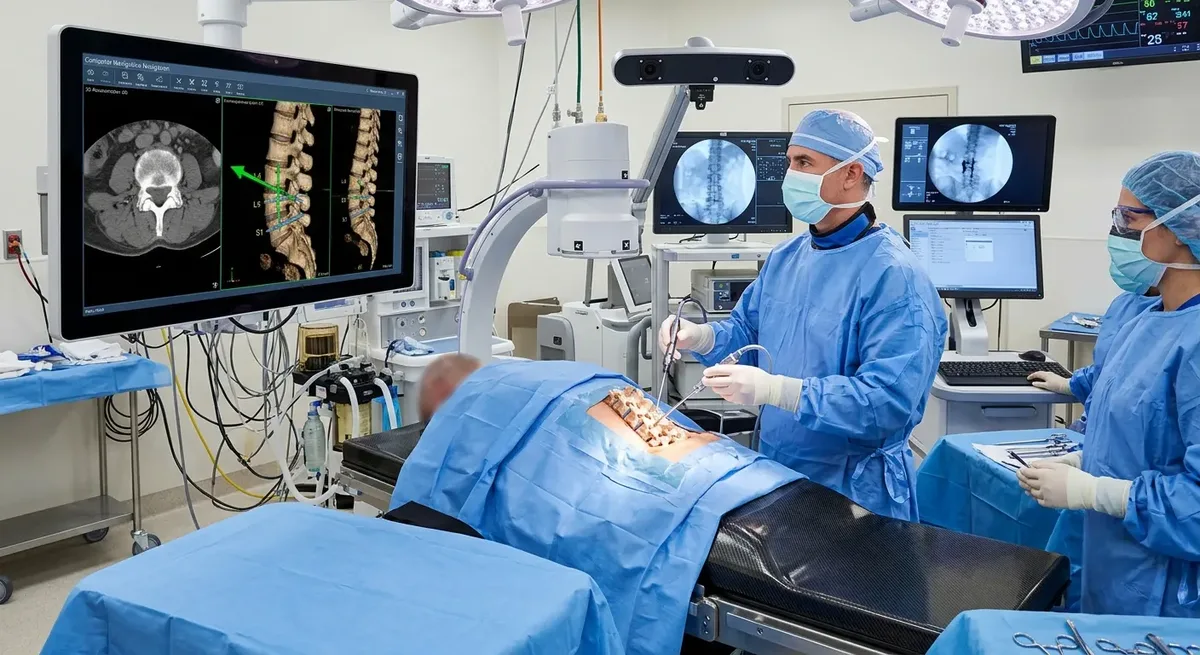
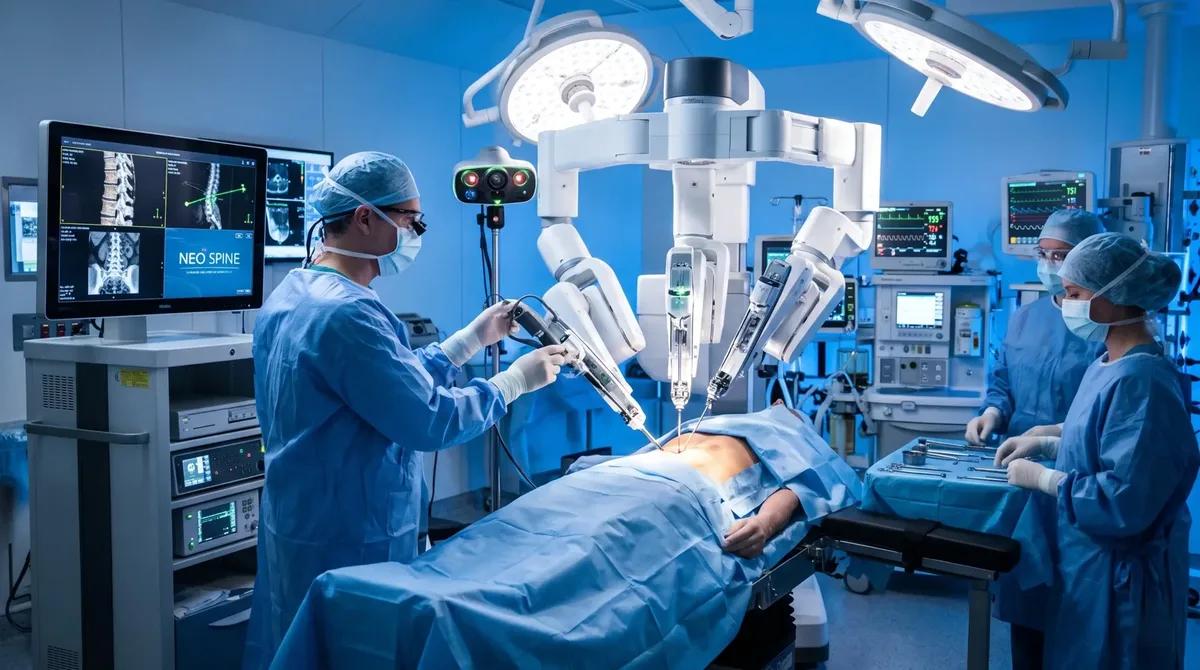
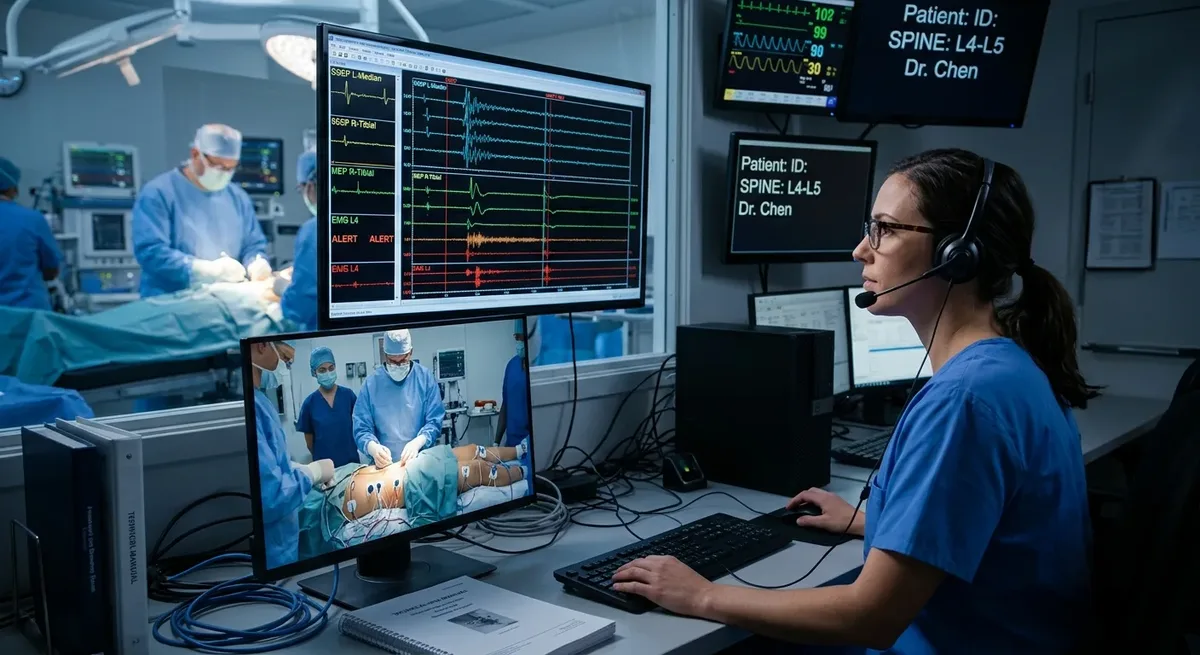
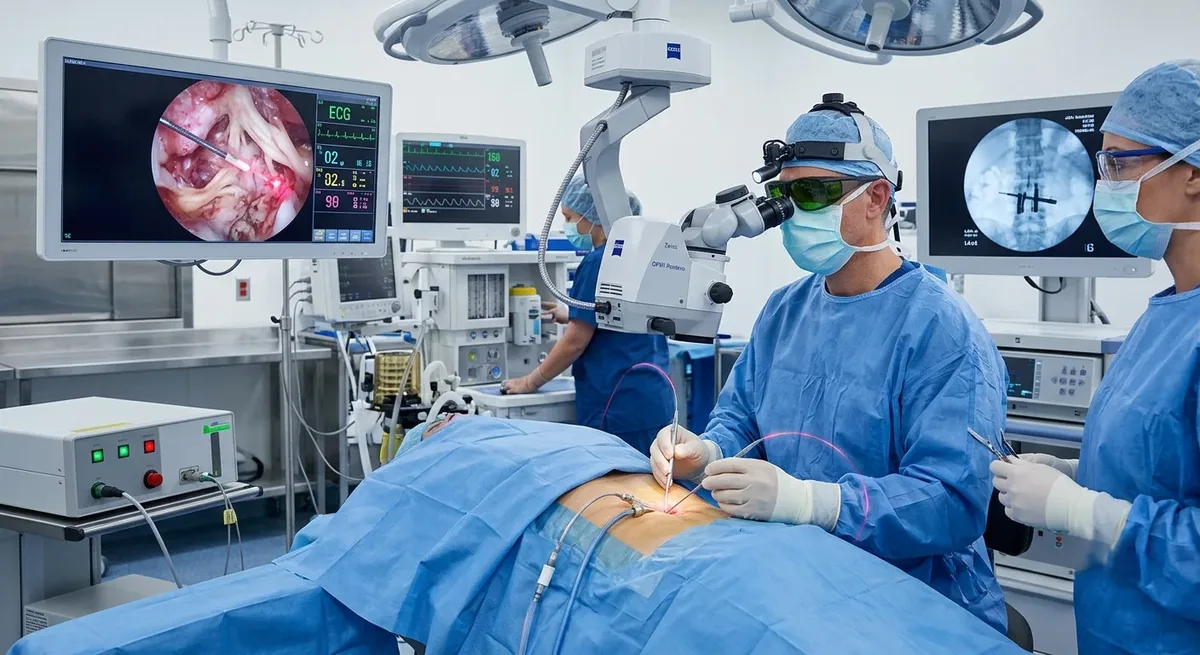
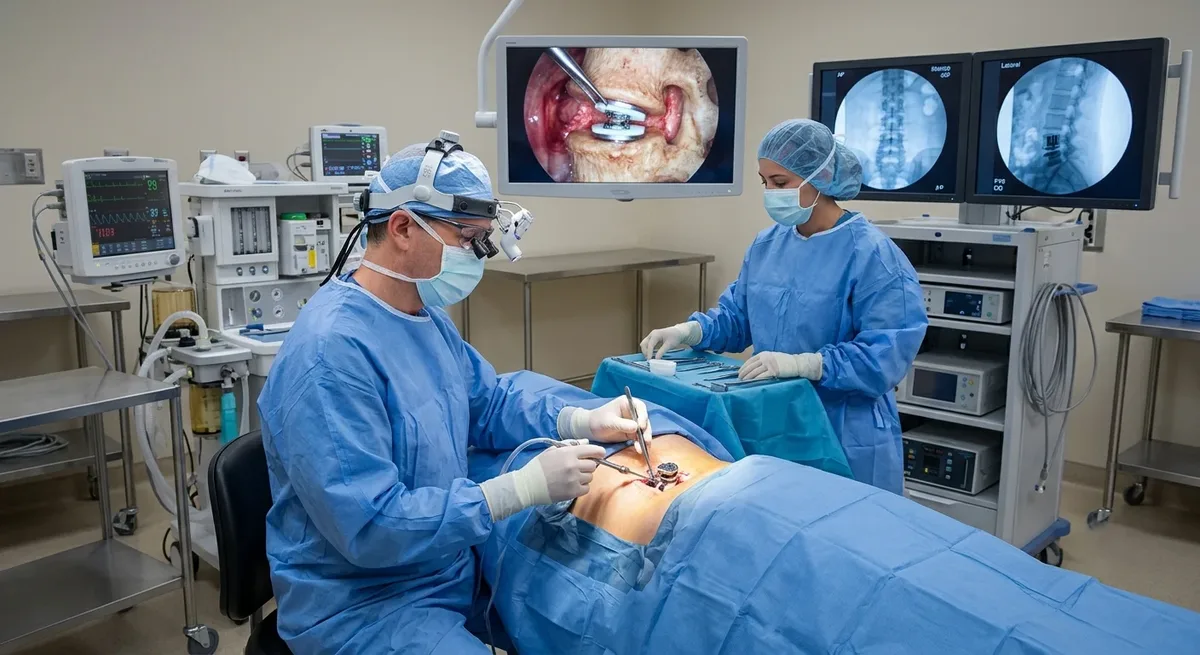
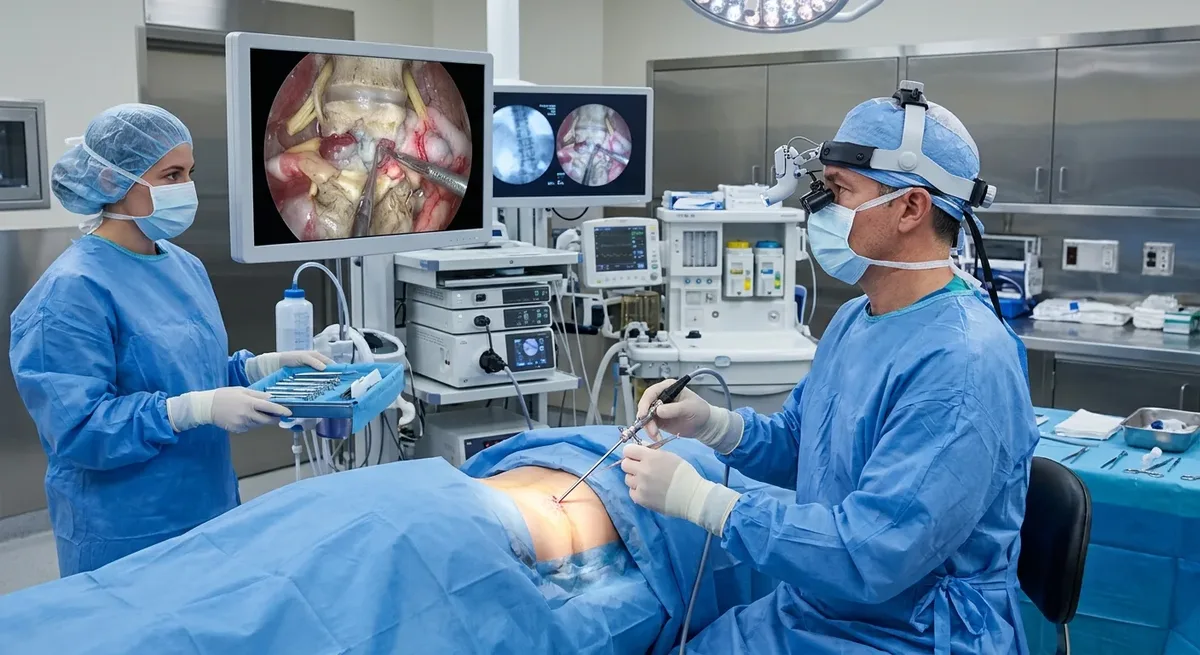
Images supplied by Neo Spine Clinic. Equipment and illustrations show the type of technology involved; Dr. Sharma will explain which tools your own operation needs.
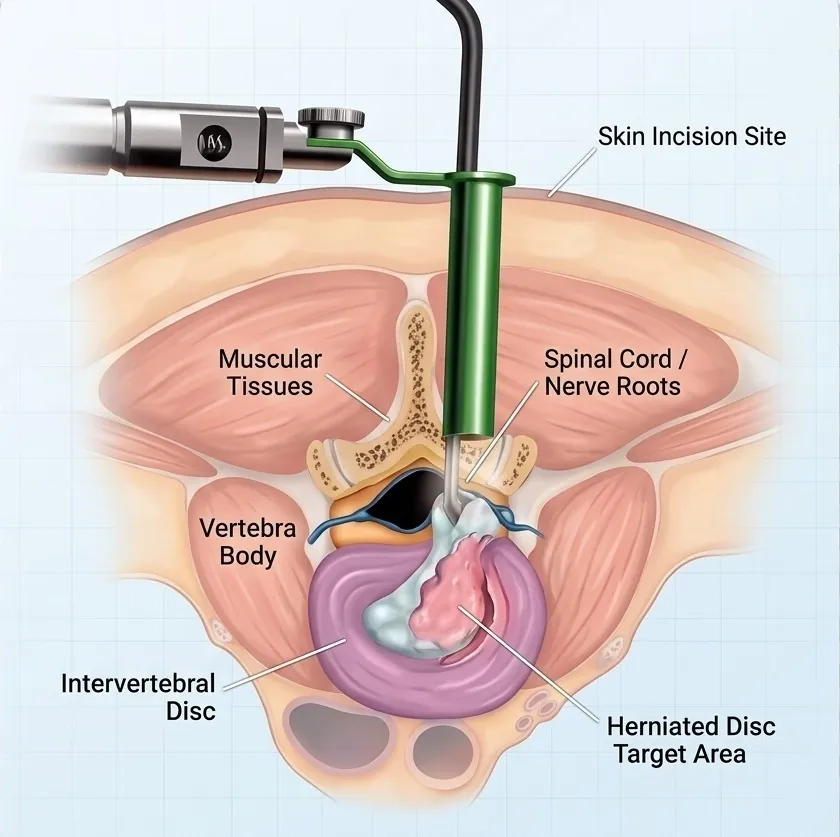
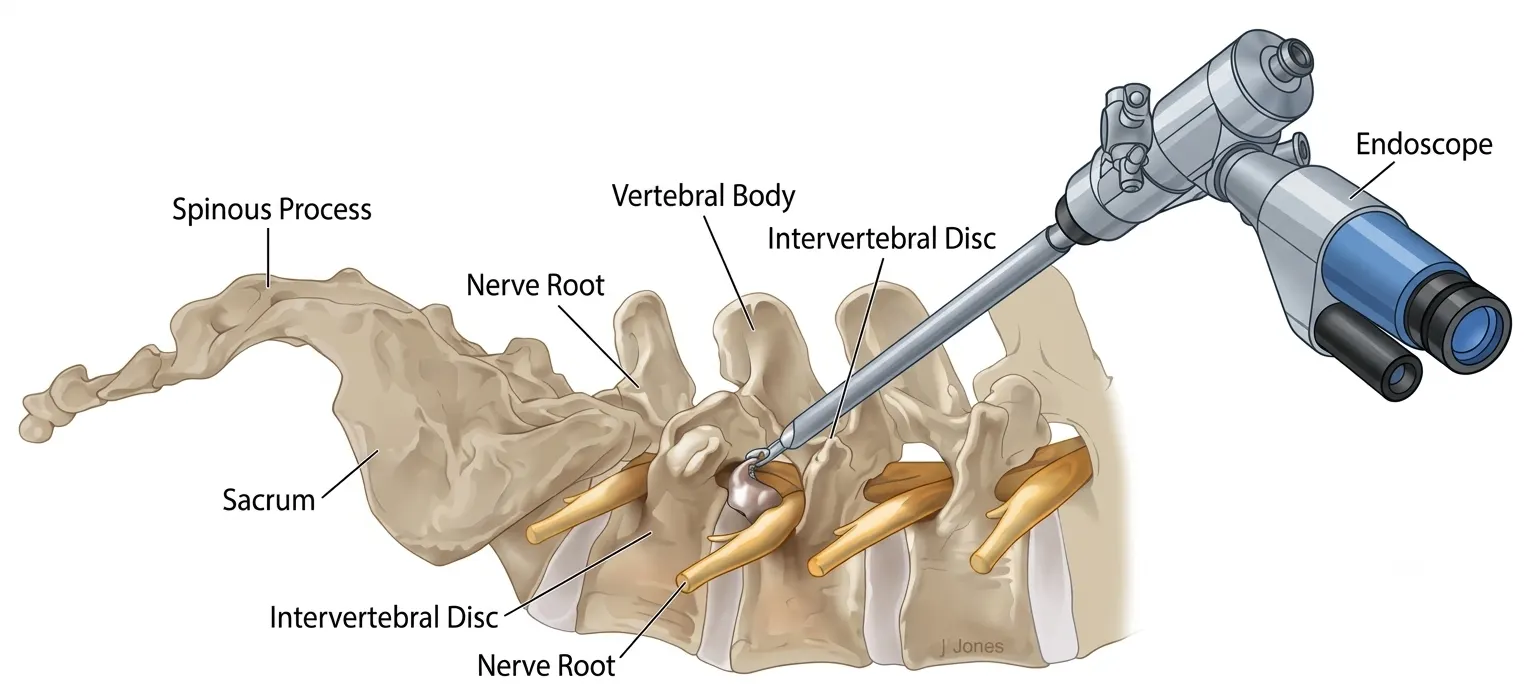 Enlarge image: The endoscope reaches the disc through a narrow working channel (illustration).
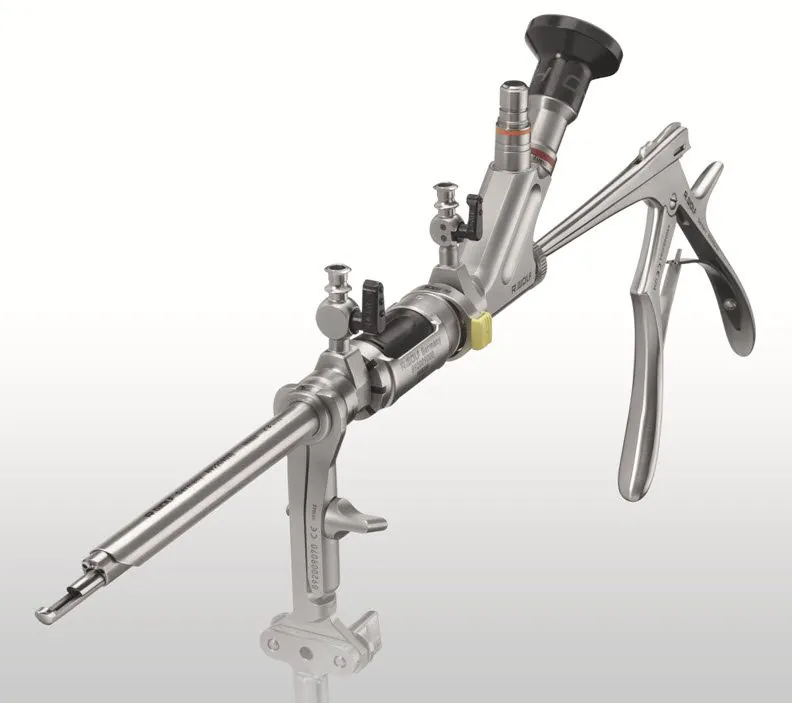 Enlarge image: A spinal endoscope: camera, light and working channel in one slim instrument.
Endoscopic Discectomy
Endoscopic discectomy is one of the most established uses of spinal endoscopy. It is commonly considered for lumbar disc herniation when displaced disc material compresses a nerve root and causes sciatica, numbness or weakness. Only the offending disc fragment is removed, with the aim of relieving nerve pressure while preserving as much normal tissue as possible.
| Approach | How the Spine Is Reached | Typical Role |
|---|---|---|
| Transforaminal (TFED) | The endoscope approaches from the side through the neural foramen, the natural opening through which a spinal nerve exits. | Useful for selected lumbar disc herniations where the fragment can be safely accessed through the foraminal corridor. |
| Interlaminar (ILED) | The endoscope enters from the back through the space between adjacent laminae. | Often considered when the anatomy and location of the herniation are better suited to a posterior route. |
Endoscopic Spine Decompression
Lumbar spinal stenosis develops when the space available for the spinal nerves becomes narrowed. Endoscopic decompression uses a working-channel endoscope and fine instruments to remove the specific structures responsible for compression while preserving uninvolved anatomy wherever possible.
What May Be Removed During Decompression
- Thickened ligamentum flavum contributing to narrowing of the canal.
- Overgrown portions of the facet joint pressing on a nerve.
- Bulging or herniated disc material occupying the nerve corridor.
By creating more room for the compressed neural structures, decompression can improve radiating leg pain and, in appropriately selected stenosis patients, walking tolerance.
Endoscopic Lumbar Fusion
When symptoms are associated with spinal instability or certain recurrent disc problems, decompression alone may not be enough. Selected patients may require an endoscopic lumbar interbody fusion, which combines minimally invasive access with reconstruction and stabilization of the affected spinal segment.
Main Steps in Endoscopic Lumbar Fusion
- The damaged disc is removed through the working corridor.
- A cage and bone-graft material are placed into the disc space through a small tube, using fluoroscopic X-ray guidance.
- Percutaneous pedicle screws are inserted through separate small skin openings when fixation is required.
The objective is durable stability and fusion while reducing the muscle disruption associated with a wider traditional exposure.
Cervical, Infection and Other Applications
Endoscopic techniques are not limited to the lumbar disc. Their role continues to expand across selected cervical, thoracic and complex spinal procedures.
Other Endoscopic Applications
Posterior cervical endoscopic discectomy / microforaminotomy
For selected lateral cervical disc herniations, a posterior route can remove the offending fragment through a small incision without removing the entire disc or automatically requiring a fusion. It can avoid a front-of-neck approach in suitable anatomy.
Endoscopic debridement for spinal infection
Selected cases of infective discitis, including bacterial or tuberculous infection, may be approached endoscopically to remove infected tissue. Tissue can also be collected directly for microbiological or pathological testing so further treatment can be targeted appropriately.
Thoracic and endoscope-assisted procedures
Endoscopic access is used less commonly in the thoracic spine. In complex operations, an endoscope may also serve as an assisting visualization tool—for example, to inspect the front of the spinal cord from a posterior route and confirm decompression. Selected anterior cervical procedures may similarly use endoscopic assistance.
Advantages of Endoscopic Spine Surgery
| Potential Advantage | What It Can Mean for the Patient |
|---|---|
| Very small access incision | Less muscle and soft-tissue disruption and a smaller surgical scar. |
| Reduced operative trauma | Blood loss and postoperative discomfort may be lower in suitable procedures. |
| Earlier recovery | Shorter hospitalization and a quicker return toward routine daily activity may be possible. |
| Anaesthesia options | Some procedures can be performed without general anaesthesia, depending on the operation and patient. |
| Magnified visualization | High-definition illumination and magnification give the surgeon a detailed view through the working corridor. |
Limitations and Challenges
Endoscopic surgery is technically demanding. It requires dedicated training, substantial experience, specialized endoscopes and instruments, and an operating-room setup designed for the technique. The technology can also increase procedure cost.
Not every spinal problem should be treated endoscopically
Extensive disease, severe instability or some forms of calcified central canal stenosis may not allow complete and safe decompression through an endoscopic corridor. In such cases, a different minimally invasive, open or combined approach may be more appropriate.
The important limitation is not simply incision size. If the endoscopic route cannot provide sufficient visualization, decompression or stabilization for the pathology, forcing the operation through a smaller corridor can compromise the objective of surgery.
Choosing the Right Surgical Approach
Endoscopic spine surgery can provide effective treatment with limited tissue disruption when the spinal condition, imaging findings and patient's symptoms are well matched to the technique. Patient selection and surgeon experience are therefore central to a good result.
The decision should compare all reasonable options—including endoscopic surgery, other minimally invasive techniques and conventional open surgery—based on the exact location and extent of compression, the presence of instability, previous operations, overall health and the goals of treatment.
Choose the operation for the pathology, not the incision
A smaller incision is valuable when it can accomplish the full surgical goal safely. The most appropriate technique is the one that provides adequate decompression or stabilization with the least necessary disruption.
Frequently Asked Questions
What does endoscopic spine surgery cost in India?
The supplied source gives a typical range of ₹1.5–3.5 lakh. The final cost varies with case complexity, hospital infrastructure, surgeon experience and whether implants or other devices are required.
What is the recovery time after endoscopic spine surgery?
Recovery varies by procedure and diagnosis. Many appropriately selected patients can walk within hours and leave hospital the same day or the next day, with activity increased gradually according to the surgeon's advice.
Is endoscopic spine surgery safe?
It can be a safe and effective option when the indication is appropriate and the procedure is performed by an experienced endoscopic spine surgeon. Its limited exposure can reduce tissue disruption, but it remains spine surgery and still carries procedure-specific risks.
What are the potential side effects or risks?
Possible risks include nerve irritation or injury, bleeding, infection, dural tear or spinal-fluid leak, persistent or recurrent symptoms, incomplete decompression and the need for revision or a different surgical approach. The exact risk profile depends on the procedure and pathology.
How does endoscopic surgery compare with minimally invasive spine surgery?
Endoscopic surgery is one form of minimally invasive spine surgery. It uses a camera and working channel through a very small access corridor, whereas other minimally invasive procedures may use tubular retractors, microscopes, navigation and percutaneous instrumentation without an endoscope.
Endoscopic surgery vs microdiscectomy — which is better?
Both can decompress a nerve affected by a herniated disc. Microdiscectomy generally uses microscopic visualization through a somewhat larger working corridor, while endoscopic discectomy uses a camera through a smaller channel. Neither is universally better; anatomy, fragment location, surgeon expertise and the required decompression determine the better option.
How do I find endoscopic spine surgery near me?
Look for a spine surgeon who routinely performs endoscopic procedures and can also offer alternative techniques. The consultation should confirm that the surgeon is choosing endoscopy because it fits your diagnosis—not simply because it is available.
What is the success rate of endoscopic spine surgery?
Success depends on the diagnosis, procedure, severity of nerve compression and patient selection. The current page previously cited approximately 85–95% for appropriately selected conditions, but an individual result cannot be predicted from a general percentage alone.
Is life normal after endoscopic spine surgery?
Many patients return progressively to normal daily activities after recovery, but the timeline depends on the operation, neurological symptoms, physical demands and underlying spinal condition. Rehabilitation and activity progression should follow the treating surgeon's plan.
How is endoscopic spine surgery different from traditional open surgery?
Endoscopic surgery reaches the target through a much smaller working corridor with camera-based visualization and less muscle exposure. Open surgery provides broader direct access and may be preferable when extensive decompression, major reconstruction or complex stabilization is required.
Is endoscopic spine surgery available in Mumbai?
Yes. Endoscopic spine surgery is available in Mumbai. Whether it is suitable for a particular patient should be decided after clinical examination and review of the relevant MRI, CT or X-rays.
This page is general education written by Dr. Amit Sharma. Whether a technique suits you depends on your diagnosis, imaging and overall health, and is decided at an individual consultation.