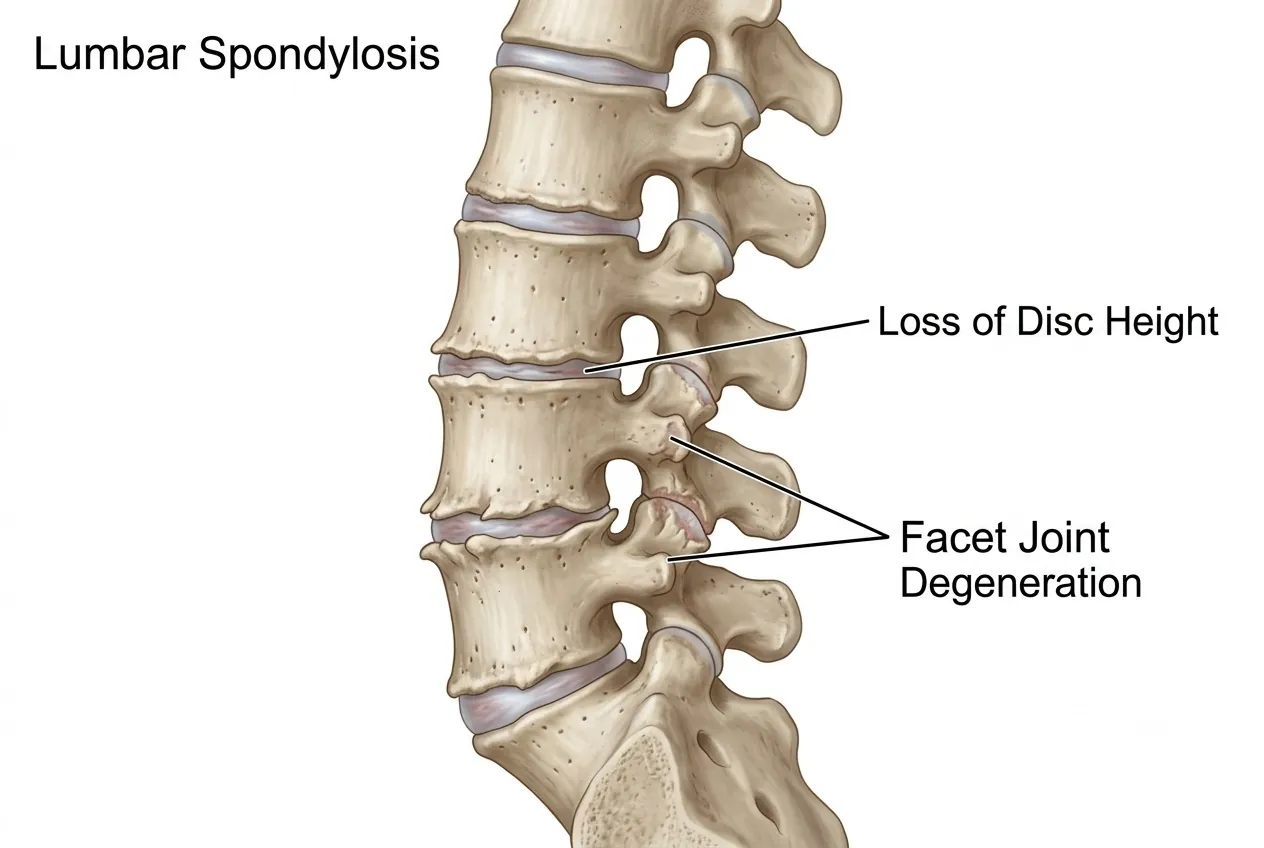
Understanding Lumbar Spondylosis
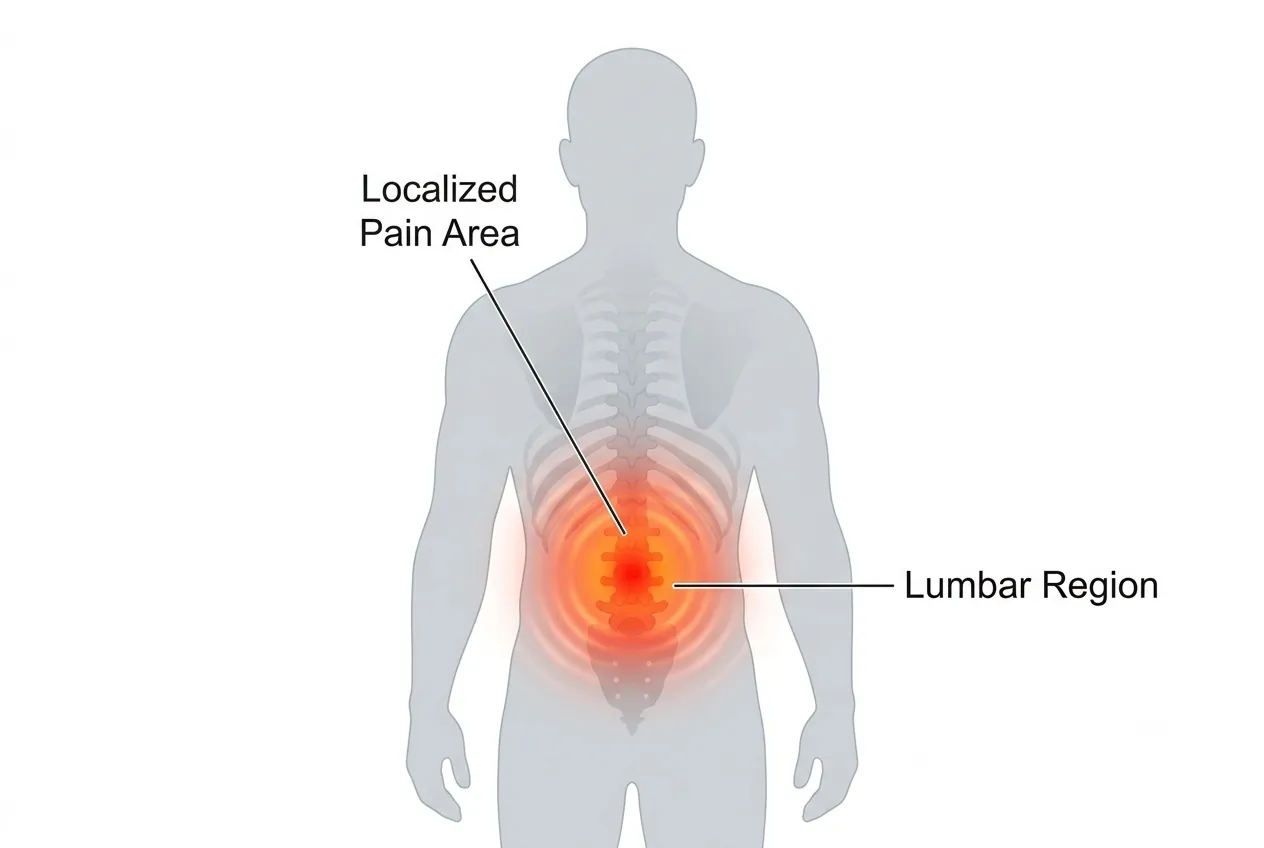
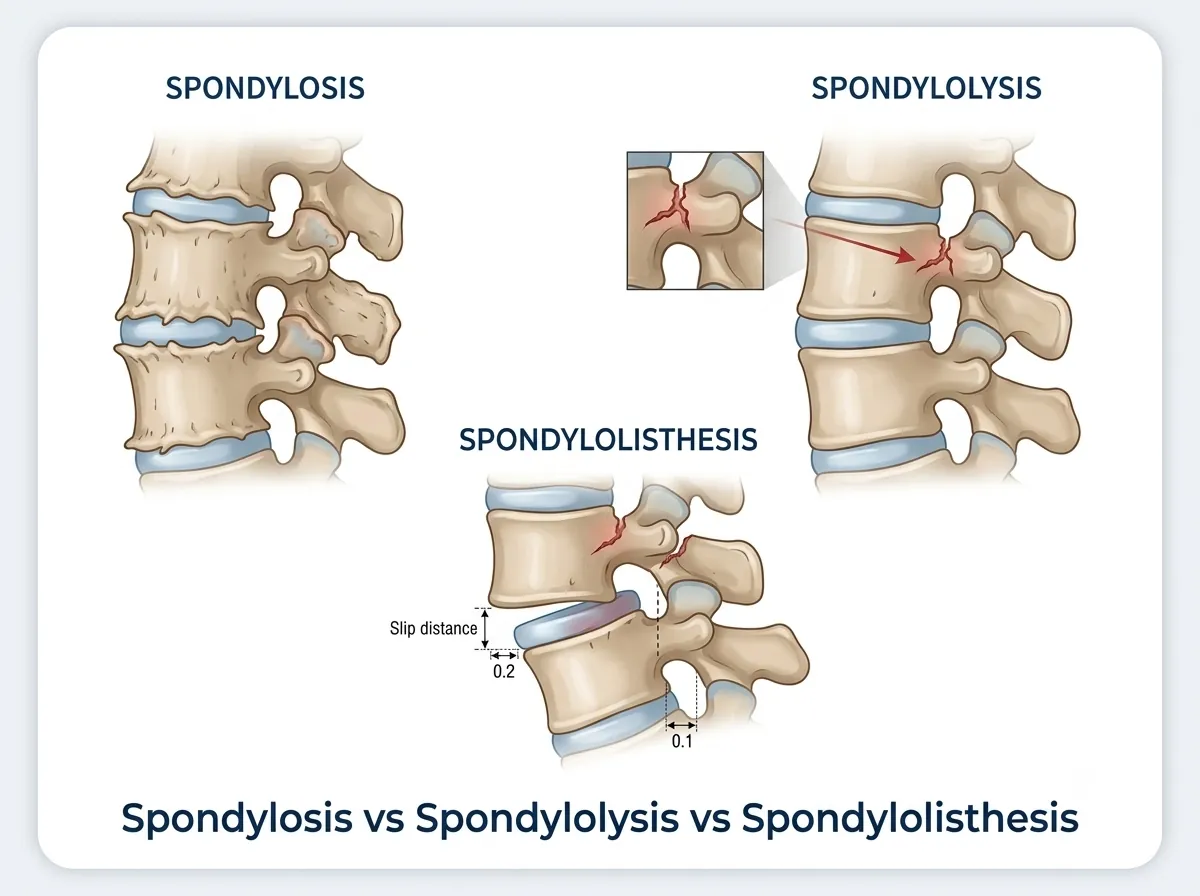
Lumbar spondylosis describes degenerative arthritis affecting the discs, facet joints and adjacent structures of the lower spine. Although spondylosis can occur in the cervical, thoracic or lumbar regions, lumbar spondylosis specifically involves the lower back.
The process is comparable to arthritis in other weight-bearing joints. As an intervertebral disc degenerates, it loses water, height and some of its ability to absorb load. At the same time, the smooth cartilage of the facet joints can wear down, leaving rougher joint surfaces that generate pain when they move against each other. Bone spurs and thickening of surrounding structures may develop as degeneration progresses.
A scan does not determine symptoms by itself
Degenerative changes are common with age. Treatment should be based on the patient's pain, mobility, neurological findings and functional limitation rather than the appearance of an X-ray or MRI alone.
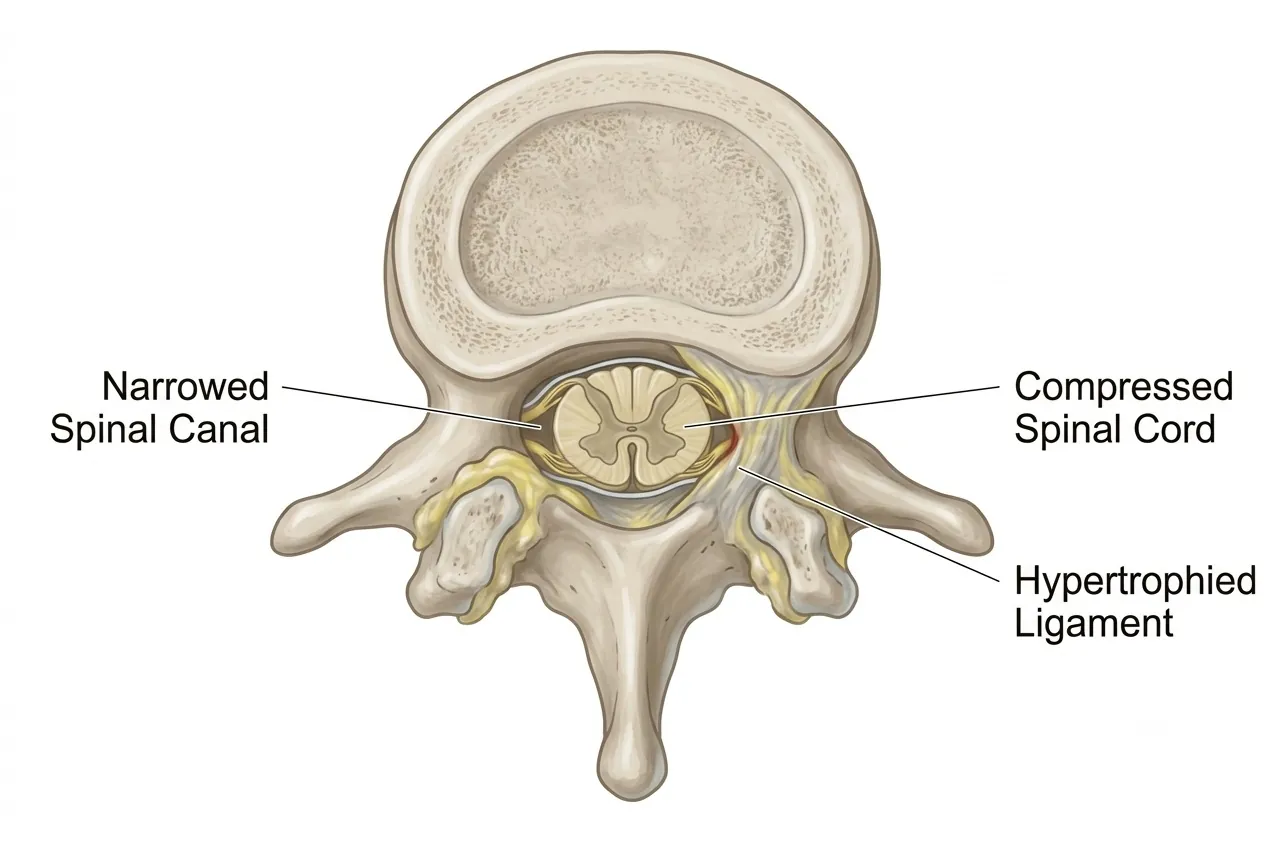
Lumbar spondylosis is also frequently accompanied by some degree of spinal stenosis. When narrowing begins to affect the spinal nerves, the clinical picture can extend beyond back pain to leg pain, numbness, weakness or difficulty walking.
Causes and Risk Factors
The main cause is chronic age-related wear of the lumbar discs and facet joints. It is therefore more common in older adults, although degeneration can appear earlier when additional mechanical or lifestyle stresses are present.
| Factor | How It Can Affect the Lumbar Spine |
|---|---|
| Age-related degeneration | Progressive disc dehydration, loss of disc height and facet-joint arthritis alter normal load distribution. |
| Obesity | Excess body weight increases mechanical load across the lower back and may accelerate wear. |
| Poor lifestyle and inactivity | Long sitting periods, poor posture and inadequate conditioning can increase strain and reduce muscular support. |
| Previous injury or trauma | An accident, fall or other lumbar injury can contribute to earlier degenerative change, including in younger adults. |
| Repetitive mechanical stress | Frequent heavy lifting, bending or prolonged standing can repeatedly load the lumbar segments. |
Symptoms
Symptoms vary according to which structures are affected and whether spinal stenosis or nerve compression is present.
- Lower-back pain: persistent or recurrent lumbar discomfort that may increase with prolonged activity.
- Radiating pain: discomfort can extend into the buttocks, back of the thighs or legs.
- Neurological symptoms: stenosis or nerve compression may produce tingling, numbness, weakness or reduced sensation in one or both legs.
- Difficulty standing or walking: more advanced stenosis can reduce walking tolerance and make prolonged upright posture difficult.
- Stiffness and reduced mobility: arthritic joints and degenerative discs can restrict comfortable spinal movement.
2-minute self-check
Do your symptoms deserve a closer look?
Tick anything you've noticed recently. Your guidance appears straight below. Everything stays on this page; nothing is stored or sent. This is an educational aid, not a diagnosis of lumbar spondylosis.
Seek urgent medical care today
These symptoms can mean a nerve or the spinal cord is under serious pressure. Go to the nearest emergency department, or call the clinic straight away. Do not wait for a routine appointment.
Book a spine specialist review soon
Arrange an assessment within the next few days, and sooner if things get worse. If you already have an MRI, you can send it for review.
Conservative care is usually a reasonable start
Activity changes, physiotherapy and appropriate medication often help. See a doctor if it is not better in 1–2 weeks, or straight away if any time-sensitive symptom appears.
Guidance only, based on the warning signs described in this guide. It cannot find the cause of your symptoms. If symptoms are severe, getting worse quickly, or you are worried, contact a doctor.
Diagnosis
Diagnosis combines the history and physical examination with imaging or nerve tests when appropriate. The aim is not merely to identify degeneration, but to determine whether the visible changes explain the patient's symptoms.
Diagnostic Tests
- X-rays: show disc-space loss, osteophytes, alignment changes, deformity and fractures. Flexion-extension views can reveal abnormal movement or instability.
- MRI: demonstrates disc desiccation, facet-joint degeneration, soft tissues, spinal stenosis and nerve compression in greater detail.
- CT: provides a more detailed assessment of bony anatomy when required.
- EMG/NCV: may be used when nerve function needs further evaluation.
- Blood tests: can help exclude other medical or inflammatory causes when the clinical picture suggests them.
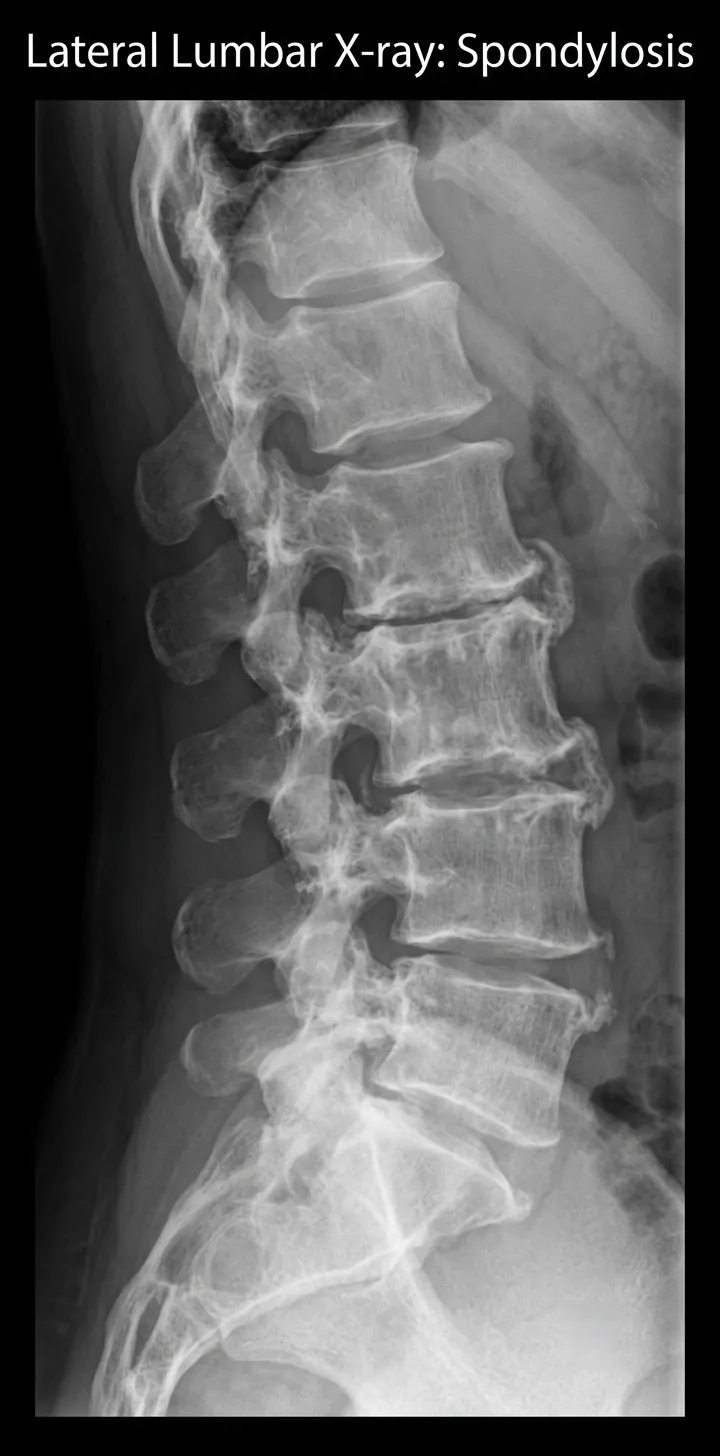 Enlarge image: X-ray showing lumbar spondylosis
Non-Surgical Treatment
Most patients begin with non-operative care. The goals are to control pain, preserve mobility, strengthen the structures supporting the spine and reduce activities that repeatedly provoke symptoms.
- Medication: appropriate pain-relieving or anti-inflammatory medicines may be used according to the patient's medical profile.
- Heat or ice: local application can provide short-term symptom relief during painful episodes.
- Activity modification: temporarily reducing movements or loads that clearly aggravate pain can allow symptoms to settle without prolonged bed rest.
- Physiotherapy: mobility work and progressive strengthening—particularly of the core and supporting trunk muscles—can improve spinal control and function.
- Bracing: selected patients may receive short-term support when clinically appropriate; routine prolonged dependence on a brace is generally avoided.
Pain Management Procedures
When appropriate conservative care does not provide enough relief, selected procedures may be considered according to the suspected pain generator.
Interventional Options
- Intradiscal steroid injection: may be considered in selected disc-related pain patterns to address inflammation.
- Laser disc therapy: is an option used in selected patients with early disc degeneration; suitability depends on the precise diagnosis.
- Facet-joint injection: can target pain suspected to arise from arthritic facet joints.
- Radiofrequency ablation: may reduce facet-mediated pain by treating the small nerves that transmit pain from the affected joints.
- Epidural steroid injection: may help selected patients when inflamed or compressed spinal nerves are producing radiating leg symptoms.
Procedures are targeted, not one-size-fits-all
The choice of injection or pain procedure depends on whether the dominant source appears to be a disc, facet joint or compressed nerve. These treatments are intended to control symptoms; they do not restore an already degenerated disc or joint to its original state.
Surgical Treatment
Surgery is considered when symptoms remain severe despite appropriate conservative treatment, or when a structural problem such as significant stenosis, instability or persistent neurological compression requires operative correction.
| Procedure | Role | Typical Consideration |
|---|---|---|
| Decompression | Removes structures compressing the spinal nerves. | Often used when clinically important spinal stenosis is producing neurological or walking symptoms; it may be combined with fusion when stability is a concern. |
| Fusion with instrumentation | Stabilizes a painful or unstable motion segment using implants while bone fusion develops for long-term stability. | Considered when painful arthritic motion, instability or the extent of decompression makes stabilization appropriate. Many cases can be treated with minimally invasive techniques. |
| Lumbar disc replacement | Replaces a diseased disc while attempting to preserve motion. | Reserved for carefully selected patients with disease mainly confined to the disc. When advanced degeneration also involves the facet joints, fusion is generally the more predictable reconstructive option. |
When to See a Spine Specialist
Seek urgent assessment
New bladder or bowel dysfunction, rapidly worsening leg weakness, major loss of sensation or other severe neurological deterioration requires prompt medical evaluation.
Arrange specialist review
Persistent back pain, recurrent sciatica, increasing numbness or weakness, or progressively reduced standing and walking tolerance should be assessed.
Routine conservative care
Stable mild back pain without neurological deficit can often begin with activity modification, appropriate medication, exercise and physiotherapy.
Early evaluation is particularly useful when pain persists or begins to interfere with work, sleep, walking or normal daily activities. Treatment can then be matched to the actual pain generator rather than simply to age-related changes on a scan.
Imaging from Dr. Sharma's practice
The images below are from Dr. Amit Sharma's practice and are shared for education, without identifying details. Every patient's imaging is different — your own scans need an individual clinical review.
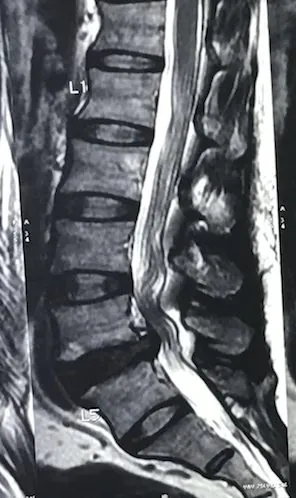 Enlarge image: Sagittal lumbar MRI showing degenerative (spondylotic) changes of the discs.
Frequently Asked Questions
What is lumbar spondylosis and what causes it?
It is degeneration of the discs, facet joints and related structures of the lower spine. Ageing is the main cause, while obesity, inactivity, prolonged poor posture, repetitive loading and previous injury can accelerate the process.
What are the most common symptoms?
Low-back pain and stiffness are common. If stenosis or nerve compression develops, pain may travel into the buttocks or legs and can be accompanied by tingling, numbness, weakness or reduced walking tolerance.
How is it diagnosed?
Clinical examination is combined with imaging when needed. X-rays assess bony degeneration and alignment, MRI evaluates discs, stenosis and nerves, and CT or nerve studies are used selectively.
Is lumbar spondylosis reversible?
Established structural degeneration cannot usually be reversed completely. Symptoms and function, however, can often improve substantially with appropriate conservative treatment and targeted intervention when necessary.
What lifestyle habits can worsen pain?
Long periods of sitting, poor ergonomics, inactivity, excess body weight and repetitive heavy lifting or bending can increase lumbar strain and symptom burden.
What is the best treatment without surgery?
Treatment is individualized, but commonly combines activity modification, appropriate medication, physiotherapy, core strengthening and weight or ergonomic management. Selected patients may benefit from targeted injections or other pain procedures.
When should I worry about symptoms?
Progressive weakness, significant loss of sensation or new bladder or bowel dysfunction requires urgent assessment. Persistent or worsening pain and neurological symptoms also warrant specialist review.
Can lumbar spondylosis cause sciatica?
Yes. Degenerative narrowing can irritate or compress lumbar nerve roots, producing radiating leg pain and sometimes numbness, tingling or weakness.
When is surgery required?
Surgery is considered when severe symptoms persist despite adequate non-operative treatment or when there is significant stenosis, instability or neurological compression that requires structural correction.
How can progression be reduced?
Maintain regular physical activity and trunk conditioning, improve posture and workstation habits, manage body weight, avoid smoking, use sound lifting technique and reduce repetitive loads that consistently aggravate the lower back.
This article is general education written by Dr. Amit Sharma. It is not a diagnosis or a substitute for an in-person consultation. If you have sudden weakness, numbness in the groin or saddle area, or new bladder or bowel problems, seek emergency care.