Hearing the words “spine surgery” naturally creates anxiety. Medication, physiotherapy, activity modification, heat and appropriate rest are sensible first-line treatments for many spinal problems. The mistake is not trying conservative care first; the mistake is assuming surgery should always be postponed until severe neurological damage has already occurred.
The goal is appropriate timing—not early surgery for everyone
Modern spine care aims to avoid unnecessary operations while also recognizing when continued nerve compression is beginning to threaten recovery. The correct timing depends on symptoms, neurological examination, imaging and response to treatment.
The “Wait and Watch” Trap
A common belief is that a patient should postpone surgery until the leg becomes completely numb, the foot starts dragging, or bladder and bowel control is affected. Those symptoms can represent serious neurological compromise, but they should not become the routine threshold for finally accepting an operation that was already clearly indicated.
Waiting indefinitely simply because a patient has not yet reached an emergency stage can allow a treatable nerve problem to become a much less reversible one.
Severe symptoms that should never be used as a routine “wait until this happens” target
- Complete or extensive numbness in an arm or leg.
- Major progressive weakness, including foot drop—where the front of the foot cannot be lifted normally and footwear may slip off unnoticed.
- Loss of bladder or bowel control associated with spinal nerve compression.
What Actually Happens to a Pinched Nerve?
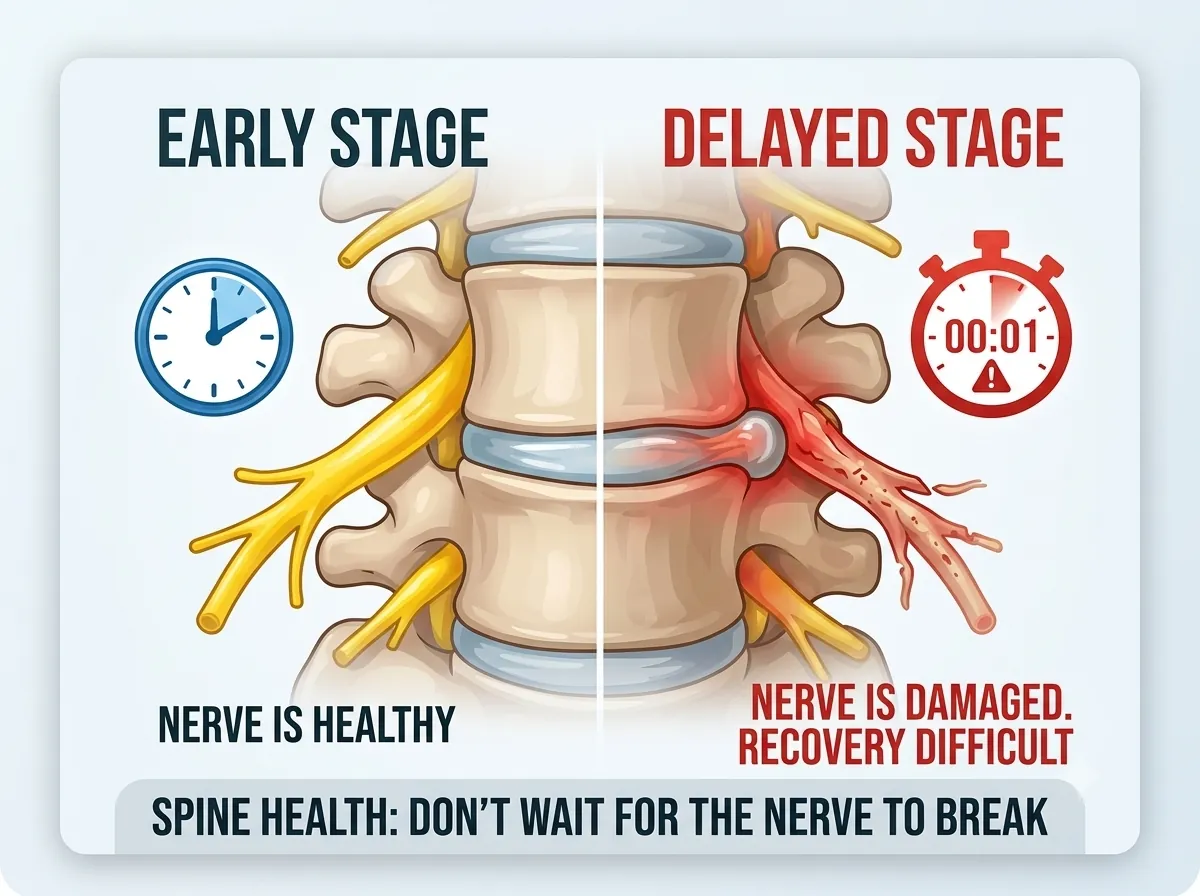
A useful way to understand nerve compression is to think of a soft garden hose. Brief pressure may temporarily stop the flow, but once the pressure is removed the hose can return to its normal shape. A nerve compressed for a relatively short period may behave similarly: when the cause of compression is relieved at the appropriate time, recovery can be very good.
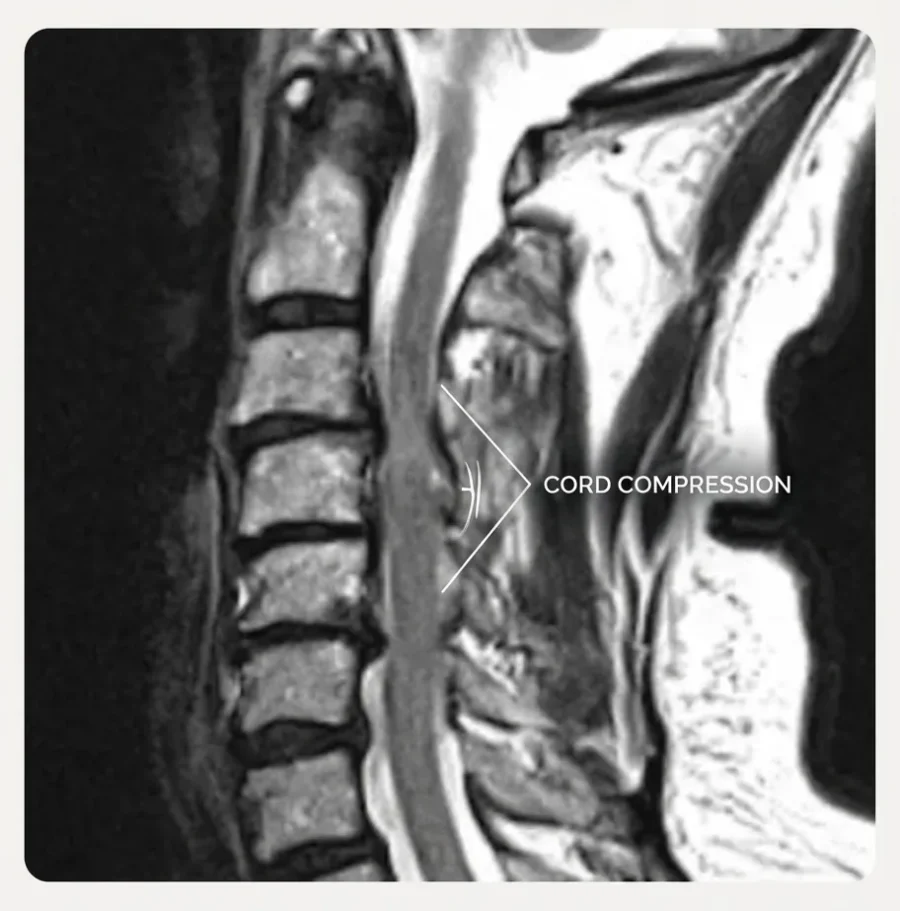
Long-standing compression is different. A slipped disc, bone spur or narrowing around a nerve can maintain pressure for months. The nerve is not only mechanically compressed; its local blood supply can also be impaired. Prolonged compression may eventually produce structural damage and scarring within delicate nerve tissue.
| Nerve situation | What it can mean for recovery |
|---|---|
| Shorter-duration, reversible compression | Removing the pressure may allow substantial or complete neurological recovery, depending on the condition. |
| Persistent compression | Ongoing pressure and impaired blood supply can progressively injure the nerve. |
| Established severe nerve damage | Decompression may prevent further deterioration, but existing numbness or weakness may recover incompletely. |
What Surgery Can — and Can’t — Do
Spine surgery does not directly “repair” a damaged nerve. In a decompression procedure, the surgeon removes the disc material, bone, ligament or other structure pressing on the nerve so that the nerve has the best possible environment to recover.
This distinction matters. A technically successful operation can completely relieve the mechanical compression, yet a nerve that has already sustained substantial long-term injury may not return to normal. Pain caused by pressure may improve while persistent numbness or weakness takes much longer to recover—or, in severe cases, remains permanent.
Successful decompression does not guarantee reversal of old nerve damage
The longer significant neurological compression continues, the less predictable complete nerve recovery becomes. This is why the timing of an indicated operation can matter as much as the operation itself.
So, When Is the Right Time for Spine Surgery?
The aim is never to rush every patient into an operating theatre. Most uncomplicated back and neck problems should first receive appropriate non-surgical treatment. Surgery becomes more reasonable when there is a clear surgical target and continued conservative care is no longer achieving its purpose.
When basic treatment has genuinely failed
- Appropriate physiotherapy, medication and activity modification have been tried consistently.
- Significant shooting or radiating pain into the arm or leg remains despite treatment.
- In a non-emergency situation, symptoms have persisted through a reasonable conservative-treatment period—often around two to three months in the scenario described here—without meaningful improvement.
When symptoms are taking over daily life
- Travel or commuting becomes extremely difficult because of radiating pain.
- Sitting through work, normal household activities or routine social/religious activities is no longer manageable.
- Pain repeatedly prevents sleep.
- Normal independence and mobility are progressively shrinking despite treatment.
When early neurological warning signs appear
- Persistent pins-and-needles or tingling.
- Continuous burning or altered sensation along a nerve distribution.
- New or mild weakness that is becoming more noticeable.
- Neurological symptoms that continue to progress despite appropriate treatment.
Urgent Warning Signs
There is an important difference between deciding the timing of planned surgery and recognizing a neurological emergency. Severe or rapidly progressive neurological symptoms require prompt assessment rather than another prolonged trial of “wait and see.”
Seek urgent assessment
New bladder or bowel dysfunction, rapidly worsening weakness, significant foot drop or major neurological deterioration requires urgent medical evaluation.
Arrange timely specialist review
Persistent radiating pain, tingling, burning or early weakness that is worsening despite treatment should not simply be ignored for months.
Conservative care remains appropriate
When symptoms are stable, neurological function is intact and treatment is helping, continued non-surgical care and monitoring may be entirely reasonable.
When to Seek a Second Opinion
Nerves are delicate and can recover slowly. If substantial nerve pain has continued for months, appropriate treatment has failed, or tingling and weakness are progressing, a second spine opinion can help clarify whether further waiting is sensible or whether decompression should now be considered.
Fear of surgery should not be the only reason to postpone a clearly indicated procedure, just as fear of pain should not be the only reason to rush into one. The safest decision is based on the diagnosis, neurological status, imaging findings, response to conservative treatment and the likely consequences of both operating and continuing to wait.
The central message
Do not wait for complete numbness, severe weakness or bladder and bowel dysfunction merely to “prove” that a nerve problem is serious. When surgery is genuinely indicated, intervening before advanced nerve damage develops can offer a better opportunity for neurological recovery.
This article is general education written by Dr. Amit Sharma. It is not a diagnosis or a substitute for an in-person consultation.