When Waiting Is Reasonable
Many spine problems do not require immediate surgery. Uncomplicated disc pain, sciatica and mechanical neck or back pain often improve with medication, activity modification, physiotherapy and time. When neurological function is stable and there is no dangerous compression, a supervised period of conservative treatment is appropriate.
Surgery should have a clear reason
An abnormal MRI alone is not an indication for surgery. Surgery becomes relevant when a defined structural problem is causing disabling symptoms, progressive neurological loss, instability or another risk that cannot safely be managed by waiting.
When Delay Becomes Risky
The balance changes when a nerve or the spinal cord is progressively losing function. Pain can often be treated later; established neurological loss may be harder to reverse. Prolonged severe compression can make weakness, numbness, gait disturbance or bladder and bowel dysfunction less likely to recover completely.
| Situation | Why delay matters |
|---|---|
| Progressive weakness | Ongoing nerve injury can reduce the chance of full strength recovery. |
| Cervical/thoracic myelopathy | Cord dysfunction can progress from hand or balance problems to major walking disability. |
| Cauda equina compression | Bladder, bowel and saddle-sensation changes may represent a surgical emergency. |
| Instability, infection or tumor | Structural or disease progression can increase neurological risk. |
Permanent Nerve Damage
A compressed nerve may initially cause pain and tingling. With more significant or prolonged compression, numbness and weakness can develop. Decompression removes mechanical pressure, but it cannot guarantee complete recovery of a nerve that has already been badly or chronically injured.
Muscle Weakness and Wasting
When a nerve no longer activates a muscle normally, strength falls and the muscle can gradually lose bulk. Depending on the affected nerve, patients may struggle to lift the foot, stand on the toes, grip objects or perform fine hand tasks.
Progressive weakness needs prompt review
Worsening weakness is an objective neurological sign and should not be managed by repeatedly postponing reassessment.
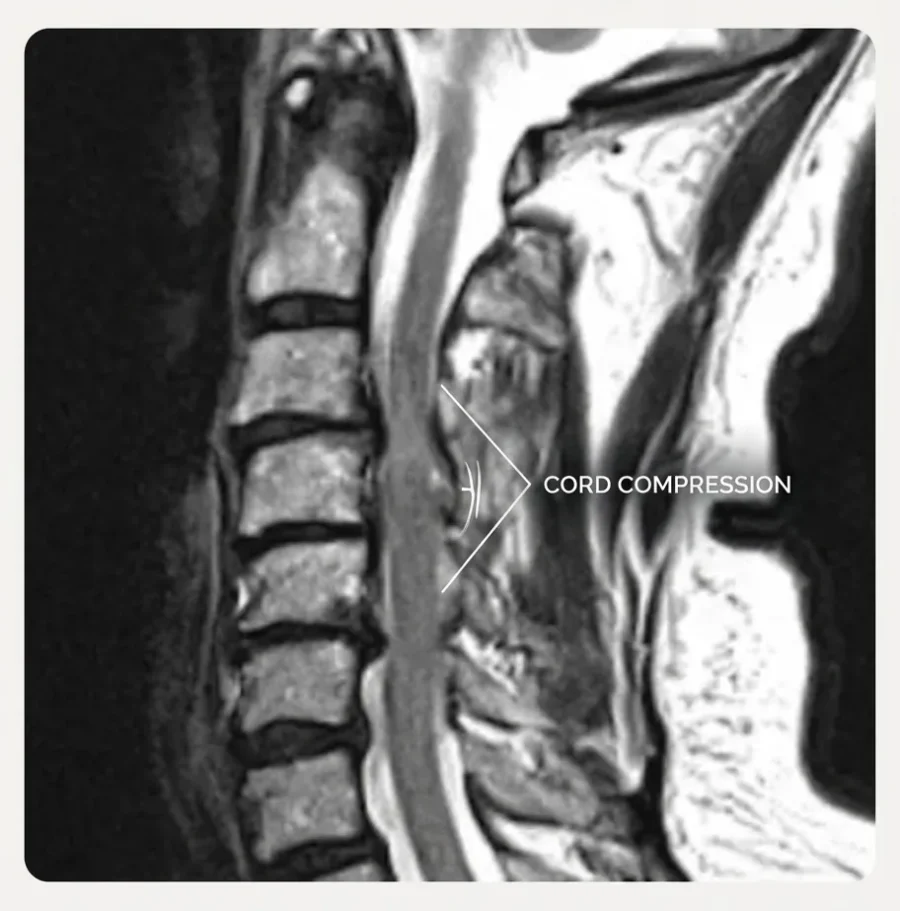
Spinal Cord Compression and Myelopathy
Spinal-cord compression can cause clumsy hands, loss of grip, imbalance, stiff or heavy legs, frequent falls and a changing walking pattern. Advanced disease can affect bladder and bowel control. Neck pain may be mild, so neurological change is more important than pain intensity.
Signs that can suggest myelopathy
- Difficulty with buttons, handwriting or fine hand movements.
- Objects slipping from the hands or reduced grip.
- Unsteadiness, tripping or gait change.
- Stiff or heavy legs.
- Bladder or bowel disturbance in advanced compression.
Emergency Warning Signs
Immediately
New bladder/bowel loss of control, saddle numbness, rapidly progressive weakness or sudden major neurological deterioration.
Prompt review
Increasing weakness, worsening dexterity, repeated falls, deteriorating balance or progressive numbness.
Usually monitored
Stable pain without neurological loss can often continue through structured non-surgical care.
How the Timing of Surgery Is Decided
There is no universal deadline for every spine operation. Timing depends on the diagnosis, duration and severity of symptoms, neurological examination, imaging, progression, response to non-surgical care and the expected benefit of treatment.
Factors that can move surgery earlier
- Progressive or significant motor weakness.
- Clinical myelopathy from spinal-cord compression.
- Cauda equina symptoms.
- Instability, fracture, infection or tumor threatening neural structures.
- Severe persistent symptoms with a clear anatomical cause despite appropriate conservative treatment.
Fear of surgery should not lead to an unnecessary operation, but it should also not cause indefinite delay when neurological function is being lost.
This article is general education written by Dr. Amit Sharma. It is not a diagnosis or a substitute for an in-person consultation.