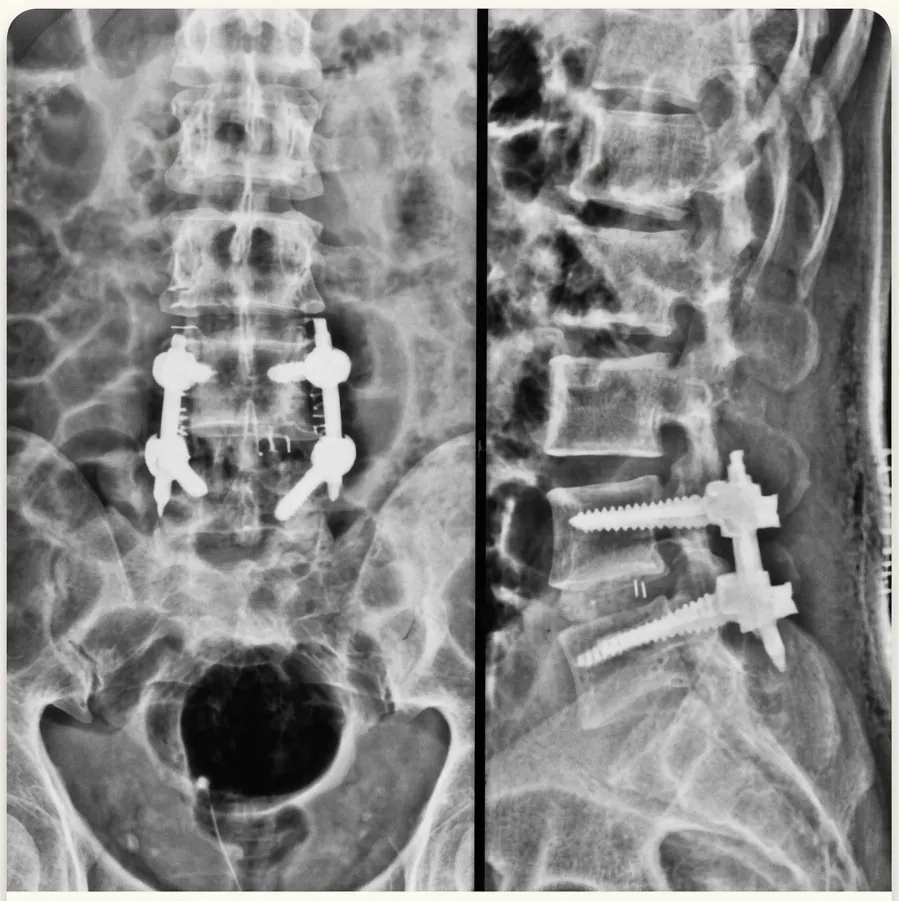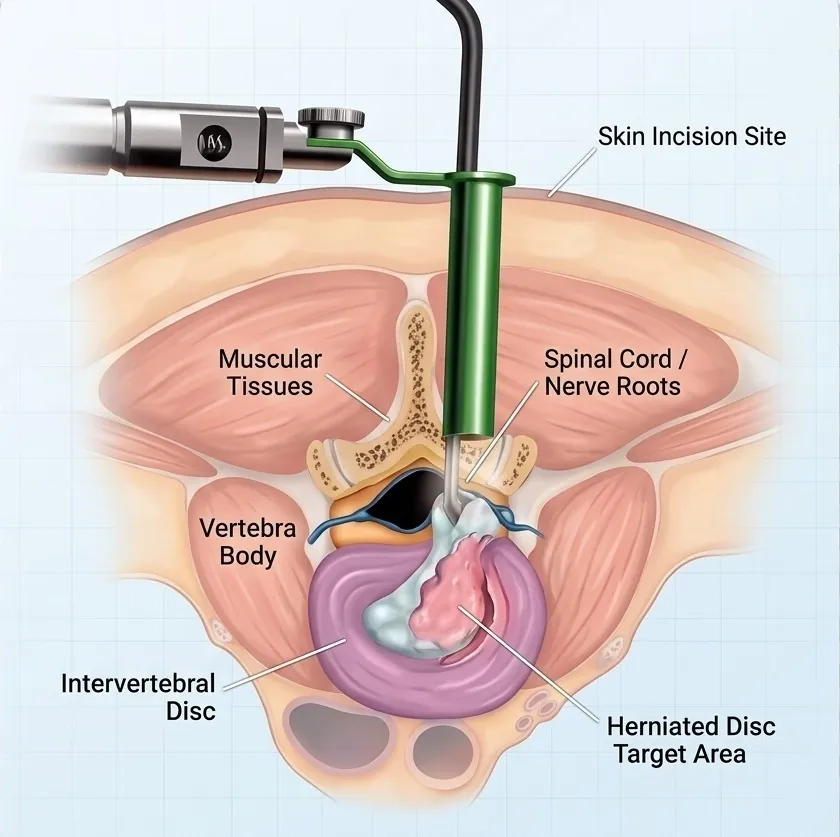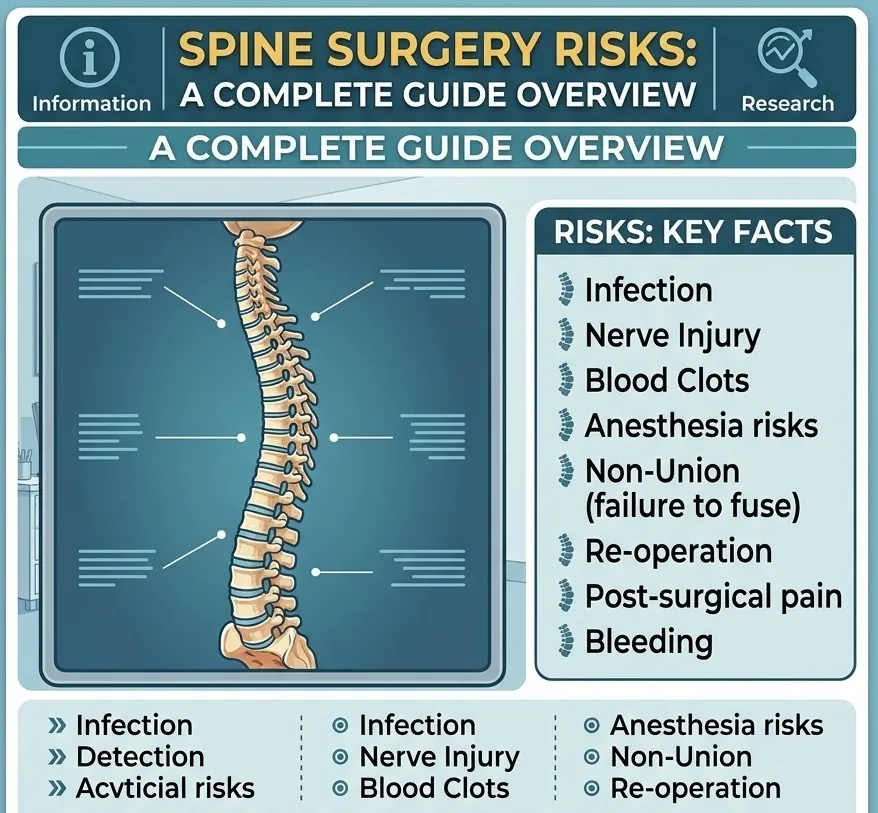
Persistent pain or neurological symptoms after spine surgery can be discouraging, but they do not automatically mean that the operation failed. Spine disorders involve nerves, discs, joints, muscles and pain-processing pathways, and these tissues do not all recover at the same speed.
Recovery Is Not Always Linear
Surgery is designed to correct a defined structural problem—for example, decompressing a nerve or stabilizing an unstable segment. It cannot guarantee that every source of pain will disappear immediately. Symptoms can fluctuate during healing, and longstanding pain may have more than one contributor.
A technically successful operation can still require a long recovery
Nerve healing, muscle rehabilitation and adaptation after months or years of symptoms may continue for weeks or months after the structural problem has been corrected.
1. Incomplete Recovery of Nerve Function
When a disc herniation or spinal stenosis compresses a nerve, surgery removes the pressure. The nerve itself then has to recover. Tingling, numbness, weakness and bladder or bowel symptoms may improve at different rates.
- Nerves recover slowly; improvement may continue over weeks to months.
- Longstanding compression can cause partial or permanent nerve injury.
- If surgery occurred after a prolonged neurological deficit, complete recovery may not be possible even after adequate decompression.
2. Residual Pain From Adjacent Degenerated Discs
Fusion or disc replacement targets the level believed to be the principal pain generator. Other nearby discs may already show milder degeneration that did not justify treatment at the time of surgery. Those levels can continue to age and may later contribute to residual or recurrent symptoms.
3. Implant Irritation or Scar Tissue
Possible implant and healing-related causes
- Screws, rods or cages can occasionally irritate surrounding muscles, ligaments or neural structures.
- Prominent implants may be more noticeable in very lean individuals.
- Inflammatory or fibrotic reactions can contribute to local discomfort.
- Scar tissue forms naturally after surgery and, in selected cases, may tether or irritate a nearby nerve root or contribute to stiffness.
4. Muscle-Related Causes of Persistent Pain
Muscles may have been weak, tight or deconditioned before surgery and can remain a pain source afterwards. Postoperative spasm, altered posture, poor movement patterns or loss of conditioning can produce discomfort even when the operated spinal structure has healed appropriately.
Targeted rehabilitation is therefore part of treatment rather than an optional extra. Physiotherapy may address strength, endurance, mobility, posture, walking mechanics and gradual return to activity.
5. Psychological and Chronic Pain Factors
Longstanding pain can change how the nervous system processes sensory signals. Anxiety, depression, poor sleep and central sensitization can amplify symptoms even after the original structural trigger has been treated.
| Contributor | How it may affect recovery |
|---|---|
| Central sensitization | The nervous system remains unusually responsive to pain signals. |
| Anxiety or depression | Can worsen pain perception, sleep and confidence with activity. |
| Deconditioning | Reduced strength and endurance make normal activity more uncomfortable. |
| Poor sleep | Can amplify pain sensitivity and slow functional recovery. |
These factors do not mean the pain is imaginary. They are genuine parts of chronic pain and may require pain-management support, counselling, medication, rehabilitation or a combined approach.
So, Is the Surgery a Failure?
Not necessarily. No spine operation can promise complete pain relief or full neurological recovery in every patient. A successful result may mean improved walking, better sleep, less radiating pain, reduced medication, improved independence or prevention of further neurological decline.
Realistic recovery expectations
- Recovery takes time and can fluctuate.
- Not every pain source is surgically correctable.
- Numbness and weakness may recover more slowly than pain.
- Ongoing physiotherapy or pain treatment may still be necessary.
- Functional improvement is often a more useful measure than expecting zero pain.
What Should You Do if You Are Not Improving?
Persistent symptoms should be reassessed systematically rather than assuming that another operation is required. The review may include the original diagnosis, operative details, neurological examination and updated imaging when clinically indicated.
Urgent reassessment
New bladder/bowel dysfunction, rapidly worsening weakness, fever with wound concerns or sudden severe neurological deterioration.
Arrange a review
Pain is worsening rather than gradually improving, neurological symptoms persist, or progress has plateaued unexpectedly.
Continue structured recovery
Gradual improvement with expected postoperative discomfort usually calls for rehabilitation and scheduled follow-up.
Many residual symptoms can be managed with rehabilitation, medication, targeted injections, lifestyle changes and time. A secondary procedure is considered only when reassessment identifies a clear structural reason that can reasonably be corrected.
This article is general education written by Dr. Amit Sharma. It is not a diagnosis or a substitute for an in-person consultation.