What Is Disc Replacement Surgery?
Disc replacement surgery (arthroplasty) removes a worn or damaged spinal disc and replaces it with an artificial disc. The artificial disc is designed to keep movement at that level, unlike a fusion, which joins the two vertebrae together permanently.
It is most often done in the neck (cervical disc replacement). Lumbar disc replacement in the lower back is also available, but suits far fewer patients.
Movement-preserving, in the right patient
Disc replacement is an alternative to fusion for carefully selected patients. Whether it suits you depends on your imaging, the health of the joints at that level and your bone quality.
How Disc Replacement Works
In the neck, the operation is done through a small incision at the front, the same approach used for an anterior cervical discectomy.
Step by step
- The damaged disc is removed completely.
- Disc material or bone spurs pressing on the nerves or spinal cord are removed, freeing them.
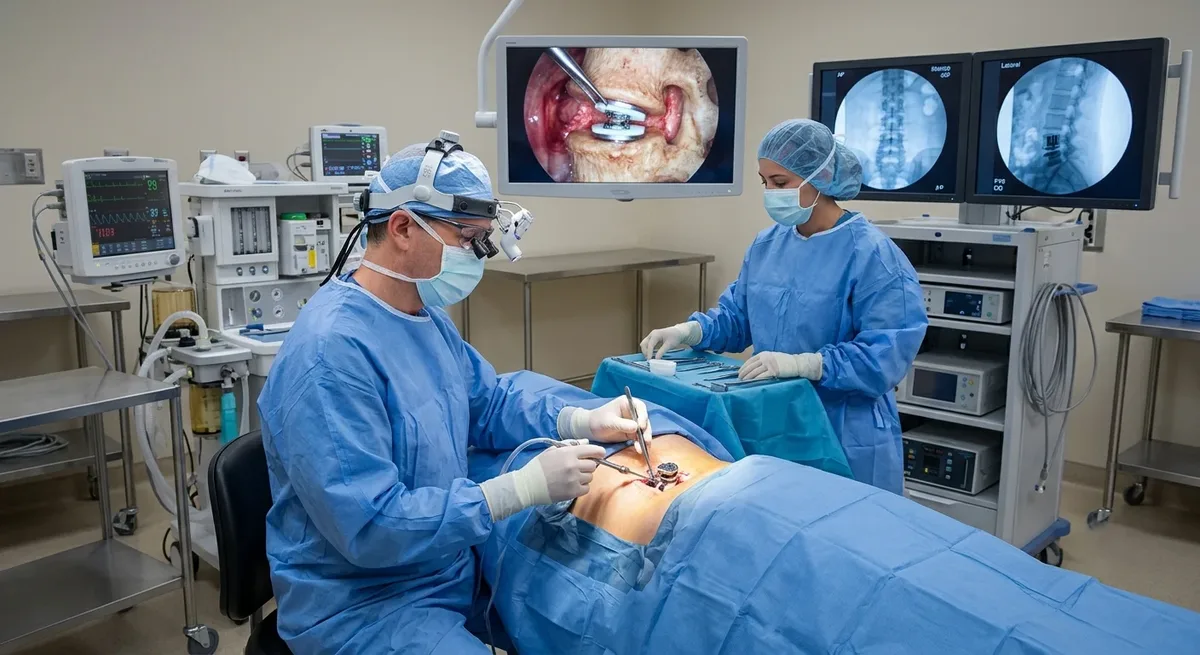
- An artificial disc of the right size is fitted into the space, using X-ray guidance.
- Its two metal endplates attach to the vertebrae above and below, with a moving core between them.
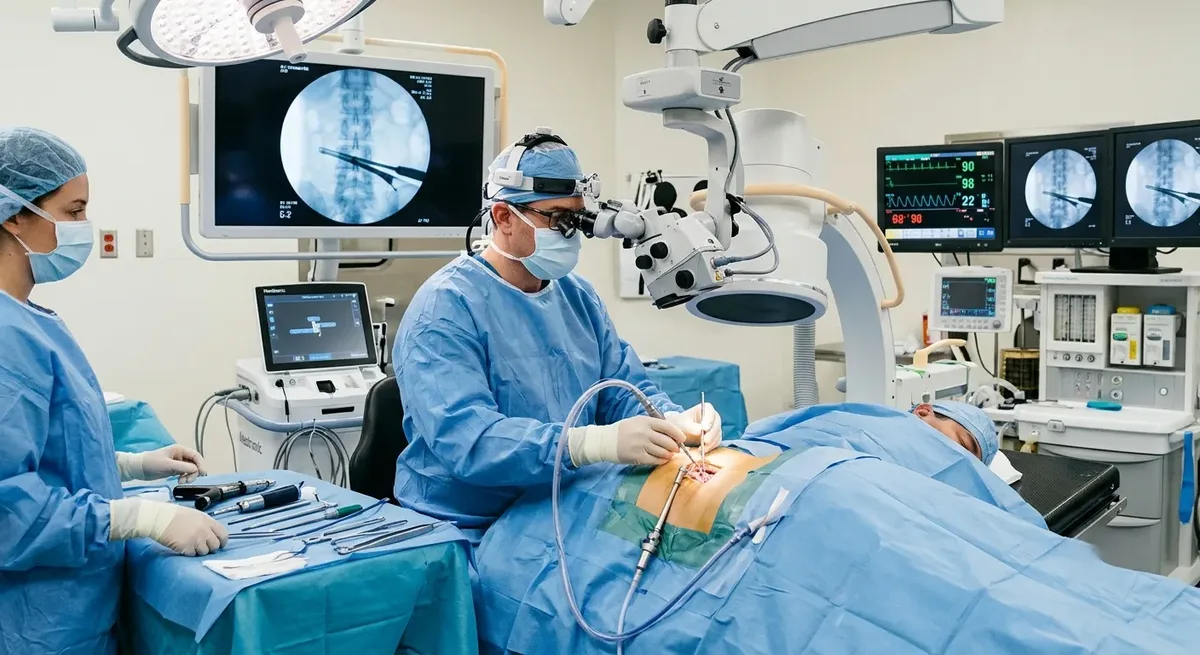
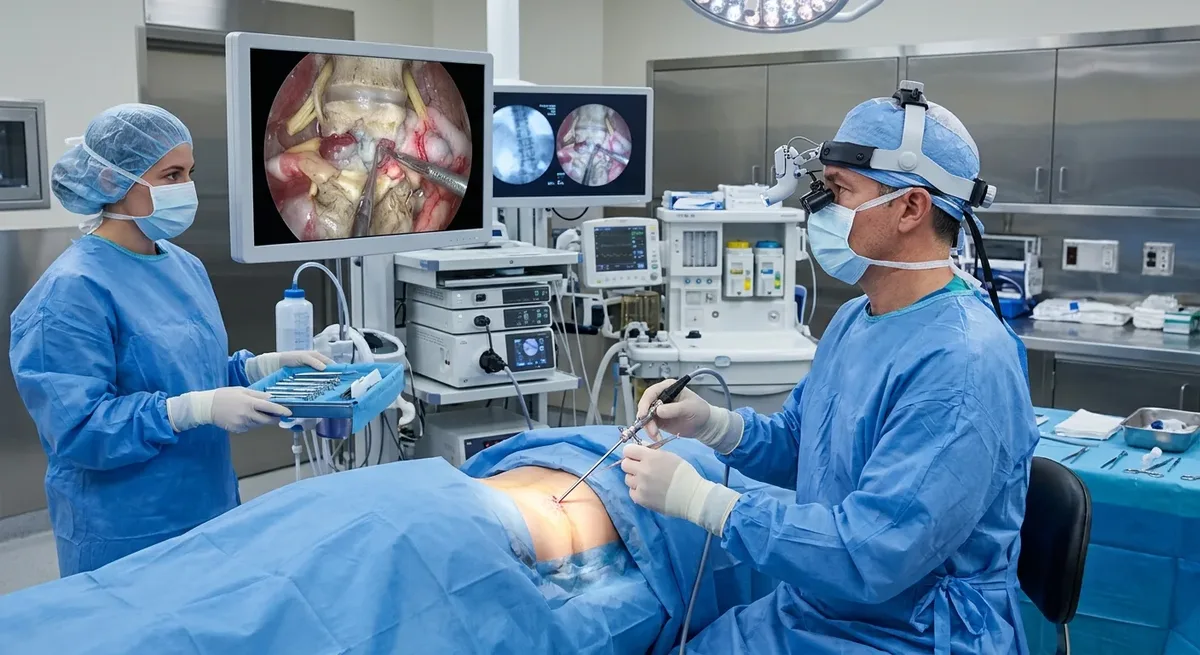
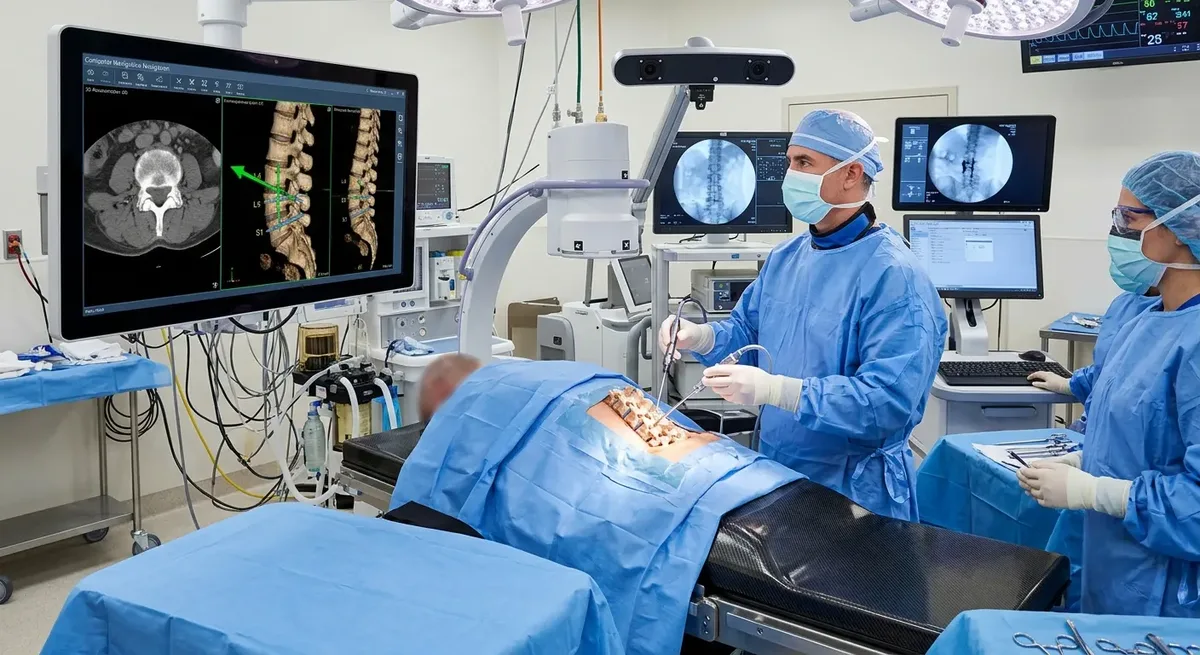
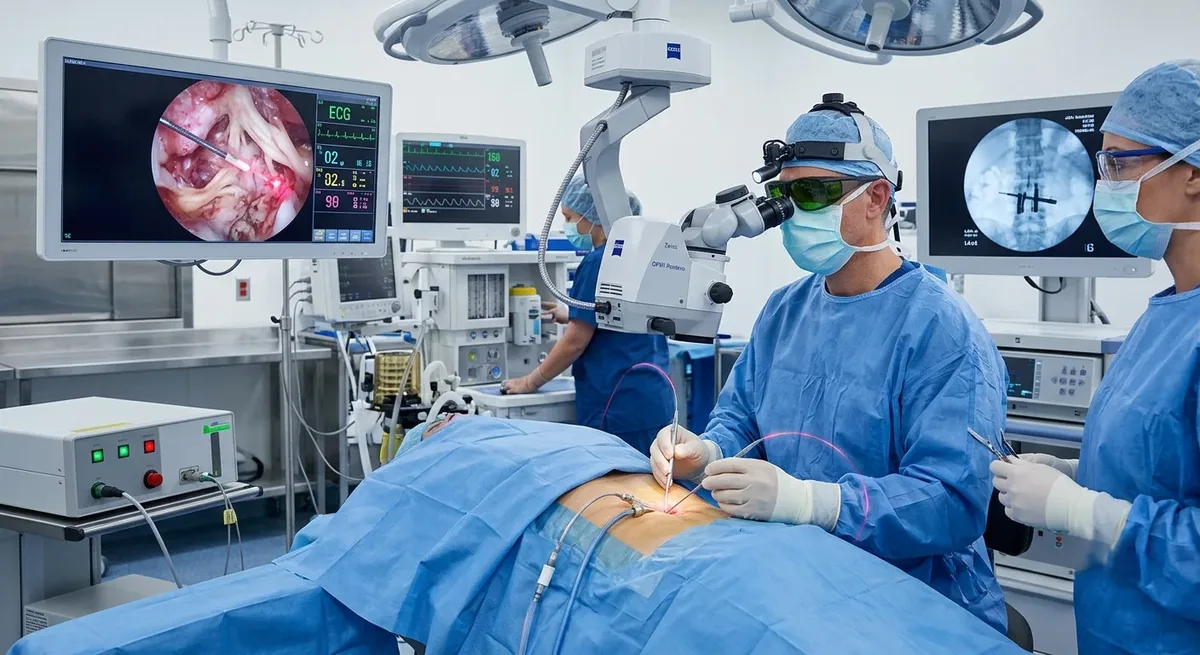
See the technology
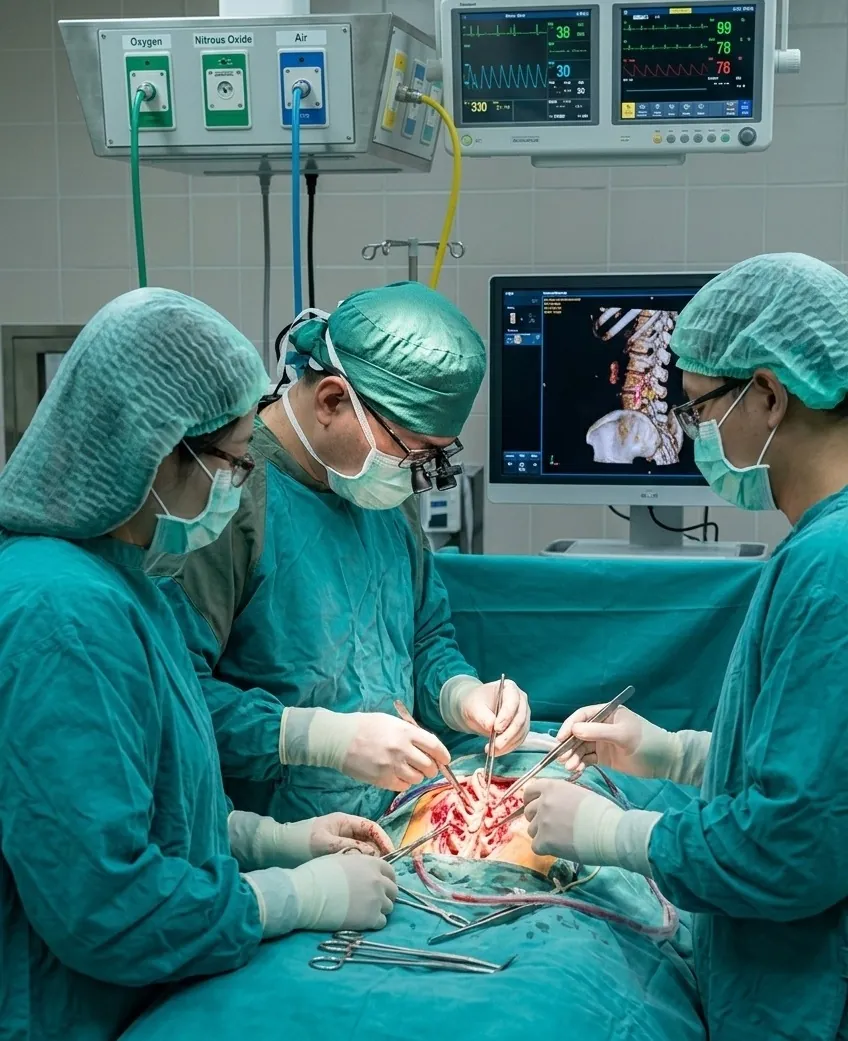
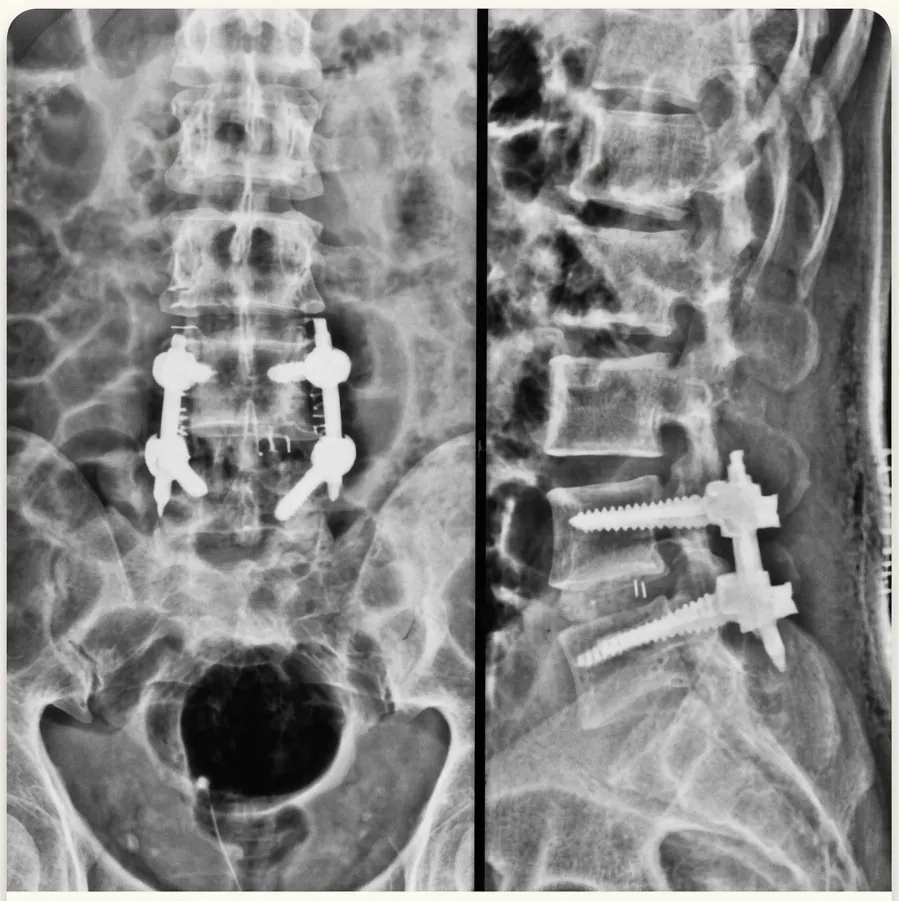
Images supplied by Neo Spine Clinic. Equipment and illustrations show the type of technology involved; Dr. Sharma will explain which tools your own operation needs.
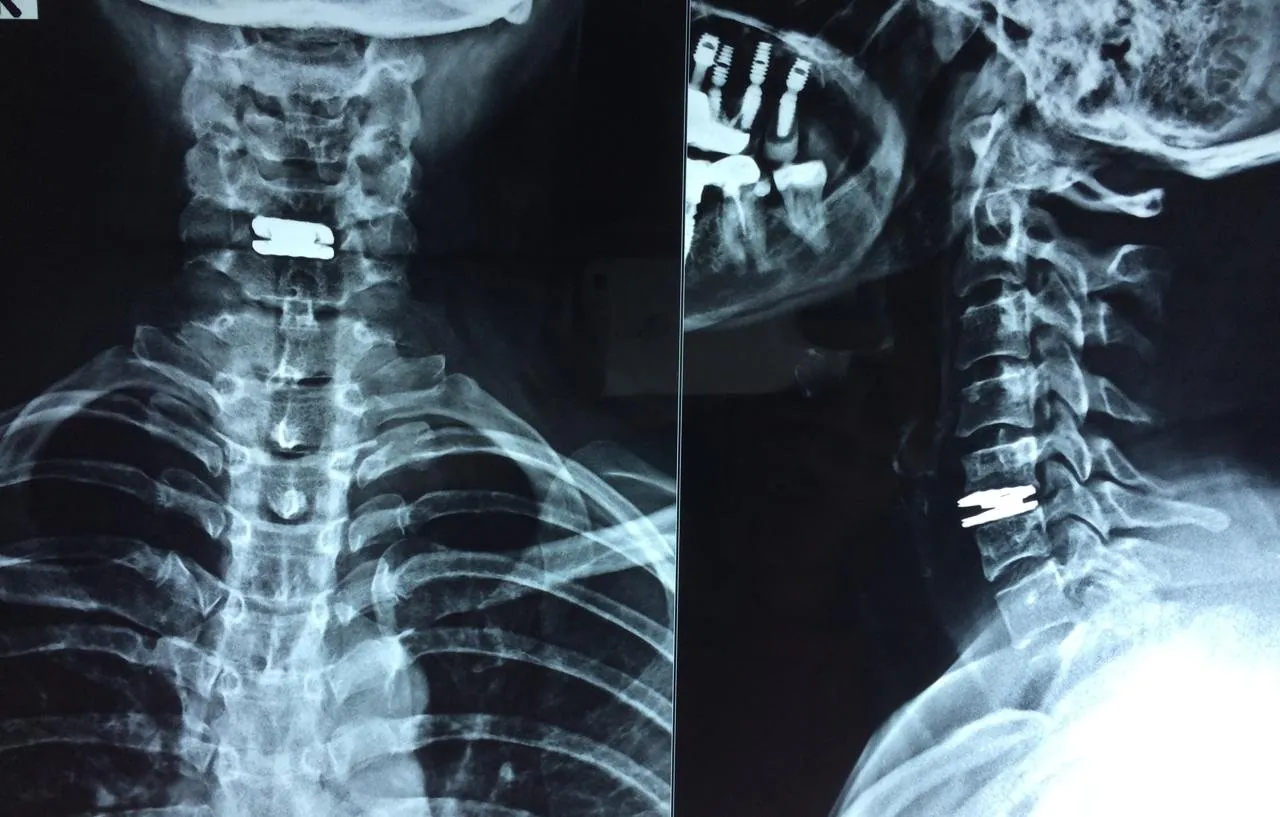 Enlarge image: X-ray after a cervical disc replacement: the artificial disc sits in the disc space.
Who Might Benefit?
- Arm pain, numbness or weakness from a slipped disc or bone spur in the neck that has not improved with non-surgical treatment
- Selected cases of cervical spondylosis or cervical myelopathy at one or two levels
- Patients whose facet joints at that level are still healthy and whose bones are strong
It is usually not suitable when there is significant arthritis of the facet joints, instability, osteoporosis, infection, or compression at many levels. In those situations a fusion is often the safer choice.
Disc Replacement or Fusion?
| Compared | Disc replacement | Fusion (ACDF) |
|---|---|---|
| Movement at the level | Kept | Joined permanently |
| Neighbouring discs | May reduce extra stress on them | More load on the levels above and below |
| Who it suits | Carefully selected patients with healthy joints | A wider range of problems, including instability |
Both operations can give excellent relief of arm pain. Your surgeon will recommend the option that best fits your imaging and your needs.
Frequently Asked Questions
Is disc replacement better than fusion?
Not for everyone. It keeps movement at the treated level, which may help the neighbouring discs, but it only suits patients whose joints and bones are healthy. For many problems, fusion remains the more reliable option.
How soon can I move my neck after surgery?
Most patients walk the same day or the next and go home within a day or two. A soft collar is often not needed, and gentle neck movement is usually encouraged early, as advised by your surgeon.
Does the artificial disc wear out?
Modern artificial discs are designed to last for many years. Your surgeon will arrange follow-up X-rays to check its position and movement.
Can lumbar discs be replaced too?
Yes, but lumbar disc replacement suits far fewer patients than cervical disc replacement. Dr. Sharma will explain whether it is an option for you.
What are the risks?
As with any operation on the front of the neck, risks include infection, bleeding, temporary difficulty swallowing or hoarseness, and problems with the implant. Dr. Sharma discusses these with you before surgery.
Will I need physiotherapy afterwards?
Most patients follow a guided programme of posture care and gentle exercises after surgery, increased step by step as advised by the surgical team.
This page is general education written by Dr. Amit Sharma. Whether a technique suits you depends on your diagnosis, imaging and overall health, and is decided at an individual consultation.