Robotic Spine Surgery: A Significant Advance in Precision Spine Care
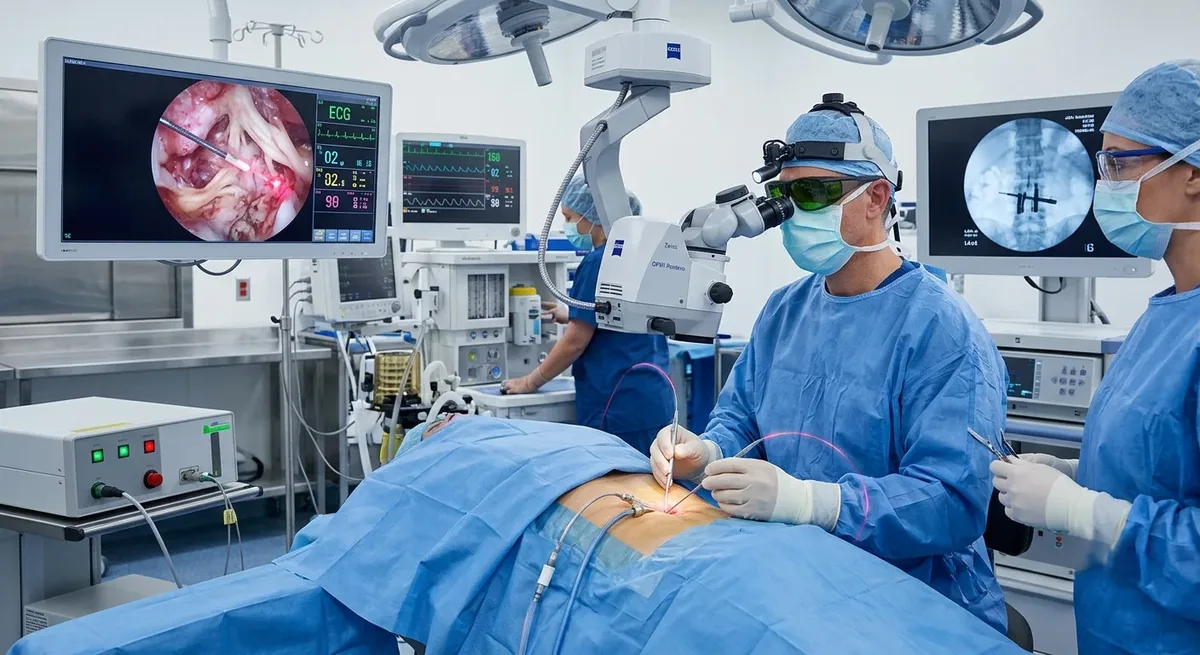
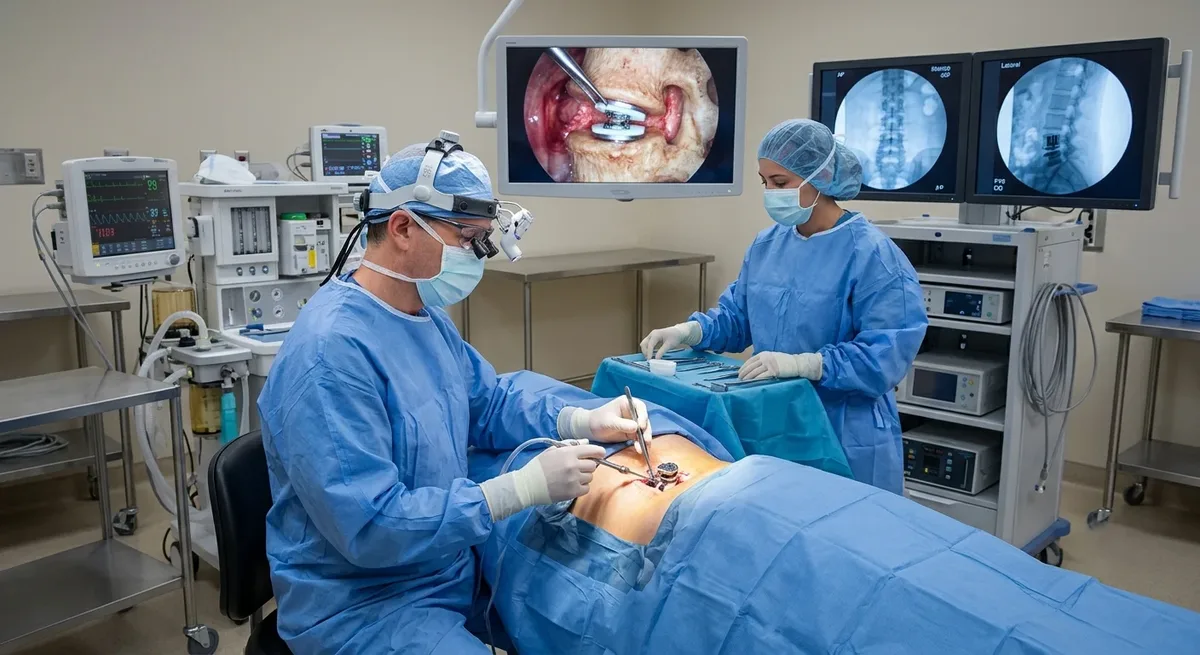
Robotic-assisted spine surgery represents one of the most meaningful technological advances in spine surgery over the past decade. At its core, it combines pre-operative imaging, computer-based surgical planning, and a robotic guidance arm to assist the surgeon in placing spinal implants with a level of precision that was not achievable with conventional technique alone.
As with all surgical technologies, its value lies in understanding exactly what it offers, and matching the right technology to the right patient.
How Robotic Spine Surgery Works
- Before surgeryPlanning on your own 3D spine
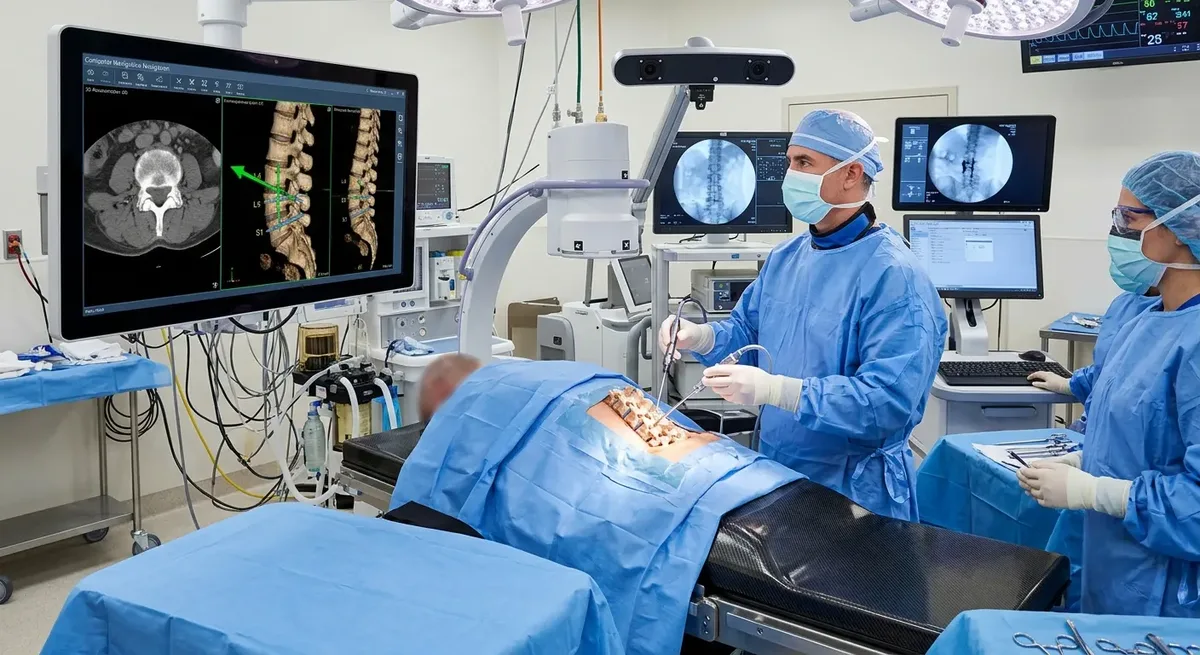
A detailed CT scan of your spine is loaded into the robotic system's planning software. The surgeon maps the exact position, angle and depth of every implant, usually the pedicle screws that anchor a fusion, on a three-dimensional model of your own anatomy. No two spines are the same, and the plan is made for yours.
- During surgeryGuided, checked in real time
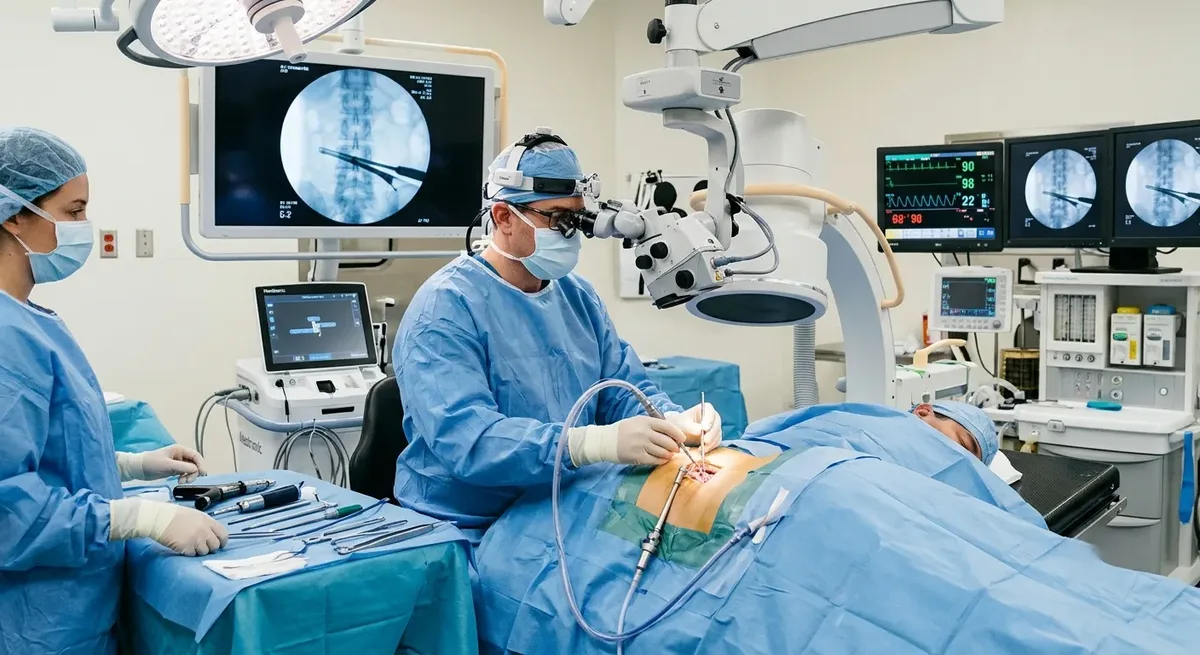
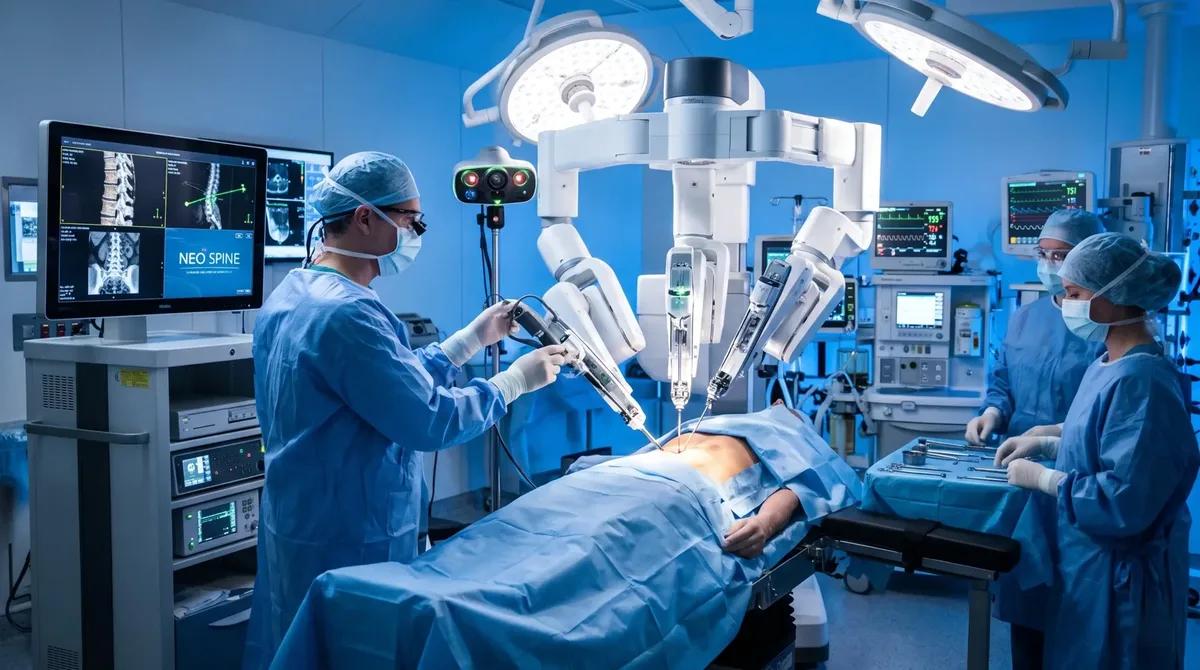
A robotic arm is positioned at the operative field. It holds a precisely guided channel through which the surgeon drills and places each screw along the planned path, with real-time feedback throughout. If anything drifts from the plan, the system alerts the surgeon immediately.
The surgeon remains in complete control
The robot does not operate independently. The robotic system is a highly sophisticated guidance and navigation tool, not an autonomous operator.
What Robotic Assistance Genuinely Improves
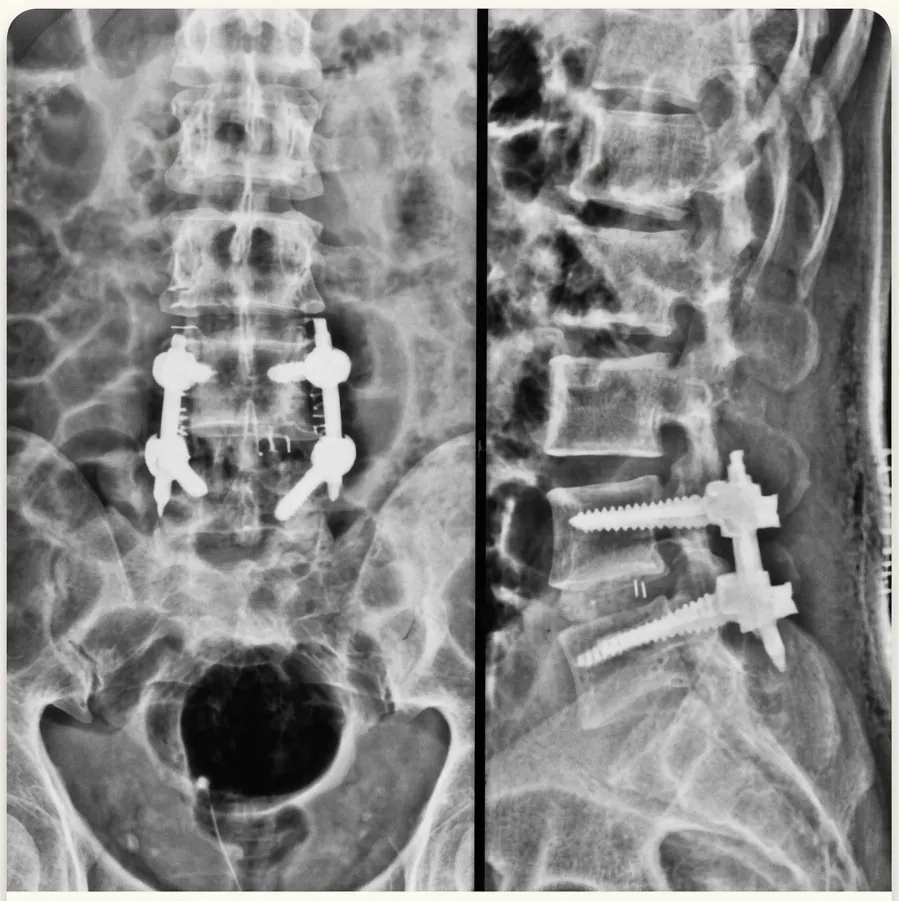
- Implant placement accuracy. Pedicle screws must pass through a narrow bony corridor in each vertebra. Accurate placement is critical: misplaced screws can fail to provide adequate fixation or, in rare cases, encroach on adjacent nerves or vessels. Robotic guidance, by combining pre-operative planning with real-time intraoperative feedback, achieves screw accuracy rates of 97 to 99 percent even in the most complex anatomical situations. This represents a meaningful advance over conventional fluoroscopy-guided technique, particularly in difficult cases.
- Patient-specific surgical planning. The pre-operative planning process that robotic surgery requires is valuable in itself. Surgeons must review the patient's precise anatomy in three dimensions before the procedure, anticipate challenges, and select implant sizes and trajectories specific to that individual. This level of pre-surgical preparation improves overall case execution.
- Reduced intraoperative radiation in appropriate cases. Conventional spine surgery uses live X-ray (fluoroscopy) during the procedure to verify implant position. Robotic systems that use pre-operative CT-based planning can significantly reduce the surgeon's and patient's exposure to intraoperative radiation, an incremental but meaningful benefit, particularly in multi-level procedures requiring many verification images.
- Confidence in complex and high-risk anatomy. In cases where the normal anatomical landmarks that guide freehand surgery are absent or distorted, robotic guidance provides a level of confidence that conventional technique cannot match. This is particularly relevant in the cases described below.
Where Robotic Surgery Makes the Greatest Difference
Robotic-assisted spine surgery delivers its most meaningful clinical advantage in the following situations:
- Complex spinal deformity: Adult scoliosis, kyphosis, and combined deformity requiring correction and instrumented fusion across multiple vertebral levels present some of the most technically demanding anatomy in spine surgery. Robotic planning and guidance in these cases improves screw accuracy and reduces the risk of malposition in anatomy where normal landmarks may be significantly distorted.
- Revision spine surgery: When a previous operation has removed bone, altered the normal anatomy, or left significant scar tissue, the reliable landmarks that guide freehand surgery may no longer be present. Robotic guidance, working from the patient's current CT anatomy rather than surgical landmarks, allows safe and accurate implant placement in these challenging conditions.
- Osteoporotic spine surgery: In patients with significantly reduced bone density, screw loosening and pullout are real risks. Pre-operative CT-based planning allows the surgeon to select optimal screw dimensions and trajectories specific to each vertebra's available bone stock, improving fixation durability in osteoporotic bone.
- High thoracic and upper cervical surgery: Surgery at these spinal levels is performed in close proximity to the spinal cord, the vertebral arteries, and major neurovascular structures. The margin for error in screw placement is narrow. Navigated robotic guidance provides a meaningful additional safety margin at these anatomically demanding levels.
- Minimally invasive fusion procedures: Robotic assistance lends itself well to percutaneous screw placement (through very small incisions) in appropriate minimally invasive fusion cases, helping to achieve reliable fixation without the need for extensive surgical exposure.
Robotic Surgery at Neo Spine Clinic
At Neo Spine Clinic, the approach to robotic-assisted surgery reflects the same philosophy that guides all my surgical decision-making: the right technique for the right patient, based on clinical evidence and individual anatomy, not on technology for its own sake.
For complex deformity, revision surgery, osteoporotic bone, or problems at high-risk levels of the spine, I refer to appropriately equipped and experienced robotic centres, where this technology provides genuine clinical value.
For primary lumbar surgery with straightforward anatomy, my minimally invasive MOTLIF (Modified Mini-Open TLIF) technique, developed over 20 years, delivers excellent outcomes. It combines the tissue-preservation benefits of a minimally invasive approach with the direct view needed for complete, safe decompression of the nerves. Read the published study.
The goal is always the same: the best possible outcome for your specific spine condition. The technology is chosen in service of that goal.
Frequently Asked Questions
Does the robot perform the surgery?
No. The robotic system is a guidance and navigation tool, not an autonomous operator. The surgeon plans every implant, places each screw through the guided channel and remains in complete control throughout the operation.
How is the operation planned?
A CT scan of your spine is loaded into the planning software. The surgeon maps the position, angle and depth of every implant on a three-dimensional model of your own anatomy before surgery.
Who benefits most from robotic assistance?
Patients with complex spinal deformity, revision surgery after a previous operation, osteoporotic bone, surgery at high-risk levels such as the upper thoracic and upper cervical spine, and selected minimally invasive fusions.
Does robotic surgery reduce radiation?
In appropriate cases, yes. Systems that use CT-based planning can significantly reduce the need for live X-ray during the operation, which helps most in multi-level procedures.
Is robotic surgery always the better choice?
Not always. For primary lumbar surgery with straightforward anatomy, minimally invasive techniques such as MOTLIF are often well suited. The technology is chosen to suit your condition and anatomy, not for its own sake.
Does Dr. Sharma offer robotic surgery?
For complex deformity, revision, osteoporotic bone or high-risk levels, Dr. Sharma refers patients to appropriately equipped and experienced robotic centres. He will explain which approach suits your spine at consultation.
This page is general education written by Dr. Amit Sharma. Whether a technique suits you depends on your diagnosis, imaging and overall health, and is decided at an individual consultation.