Understanding Kyphosis
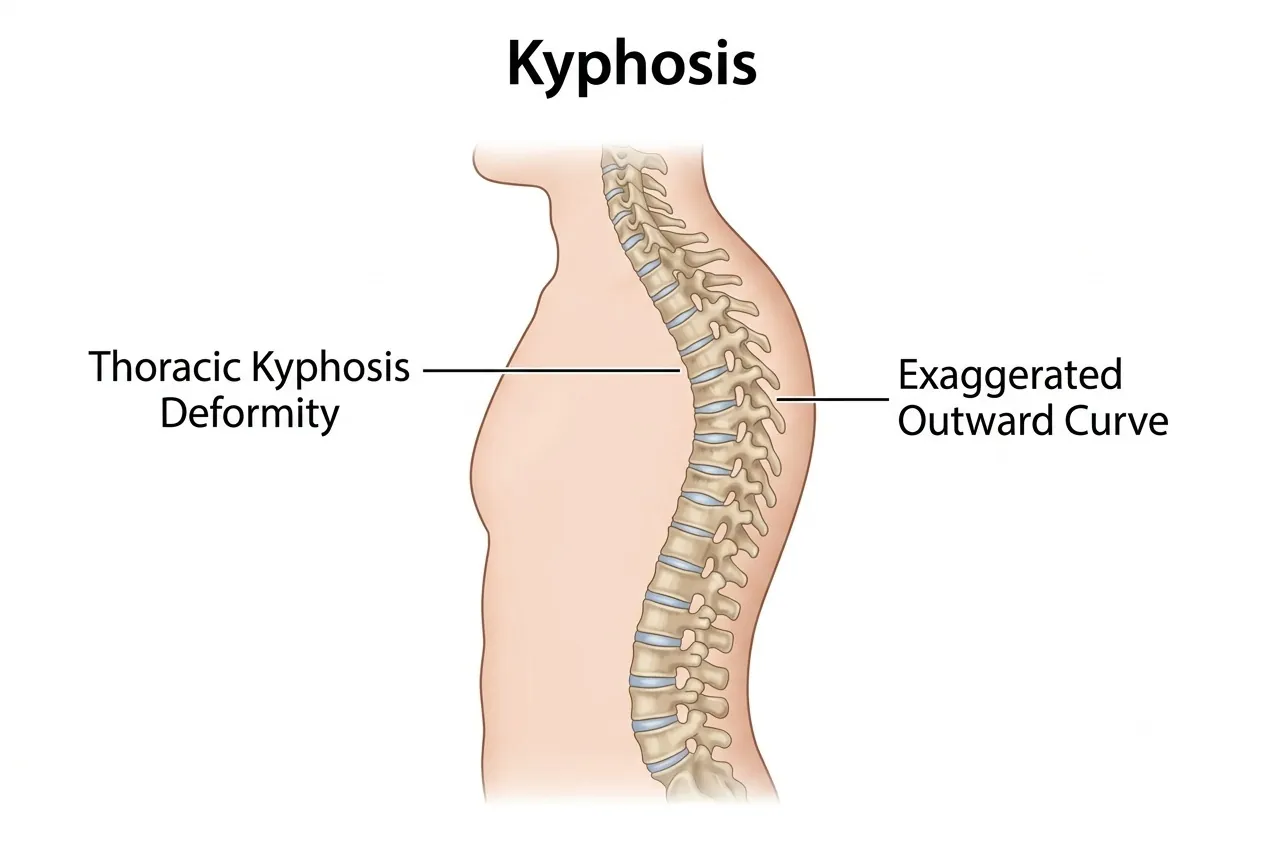
Kyphosis describes an excessive forward rounding of the spine. A normal spine is not completely straight when viewed from the side: the neck and lower back normally have lordosis, while the thoracic spine normally has kyphosis. The condition becomes abnormal when thoracic kyphosis is excessive or when normal cervical or lumbar lordosis is lost, creating a rounded or hunched alignment.
Not every rounded back is the same
Flexible postural rounding behaves very differently from a rigid structural deformity such as Scheuermann or congenital kyphosis. Identifying the type determines whether posture therapy, bracing, observation or surgery is appropriate.
Types and Causes
| Type | Typical Features |
|---|---|
| Scheuermann kyphosis | A developmental, usually rigid deformity caused by wedge-shaped vertebral growth, commonly presenting during adolescence with back pain and postural change. |
| Congenital kyphosis | Results from vertebral formation or segmentation abnormalities present from birth. It can be sharp and rapidly progressive and may coexist with spinal-cord or other congenital organ abnormalities. |
| Postural kyphosis | A flexible curve related to posture, commonly seen during adolescence. It tends to correct when the patient lies down and is usually managed with posture correction and physiotherapy. |
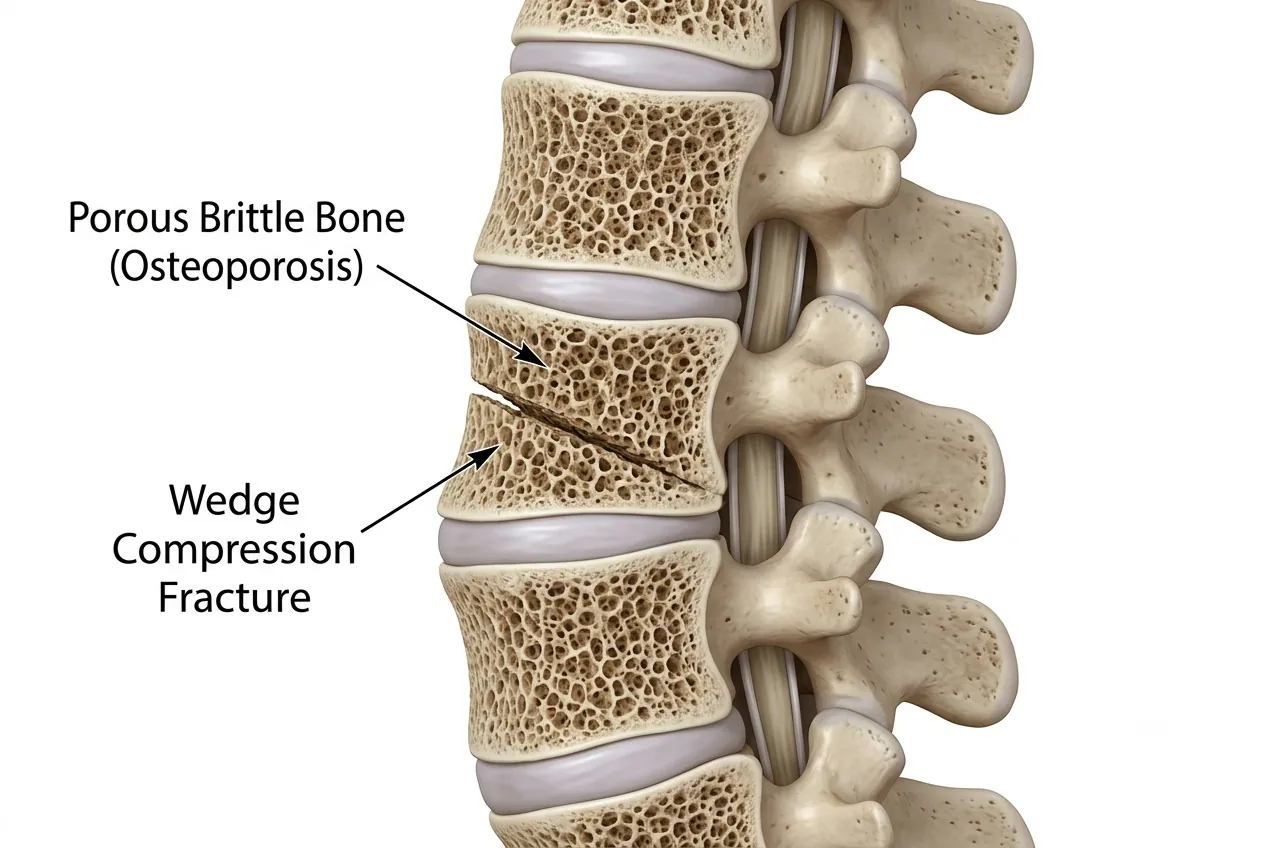
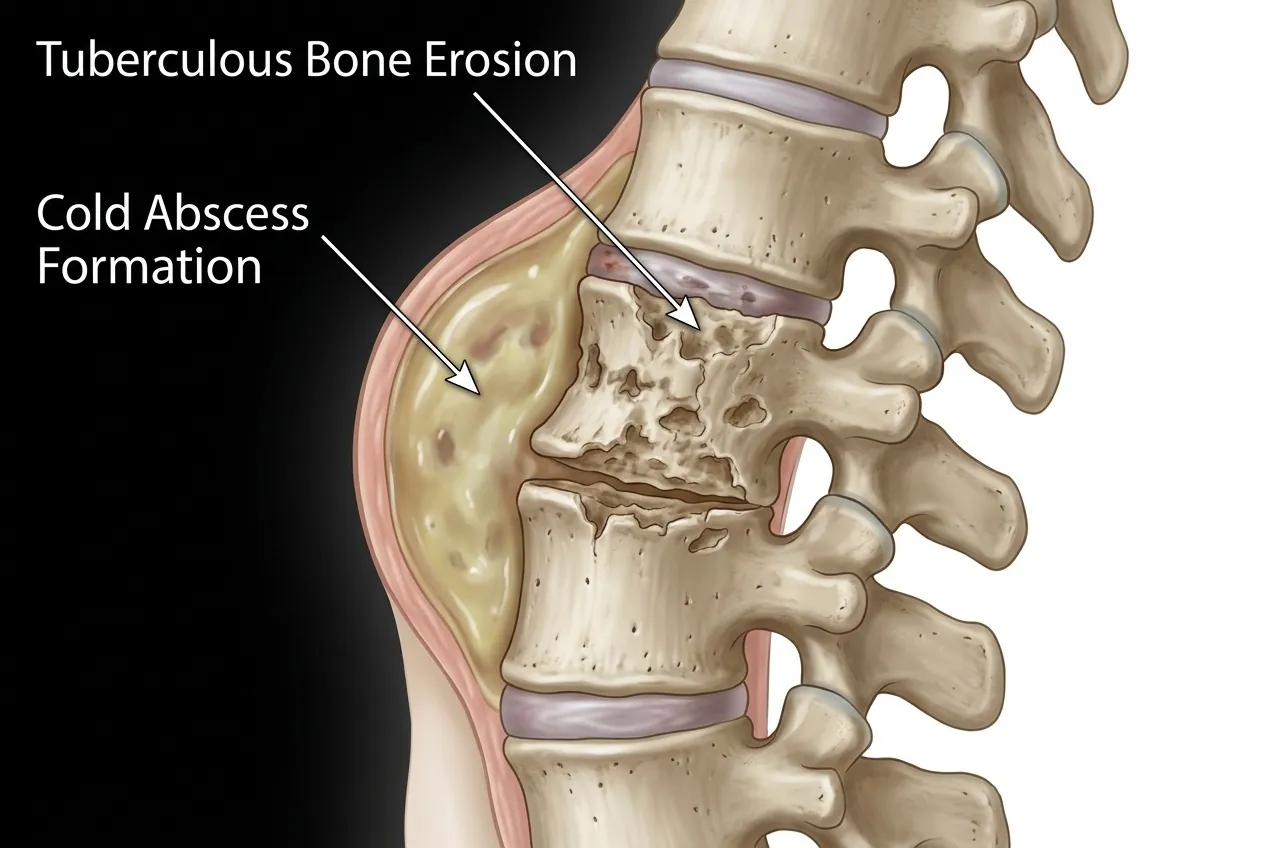
| Secondary kyphosis | Develops when another disorder damages or collapses the anterior spinal column, including spinal tuberculosis, osteoporotic fractures, tumors such as multiple myeloma, and ankylosing spondylitis. |
Symptoms
The most visible feature is a rounded or hunched spinal profile. The clinical impact depends on the degree, rigidity and cause of the curve.
- Mild disease: may mainly produce cosmetic concern, postural fatigue or mild back pain.
- More severe deformity: can cause persistent pain, stiffness, imbalance and difficulty lying comfortably on the back.
- Thoracic compression: a very severe curve can restrict chest mechanics and contribute to breathing difficulty.
- Neurological compression: spinal stenosis may produce limb numbness or weakness, reduced hand dexterity, balance problems, leg spasticity and, in advanced cases, bladder or bowel dysfunction.
Urgent assessment
New weakness, severe walking difficulty or loss of bladder/bowel control requires prompt medical assessment.
Specialist review
A visibly progressing rigid curve, increasing pain, breathing limitation or worsening imbalance should be evaluated.
Mild flexible curve
Postural kyphosis without neurological problems can often be managed conservatively after appropriate assessment.
2-minute self-check
Do your symptoms deserve a closer look?
Tick anything you've noticed recently. Your guidance appears straight below. Everything stays on this page; nothing is stored or sent. This is an educational aid, not a diagnosis of kyphosis.
Seek urgent medical care today
These symptoms can mean a nerve or the spinal cord is under serious pressure. Go to the nearest emergency department, or call the clinic straight away. Do not wait for a routine appointment.
Book a spine specialist review soon
Arrange an assessment within the next few days, and sooner if things get worse. If you already have an MRI, you can send it for review.
Conservative care is usually a reasonable start
Activity changes, physiotherapy and appropriate medication often help. See a doctor if it is not better in 1–2 weeks, or straight away if any time-sensitive symptom appears.
Guidance only, based on the warning signs described in this guide. It cannot find the cause of your symptoms. If symptoms are severe, getting worse quickly, or you are worried, contact a doctor.
Diagnosis
Diagnosis begins with history and examination to determine whether the curve is flexible or structural, assess overall balance and look for neurological findings or clues to an underlying disorder.
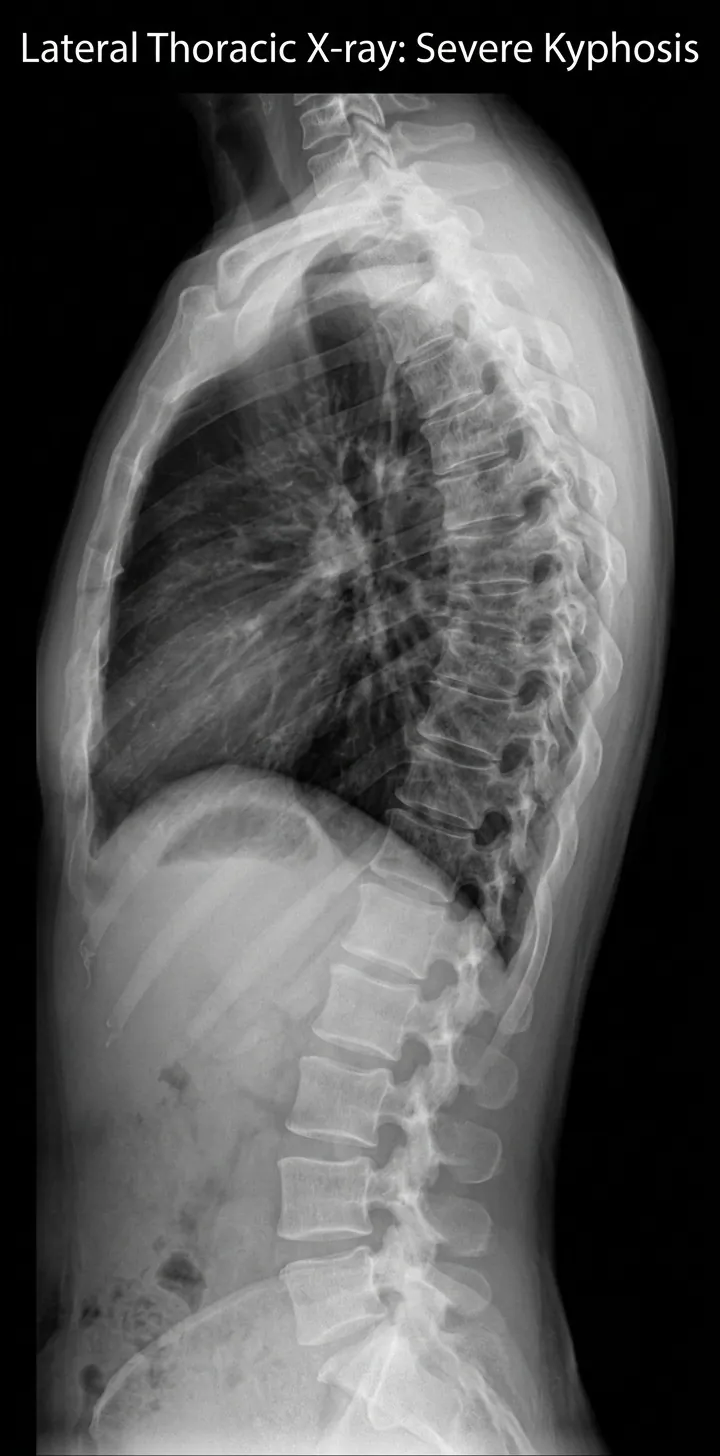 Enlarge image: X-ray showing kyphotic spinal curvature
Investigations Used for Kyphosis
- X-rays: measure curve magnitude; bending views assess flexibility and serial films can monitor progression.
- MRI: evaluates spinal-cord compression, congenital neural abnormalities and secondary disease such as tumor or infection.
- CT: gives detailed vertebral anatomy and is particularly useful in congenital deformity and fractures.
- EMG/NCV: may assess nerve dysfunction when neurological symptoms require further clarification.
- Abdominal ultrasound and 2D echocardiography: may be used in congenital kyphosis to look for associated organ abnormalities.
- Biopsy: may be required when infection or spinal tumor is suspected.
Non-Surgical Treatment
Management depends on the type of kyphosis, curve magnitude, progression, skeletal maturity, symptoms and neurological status. Pain medicines, muscle relaxants and nerve-pain medicines such as pregabalin or gabapentin may be prescribed when clinically appropriate, while physiotherapy focuses on mobility, posture and back-muscle conditioning.
Observation and Bracing
- Observation: suitable for selected mild deformities without important cosmetic, functional or neurological problems. Growing patients may need frequent follow-up to detect progression.
- Scheuermann bracing: may be considered in growing children with curves in approximately the 60–80° range. Effective bracing generally requires prolonged daily wear and is not expected to correct a structural curve after skeletal maturity.
- Secondary kyphosis: a brace may provide support and pain relief while the underlying disease is treated.
Surgical Treatment
Surgery enters consideration for severe deformity, continued progression despite bracing, major cosmetic or postural imbalance, neurological compression, and high-risk congenital or secondary kyphosis. In Scheuermann kyphosis, curves above roughly 80° commonly warrant surgical discussion when symptoms and overall clinical circumstances support it.
| Technique | Role |
|---|---|
| Posterior spinal fusion | The commonest approach for many structural deformities, using implants to realign and stabilize the spine. |
| Anterior release and fusion | May be used for selected rigid deformities requiring additional release before correction. |
| Combined approach | Severe or complex deformities may require both anterior and posterior procedures. |
Correction must be safe, not excessive
The surgical objective is balanced alignment, neurological safety and durable stabilization. Attempting to make every curve perfectly straight is neither necessary nor appropriate.
Recovery
After modern kyphosis surgery, sitting and walking may begin as early as the following day when pain control and neurological status allow. Multimodal pain management and physiotherapy support progressive mobility. Longer-term recovery depends on the magnitude of correction, number of fused levels, age, bone quality and the underlying cause of the deformity.
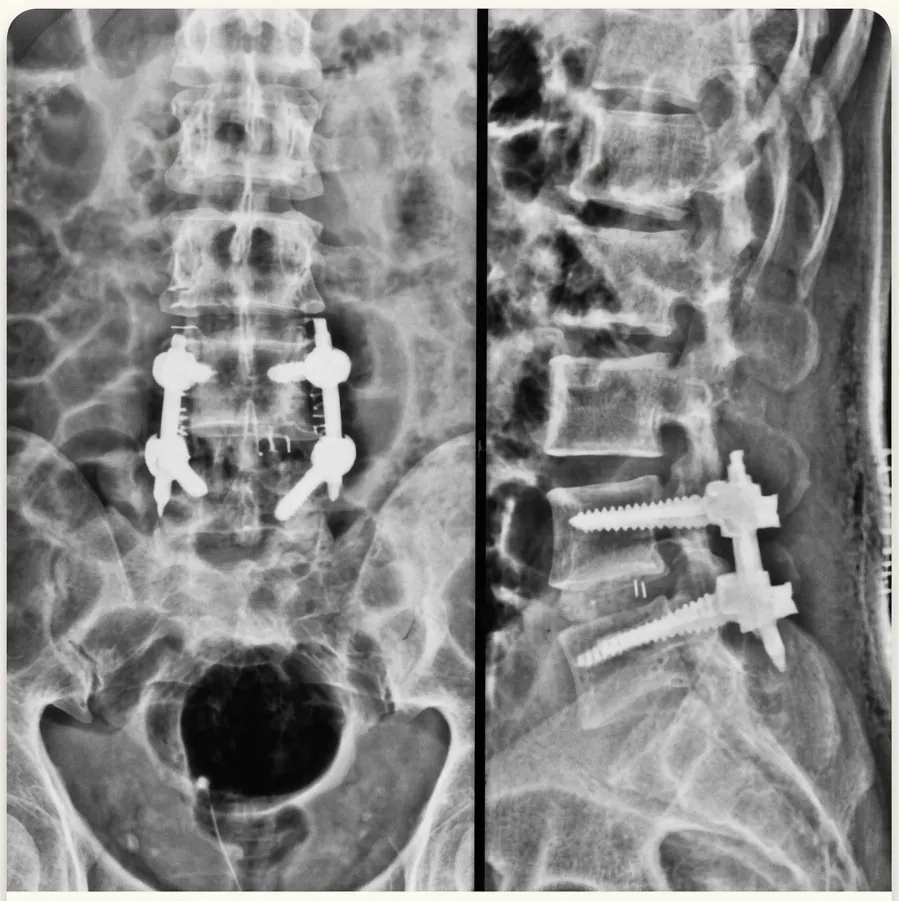
Imaging from Dr. Sharma's practice
The images below are from Dr. Amit Sharma's practice and are shared for education, without identifying details. Every patient's imaging is different — your own scans need an individual clinical review.
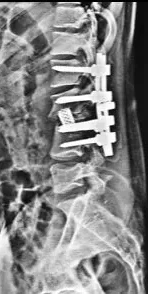 Enlarge image: Kyphosis: instrumented correction, lateral view (clinical image).
Frequently Asked Questions
What is the difference between kyphosis, lordosis and scoliosis?
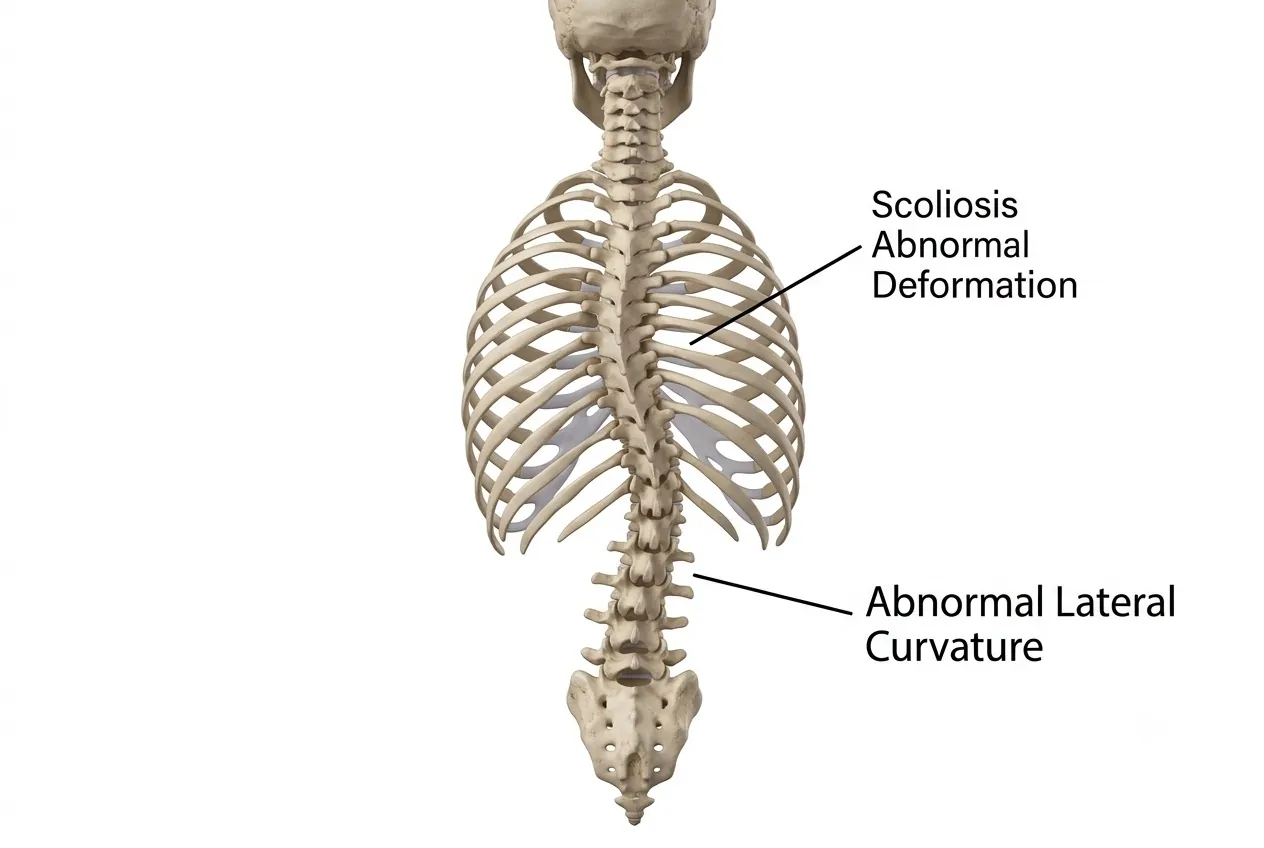
Kyphosis is excessive forward rounding, usually of the thoracic spine. Lordosis is an excessive inward curve, most often in the lumbar region. Scoliosis is a sideways curvature, frequently accompanied by vertebral rotation. More than one alignment problem can coexist.
Can kyphosis be reversed without surgery?
Flexible postural kyphosis can often improve substantially with posture correction and physiotherapy. A rigid structural curve cannot usually be fully reversed with exercise alone, although symptoms and function may improve.
What exercises are best for kyphosis or lordosis?
Exercise should be individualized. Postural training, spinal mobility and appropriate back/core strengthening are commonly used, but rigid deformity or neurological symptoms should be assessed before beginning an unsupervised program.
What does kyphosis surgery cost, and is it worth it?
Cost varies with deformity complexity, number of levels, implants, hospital stay and whether combined approaches are required. Whether surgery is worthwhile depends on progression, pain, neurological risk, balance and expected functional benefit.
How successful is kyphosis surgery, and what are the risks?
Modern surgery can substantially improve alignment, pain and function in appropriately selected patients. Risks include neurological injury, infection, bleeding, implant problems, non-union and general surgical complications; risk varies with the deformity and procedure.
How long does recovery take?
Early walking can begin quickly, but healing and return to normal activity occur over weeks to months depending on the scale of surgery and individual recovery.
Is surgery dangerous for elderly patients?
Age alone does not determine suitability. Frailty, osteoporosis, heart/lung health, neurological status and the size of the proposed reconstruction are central to risk assessment.
What is the best treatment for kyphosis in an elderly person?
Treatment is individualized. Many patients benefit from pain control, osteoporosis treatment, physiotherapy and support, while surgery is reserved for selected cases with instability, progressive deformity, neurological compromise or disabling symptoms.
Can kyphosis be reversed in older adults?
A fixed structural deformity may not fully reverse without reconstruction, but pain, strength, balance and function can often be improved with appropriate treatment.
Can stress and anxiety cause back pain?
Stress can increase muscle tension and amplify pain, but it does not by itself explain a structural kyphotic deformity. Persistent or progressive symptoms should be assessed on their own merits.
This article is general education written by Dr. Amit Sharma. It is not a diagnosis or a substitute for an in-person consultation. If you have sudden weakness, numbness in the groin or saddle area, or new bladder or bowel problems, seek emergency care.