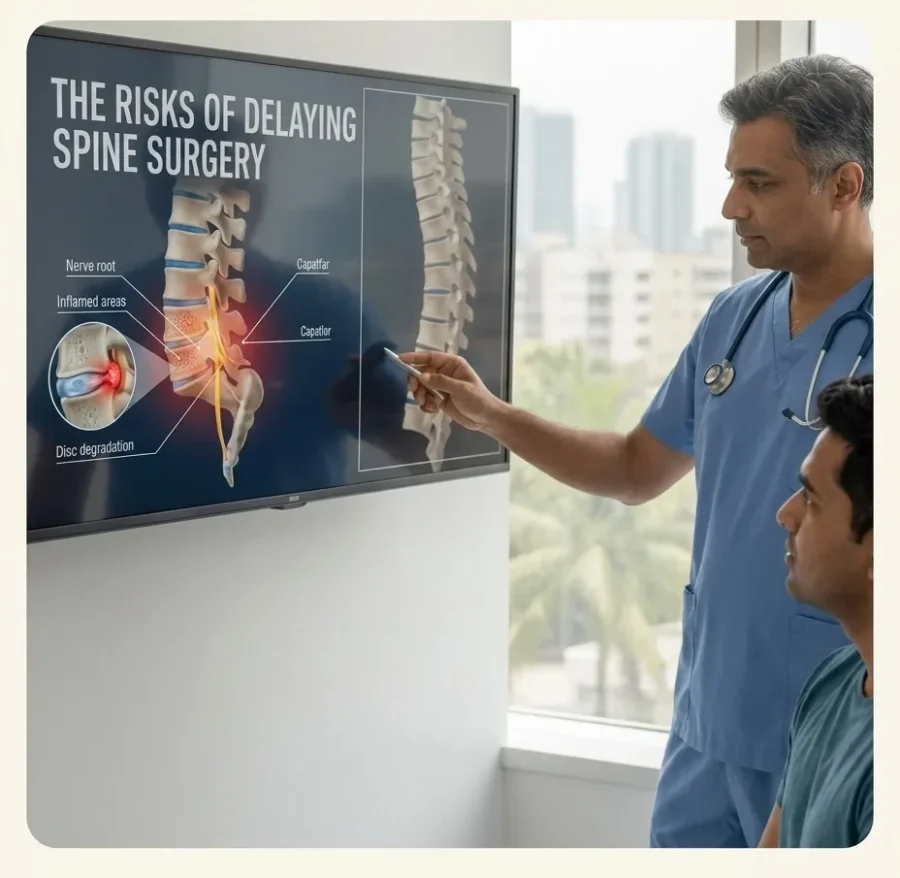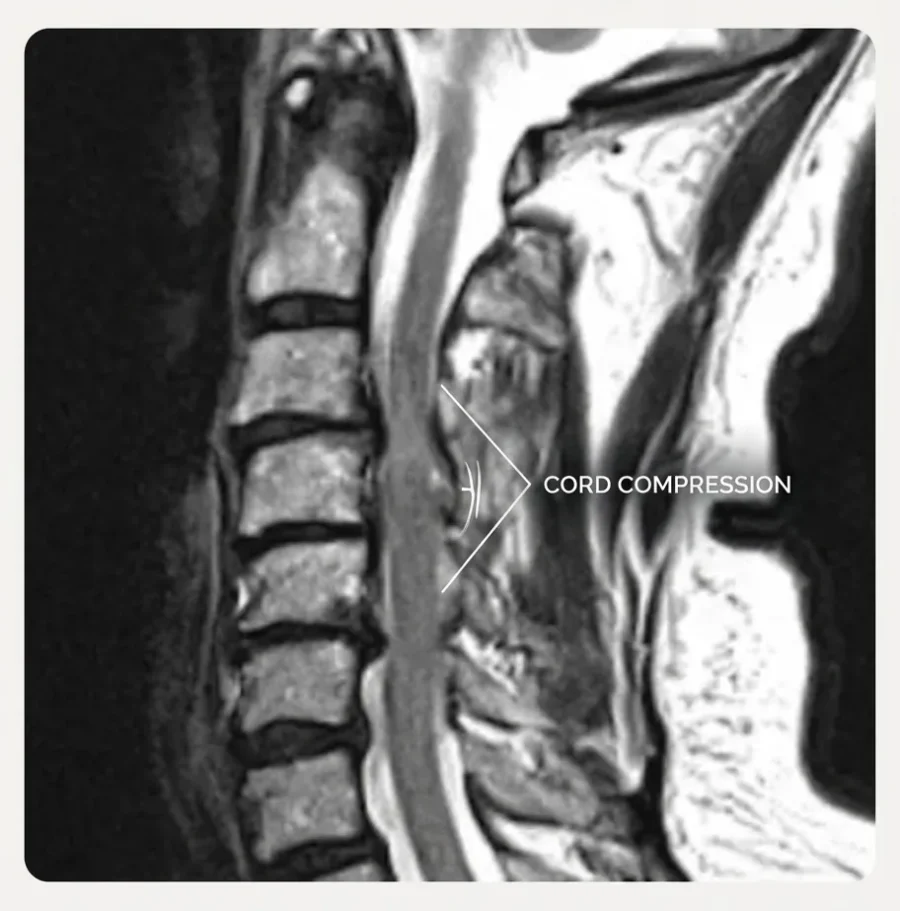
Older adults are often told that back or leg pain is simply part of ageing and that spine surgery becomes “too risky” after 70 or 80. Chronological age matters, but it is only one part of risk assessment. Modern surgery, anesthesia and rehabilitation allow selected patients in their 70s, 80s and beyond to undergo treatment when the expected benefit justifies the risk.
Age Is Not the Only Measure of Surgical Fitness
The decision should consider frailty, heart and lung function, bone quality, nutrition, mobility, cognition, medications, the severity of the spinal problem and what the patient hopes to regain. A fit 80-year-old and a frail 65-year-old can have very different risk profiles.
The question is not simply “How old are you?”
The more useful question is whether the spinal condition is limiting independence and whether the patient's overall health can support the proposed procedure and recovery.
From Large Exposure to Minimally Invasive Surgery
Traditional open operations may require wider muscle exposure. MISS uses smaller working corridors, tubular retractors and magnified visualization to reach selected discs, nerves or fusion targets with less disruption of surrounding muscle.
Why this can matter more in older patients
- Less soft-tissue disruption.
- Potentially lower blood loss.
- Less postoperative pain in suitable procedures.
- Smaller wounds and earlier mobilization.
- Potentially shorter hospital stay, reducing some risks associated with prolonged immobility.
Navigation and Robotics: 3D Guidance
Intraoperative 3D navigation maps instruments and anatomy in real time, while robotic platforms can guide planned implant trajectories. These systems can be particularly valuable when anatomy is altered by degeneration, deformity or previous surgery.
Precision technology does not make every operation low-risk
Navigation and robotics improve guidance, but osteoporosis, frailty, medical disease and the complexity of the operation still require careful individualized planning.
Senior-Focused Anesthesia and ERAS
Anesthesia for an older adult is planned around geriatric physiology rather than simply using the same approach for every age. Enhanced Recovery After Surgery (ERAS) pathways combine preoperative optimization, thoughtful anesthesia, pain control and early mobilization.
Key perioperative priorities
- Maintain stable circulation and oxygenation.
- Use medication strategies appropriate for older physiology and kidney/liver function.
- Reduce unnecessary sedating medication where possible.
- Plan pain control that allows early movement.
- Recognize and reduce risks of postoperative confusion/delirium.
Prehabilitation: Start Recovery Before Surgery
Prehabilitation means improving modifiable health factors before the operation rather than waiting until afterward to begin rehabilitation. For older patients this can include nutrition, strength and walking capacity, respiratory conditioning and bone-health assessment.
| Area | Pre-operative focus |
|---|---|
| Nutrition | Identify poor intake and support adequate protein/energy for healing. |
| Bone health | Assess osteoporosis risk when instrumentation or fusion is planned. |
| Physical capacity | Maintain safe strength, walking and respiratory conditioning as tolerated. |
| Medical optimization | Review cardiovascular, respiratory and other relevant conditions before surgery. |
Walking Early: Modern Rehabilitation
Weeks of routine bed rest are no longer the standard after most spine operations. When medically safe, the goal is to sit, stand and walk early—sometimes within hours or by the next day. Early mobilization helps preserve strength and independence and reduces complications associated with immobility, including blood clots, chest problems and joint stiffness.
Rehabilitation should focus on meaningful functional goals: walking outdoors, managing stairs, returning to self-care or resuming activities with family.
Why “Wait and See” Can Also Carry Risk
For some older adults, chronic spinal pain or nerve compression gradually reduces walking and activity. The consequence may extend beyond pain: deconditioning, loss of confidence, social isolation and loss of independence can follow prolonged immobility.
Urgent neurological change
Rapidly worsening weakness, bladder/bowel dysfunction or major walking deterioration requires prompt medical assessment regardless of age.
Progressive loss of independence
Increasing pain or nerve symptoms that steadily reduce walking and daily function deserve specialist review rather than automatic acceptance as “old age.”
Age alone is not a verdict
Overall health, goals and the treatability of the spinal problem are more informative than a birthday alone.
This article is general education written by Dr. Amit Sharma. It is not a diagnosis or a substitute for an in-person consultation.