Titanium implants
Highly biocompatible, MRI-compatible and resistant to infection. They give excellent fusion rates and long-term stability.
Spine surgery has changed remarkably over the past decade. New technology, combined with minimally invasive technique, has improved surgical precision, shortened recovery and improved results for patients.
Smaller incisions, real-time guidance and nerve monitoring. Each page explains how the technology works, who it suits and its limits.
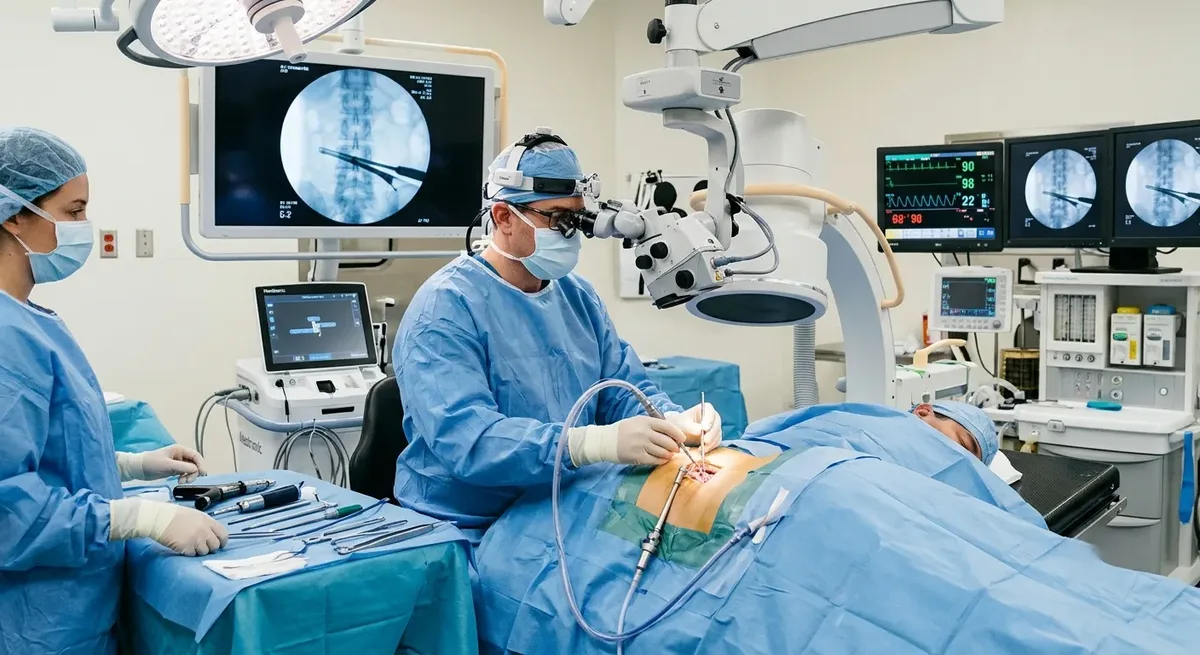 Minimally Invasive Spine SurgeryDecompression, stabilisation and fusion through small, muscle-sparing access corridors instead of a long open incision.
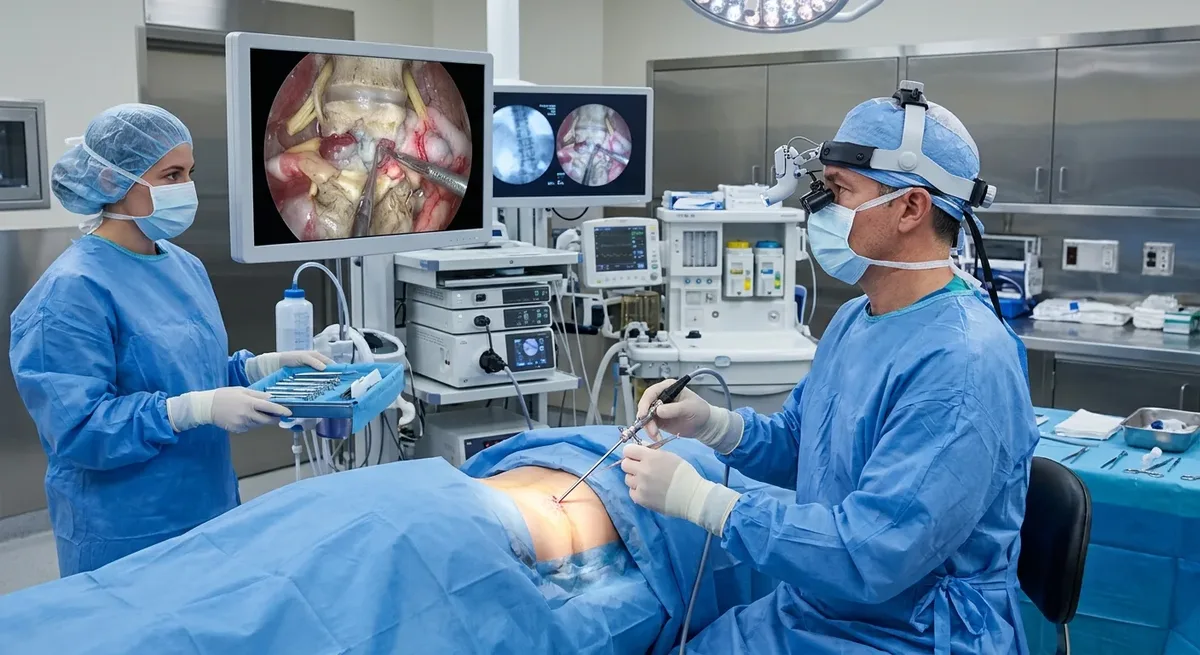 Endoscopic Spine SurgeryA thin camera and fine instruments pass through a very small incision to treat disc herniations and stenosis.
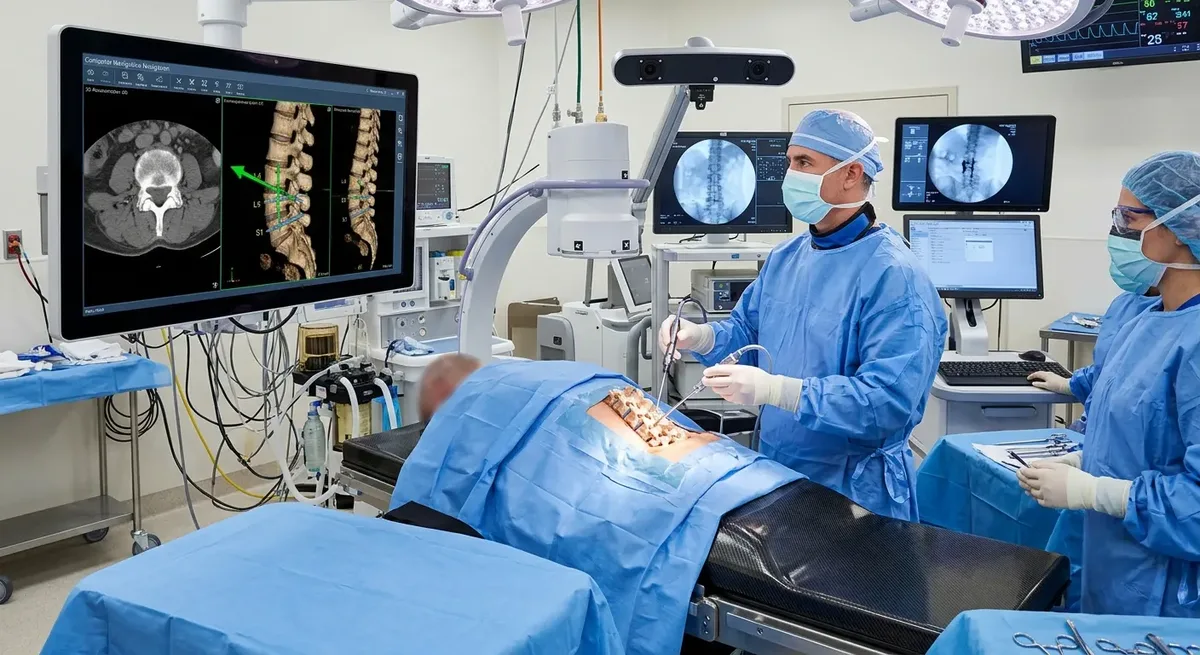 Computer Navigation Spine SurgeryShows the position of instruments relative to your spine on a 3D image in real time, guiding accurate screw and implant placement.
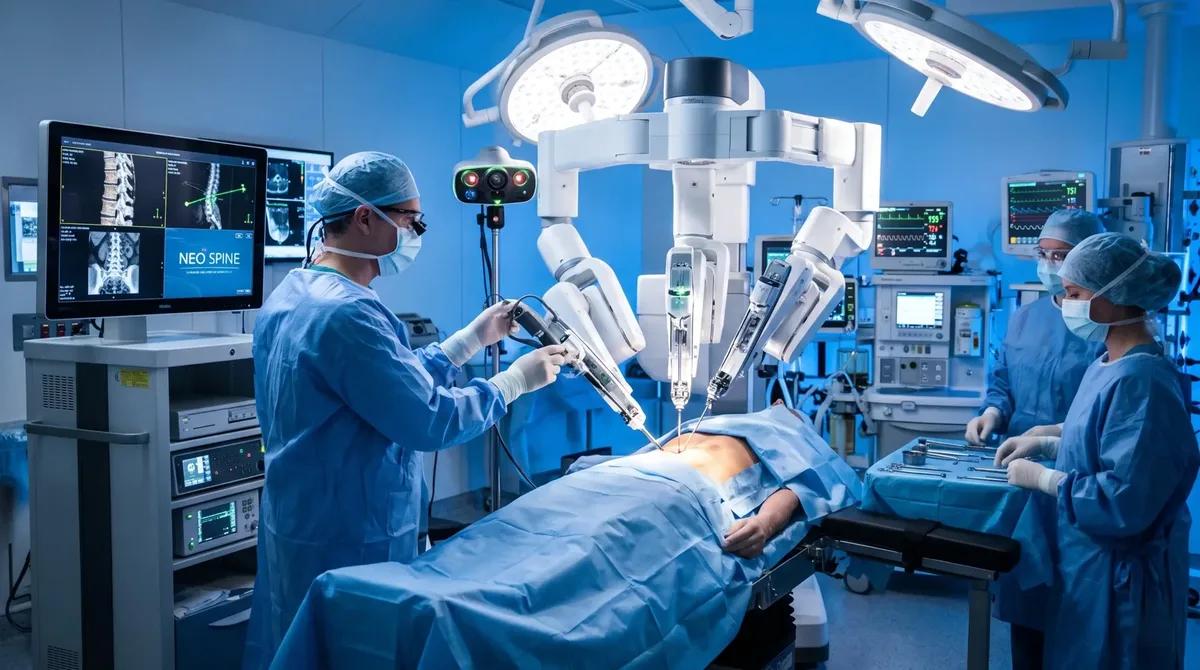 Robotic Spine SurgeryCT-based planning and a robotic guidance arm help the surgeon place spinal screws with 97 to 99 percent accuracy, even in complex anatomy.
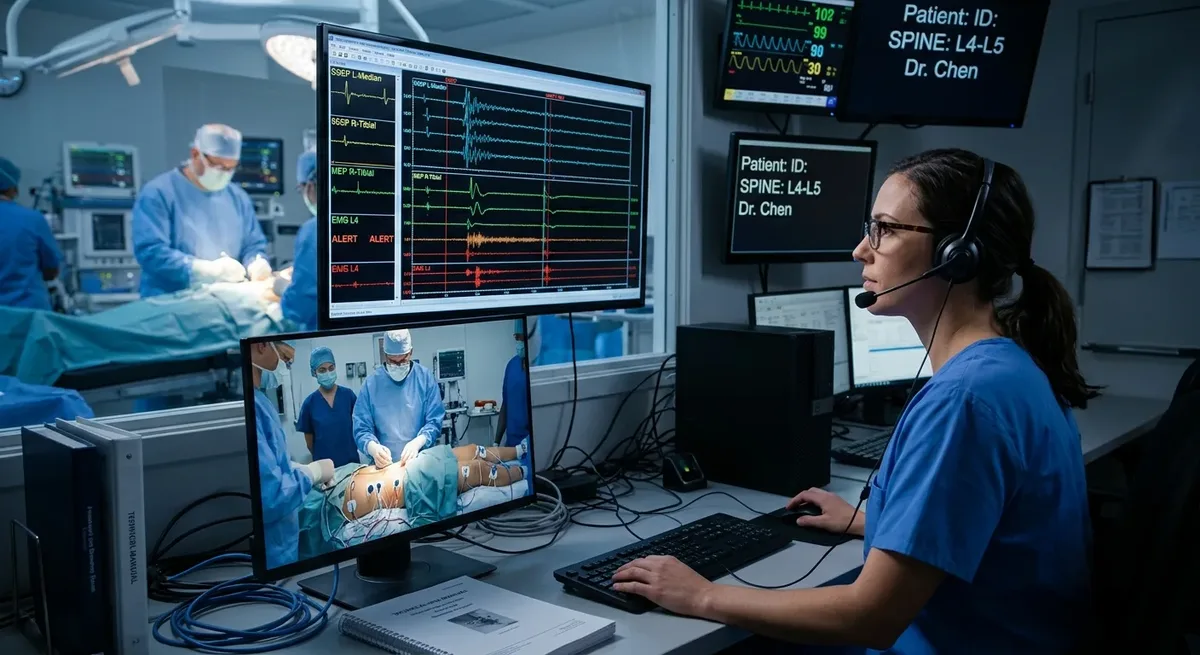 Spinal NeuromonitoringContinuous checks of spinal cord and nerve function during surgery, so the team is warned early if nerves are under stress.
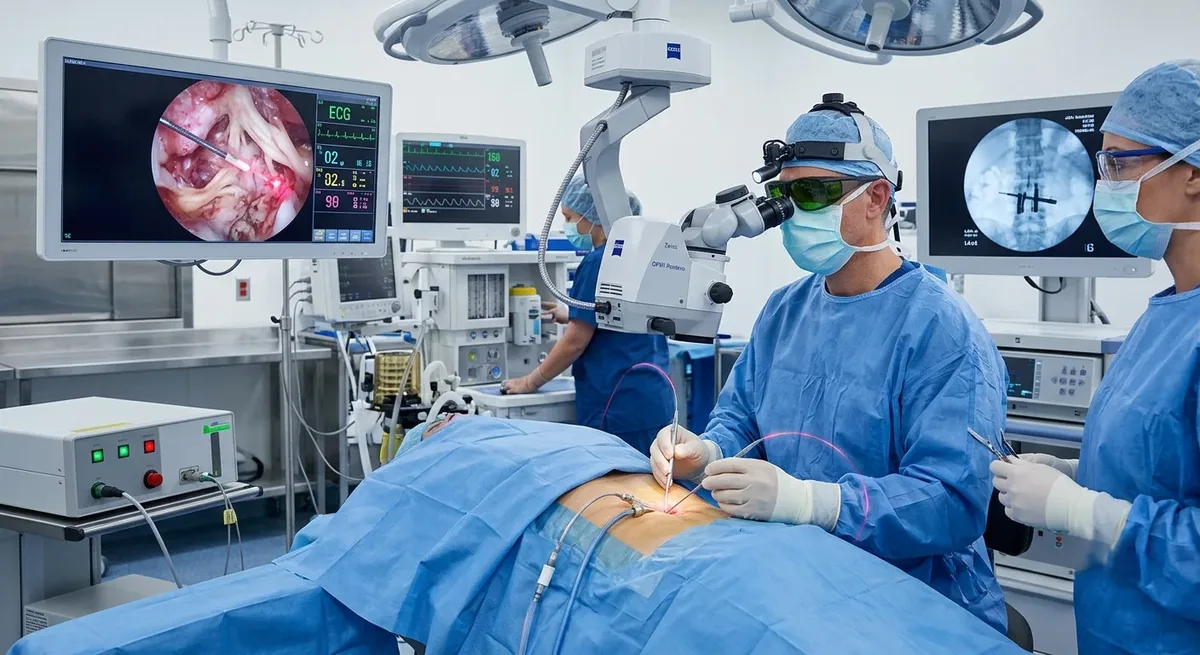 LASER Spine SurgeryFocused light energy used as a precise tool in selected minimally invasive procedures, often alongside endoscopic surgery.
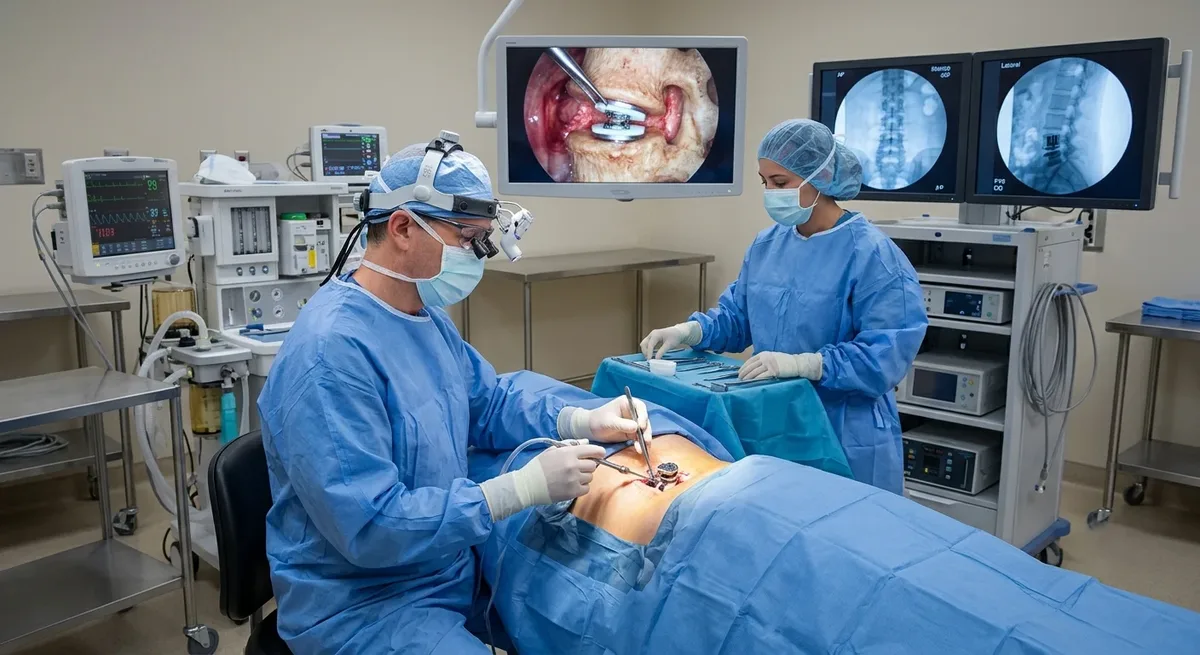 Disc Replacement SurgeryA worn disc is replaced with an artificial disc that keeps movement at that level, instead of fusing it.
Modern spine surgery is increasingly moving towards minimally invasive (MIS) and endoscopic procedures. These involve smaller incisions, less blood loss and minimal damage to the surrounding muscles and tissues.
Benefits
Precision is paramount in spine surgery. Computer-assisted navigation gives the surgeon real-time 3D imaging and guidance, allowing highly accurate placement of screws and implants. This is especially valuable in deformity correction and complex spine reconstruction.
Intraoperative neuromonitoring (IONM) continuously checks how the spinal cord and nerve roots are working during surgery, reducing the risk of nerve injury.
Advantages
| Technology | What it does | Key points |
|---|---|---|
| Minimally Invasive Spine Surgery | Decompression, stabilisation and fusion through small, muscle-sparing access corridors instead of a long open incision. |
|
| Endoscopic Spine Surgery | A thin camera and fine instruments pass through a very small incision to treat disc herniations and stenosis. |
|
| Computer Navigation Spine Surgery | Shows the position of instruments relative to your spine on a 3D image in real time, guiding accurate screw and implant placement. |
|
| Robotic Spine Surgery | CT-based planning and a robotic guidance arm help the surgeon place spinal screws with 97 to 99 percent accuracy, even in complex anatomy. |
|
| Spinal Neuromonitoring | Continuous checks of spinal cord and nerve function during surgery, so the team is warned early if nerves are under stress. |
|
| LASER Spine Surgery | Focused light energy used as a precise tool in selected minimally invasive procedures, often alongside endoscopic surgery. |
|
| Disc Replacement Surgery | A worn disc is replaced with an artificial disc that keeps movement at that level, instead of fusing it. |
|
Today's implants are designed for strength, compatibility with the body and integration with bone.
Highly biocompatible, MRI-compatible and resistant to infection. They give excellent fusion rates and long-term stability.
Specialised screws, such as cement-augmented cannulated screws or coated pedicle screws, hold better in weak or brittle (osteoporotic) bone.
Better metallurgy allows stronger yet smaller implants, which disturb less tissue when they are inserted.
These reduce the need for a front (anterior) neck plate, which means less throat irritation and swallowing difficulty after surgery.
PEEK (polyetheretherketone) cages don't show up on X-rays, so bone healing (fusion) around them is easier to check. PEEK also behaves mechanically much like natural bone.
Made from materials such as polylactic acid (PLA), they support the spine while it heals and are then gradually absorbed by the body, reducing long-term problems such as infection or irritation.
Spinal fusion relies on bone graft to help two vertebrae grow together. Today surgeons have several options:
Cutting-edge enhancement
Bone morphogenetic proteins (BMPs) are powerful bone-healing molecules that stimulate bone growth. They are especially useful in complex and revision surgery, where achieving fusion is challenging.
For people with degenerative disc disease, an artificial disc can be an alternative to fusion. Instead of stopping movement at the affected level, the artificial disc mimics how a healthy disc works.
Benefits
Research in tissue engineering and biomaterials is promising. Scientists are working on growing spinal disc tissue in the laboratory, which could one day be implanted in people with early disc degeneration.
Smart implants that can monitor fusion or load-bearing
Smaller, more customised surgical instruments
Better robotic assistance for precise surgery
Spine surgery is undergoing a transformative shift, offering safer, less invasive and more effective treatment options than ever before.
Dr. Amit SharmaConsultant Spine Surgeon, Neo Spine Clinic
Not every technology suits every patient. The right approach depends on your diagnosis, imaging and overall health, and is decided at a consultation.
Book a consultation, or send your MRI and reports for Dr. Sharma to review.