Overview
At Neo Spine Clinic, we strongly believe that treatment decisions should be based on physiological fitness, symptoms, and quality of life, not merely on age written on a birth certificate. This success story of an 81-year-old female patient clearly demonstrates that spine surgery in elderly patients can be safe, effective, and life-changing when performed for the right indications.
Long-Standing Leg Pain That Refused to Go Away
The patient presented with severe right leg pain, which had gradually worsened over time. The pain was sharp, radiating down the leg, and significantly limited her ability to walk, stand, and carry out daily activities independently. Like many elderly patients, she had begun to accept pain as a part of aging, until it became unbearable.
Clinical evaluation and imaging revealed L5 lytic spondylolisthesis, a condition caused by a pars interarticularis fracture. This led to instability at the lower lumbar spine and compression of the nerve roots supplying the right leg. The result was classic radicular leg pain, which did not respond adequately to medications or conservative treatment.
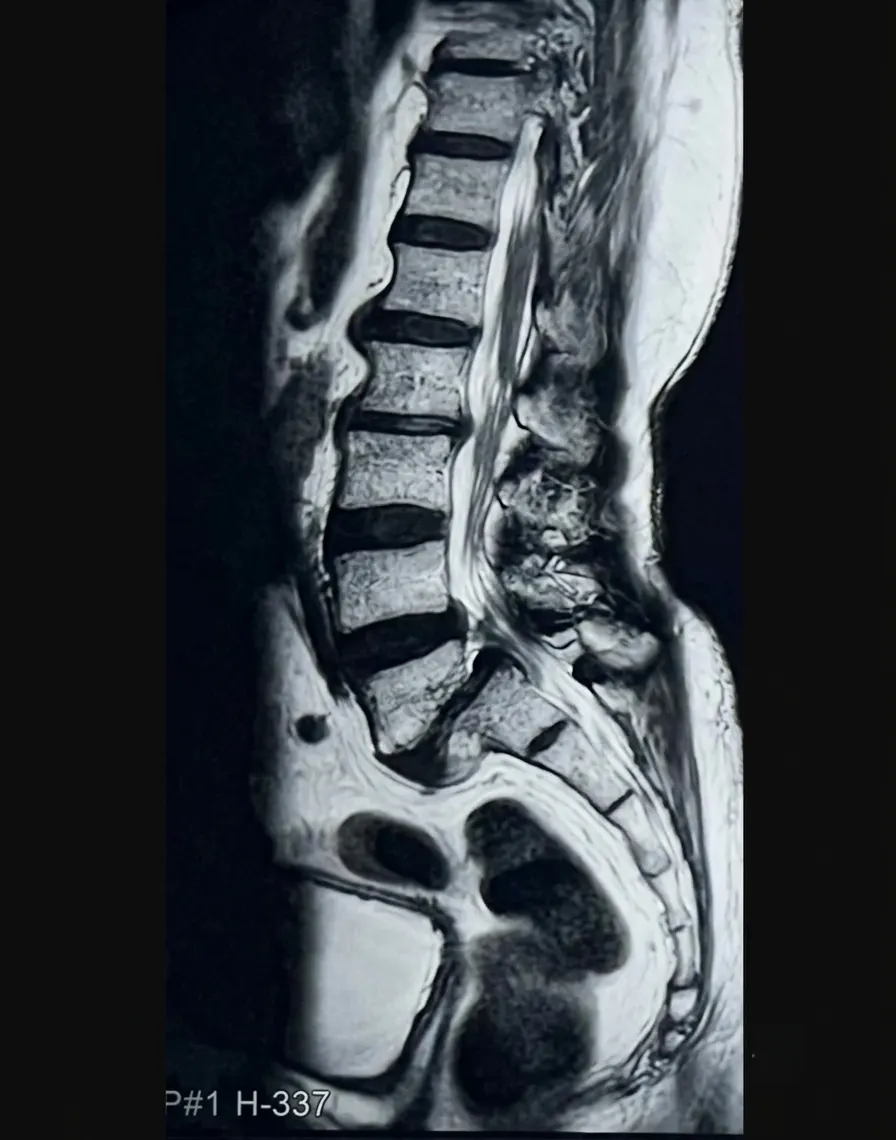 Enlarge image: MRI: L5 lytic spondylolisthesis
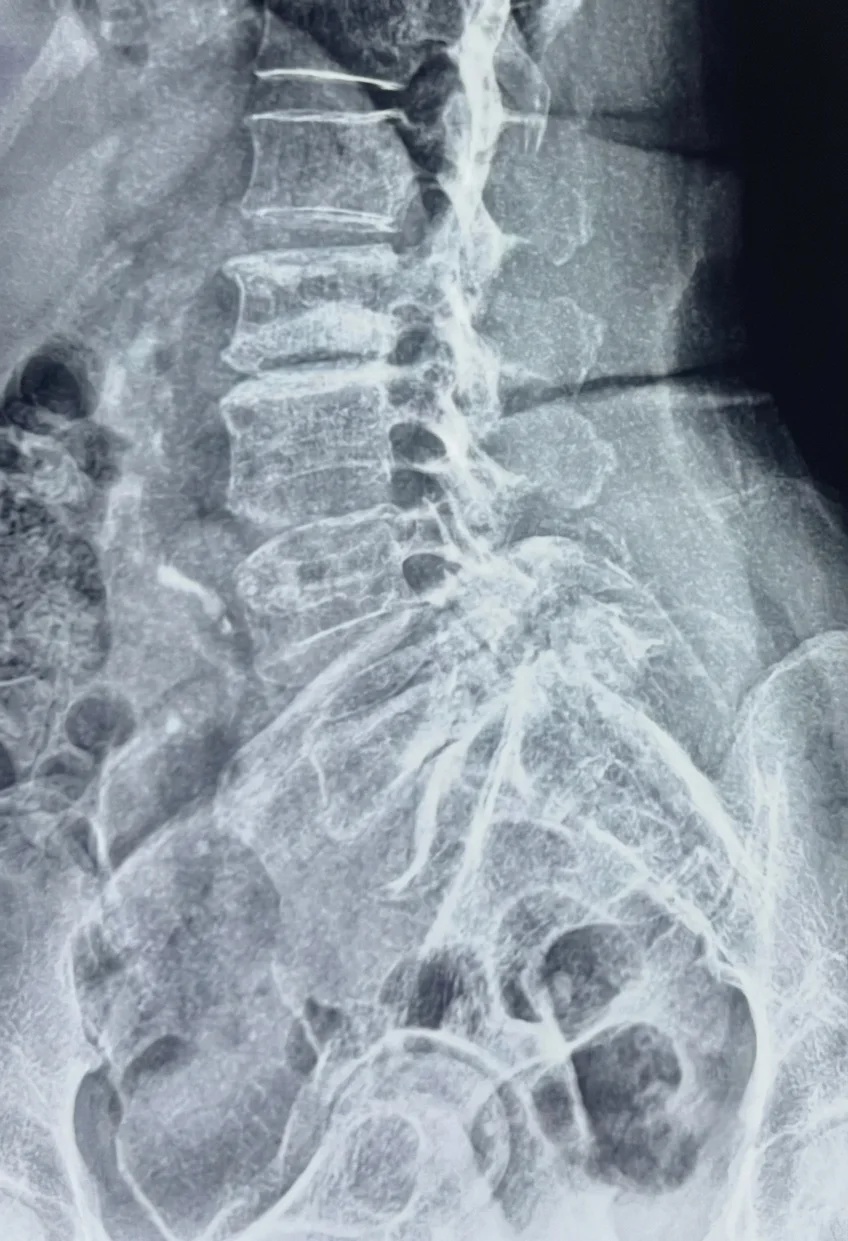 Enlarge image: Pre-op X-ray
Understanding the Problem: Why Surgery Was Needed
In elderly patients, spinal degeneration often coexists with instability. In this case, the slipped vertebra at L5 was continuously irritating the nerve, making non-surgical treatment unlikely to provide lasting relief.
After thorough evaluation, medical optimization, and detailed counseling with the patient and her family, the decision was made to proceed with L4-L5-S1 decompression and spinal instrumentation surgery. The aim was not just pain relief, but also:
- Permanent nerve decompression
- Spinal stabilization
- Prevention of further neurological deterioration
- Early mobilization and independence
The Surgery and Immediate Outcome
The surgery was performed successfully with careful attention to minimizing tissue trauma and blood loss, an especially important consideration in elderly patients.
The results were encouraging:
- The patient stood and walked the very next day after surgery
- Her right leg pain improved immediately after the procedure
- She experienced some expected post-surgical back pain for 1-2 days, which was well controlled with medications
- There were no neurological complications
- She was discharged safely on the third post-operative day
For an 81-year-old patient undergoing multi-level decompression and fixation, this recovery was both smooth and gratifying.
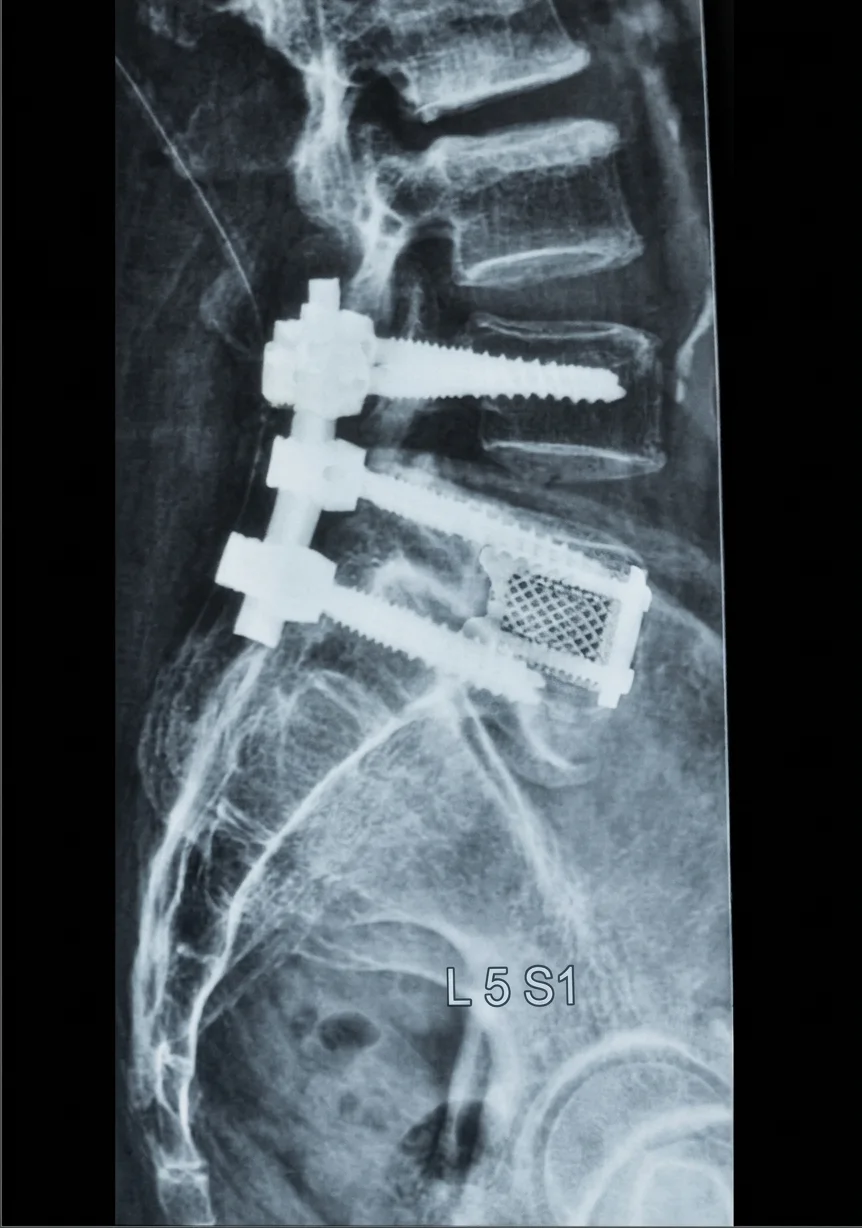 Enlarge image: Post-op X-ray: decompression and fixation
Recovery Beyond Expectations
Early mobilization plays a crucial role in preventing complications such as pneumonia, bed sores, and muscle deconditioning, common fears associated with surgery in old age. In this case, the patient regained confidence quickly, walked with minimal support, and reported a dramatic improvement in her quality of life.
Her recovery reinforces an important message:Elderly patients often recover better than expected when pain is relieved and stability is restored.
A Strong Message for Elderly Patients and Families
One of the most common myths we encounter is:
“Spine surgery is unsafe in old age.”
Modern spine surgery has evolved significantly. With advances in anesthesia, surgical techniques, implants, and post-operative care, age alone is no longer a contraindication for spine surgery.
If an elderly patient is:
- Suffering from persistent leg pain
- Losing independence due to spinal problems
- Mentally alert and medically optimized
Then surgery can offer meaningful, lasting relief.
Do Not Suffer Just Because of Age
Pain should never be accepted as an inevitable part of growing old. This patient’s journey is a reminder that even in the eighth or ninth decade of life, patients deserve pain-free mobility and dignity.
Educational Disclaimer: Published strictly for educational and clinical training purposes. Patient identity has been withheld and anonymized in compliance with medical confidentiality standards.