The patient
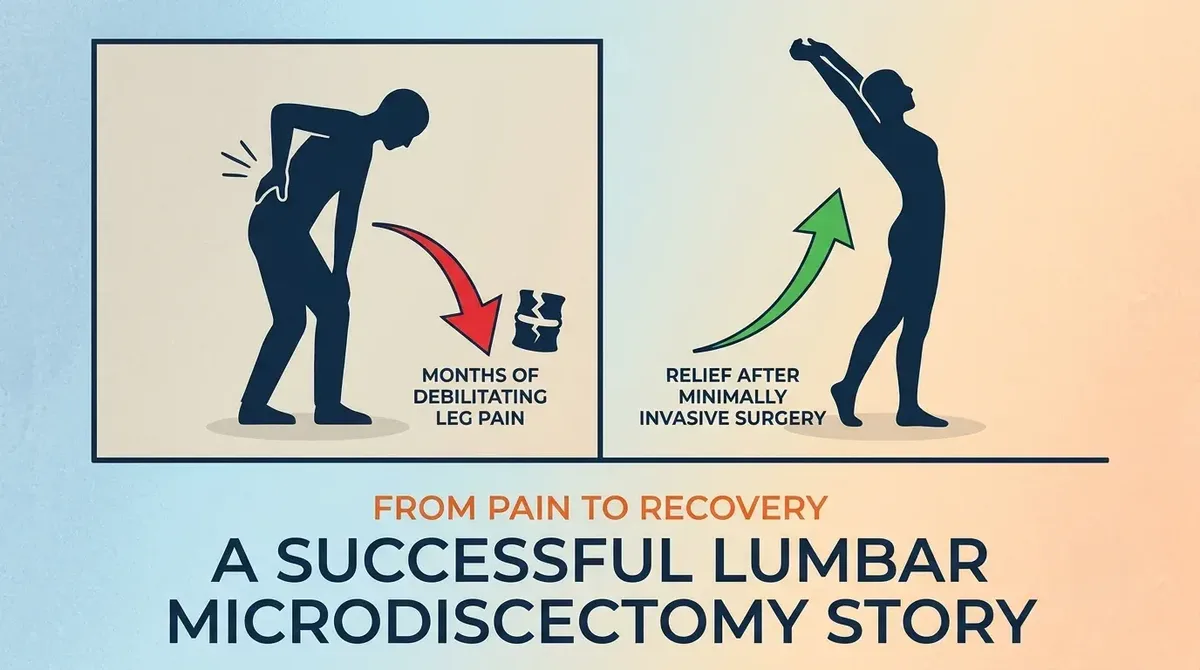
Back pain is common. But when pain shoots down the leg, limits walking and refuses to improve despite weeks of treatment, it begins to control a person's life. This was the situation for a 24-year-old student, pursuing higher studies in Australia, who had suffered severe leg pain from a lumbar disc prolapse for nearly three months.
Fear of surgery
Like many young patients, surgery was not the first choice. In fact, it was the last. The patient and the family shared a strong belief that spine surgery is unpredictable, risky and best avoided at all costs. The patient was hesitant, and the mother was far more worried, constantly fearing paralysis, long-term disability or worse pain after surgery.
These fears are very common in spine practice. They are often fuelled by misinformation, exaggerated stories and outdated ideas about spine surgery. The reality is very different.
Diagnosis and decision
The patient had tried adequate conservative treatment, but the pain persisted and began affecting daily life and studies. The clinical examination and MRI clearly matched: a prolapsed L4-5 lumbar disc was pressing on the nerve.
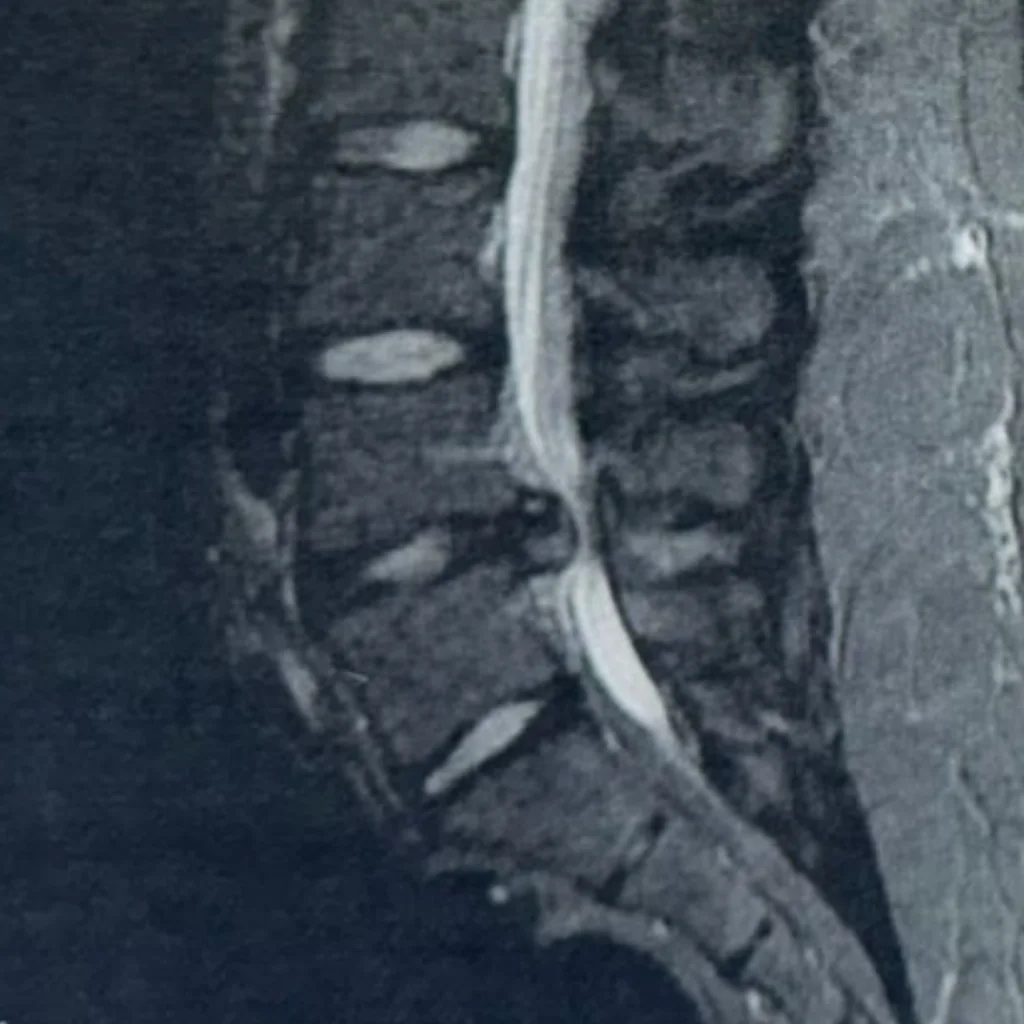 Enlarge image: MRI showing the L4-5 disc prolapse
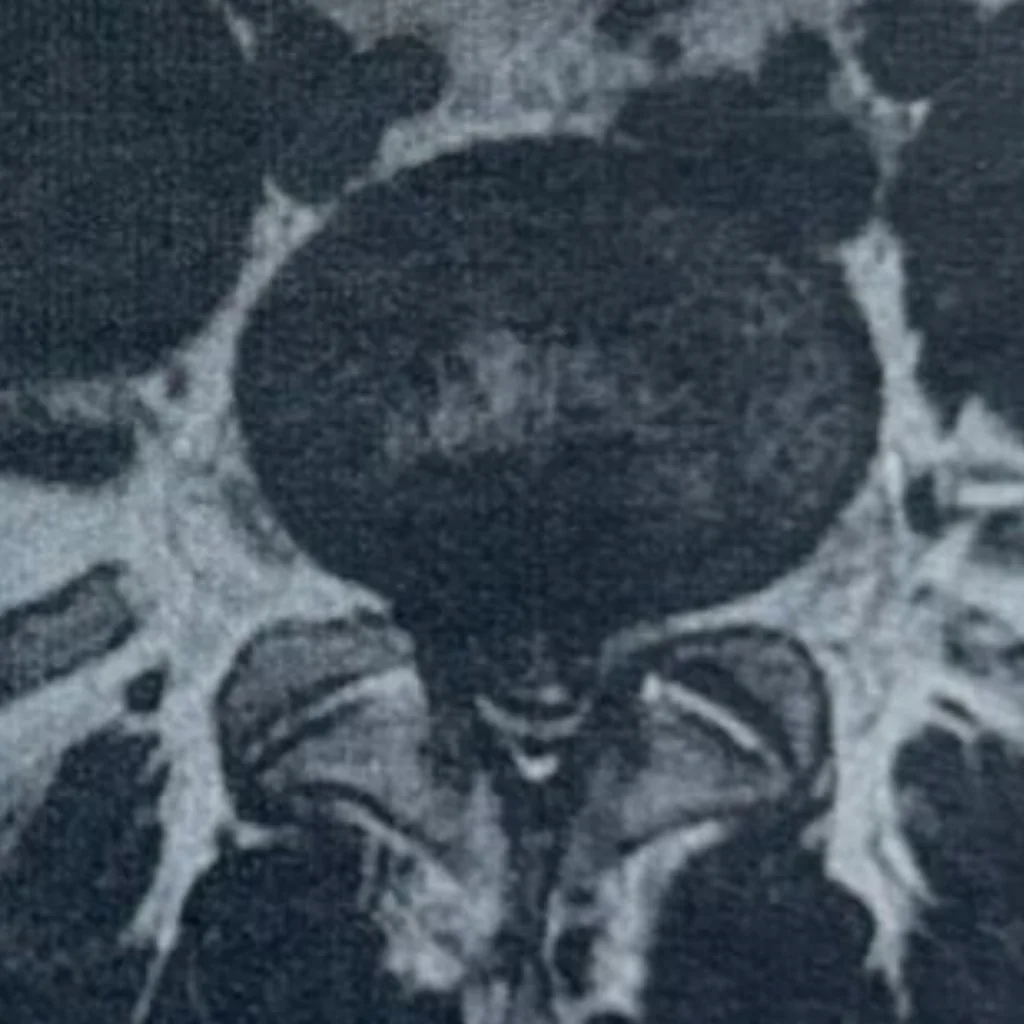 Enlarge image: Axial cut of MRI showing L4-5 disc prolapse
After several detailed discussions about the risks, benefits, alternatives and realistic expectations, the family understood an important truth: not operating when surgery is clearly indicated carries its own risks, including prolonged nerve damage and delayed recovery.
The patient was slightly overweight, which often adds to anxiety about surgery. With modern techniques and careful planning, this was not a significant obstacle.
The surgery
A microdiscectomy was performed. This targeted procedure removes only the disc fragment pressing on the nerve, while preserving the normal structures of the spine. The surgery was smooth, precise and uneventful.
Recovery
What followed challenged every fear the family had carried for months.
- The patient stood up and walked on the same day of surgery, and the severe leg pain of the last three months was gone.
- The patient was comfortably discharged on the second day after surgery, walking independently.
- At two weeks, the result remains excellent: complete relief of leg pain, and numbness that is steadily improving, which is a normal part of nerve healing.
Medically, the patient is fit to return to Australia at any time.
The takeaway
This story is not exceptional. It is representative of what well-indicated, well-performed spine surgery can achieve today. Spine surgery is not unpredictable or dangerous when it is done for the right reasons, at the right time, with modern techniques.
For patients and families who hesitate because of fear rather than facts, this case is a reassurance: when evidence, experience and patient-centred decisions come together, spine surgery gives patients their life back.
Educational Disclaimer: Published strictly for educational and clinical training purposes. Patient identity has been withheld and anonymized in compliance with medical confidentiality standards.